
Corporate Performance Improvement Resume Guide 2026
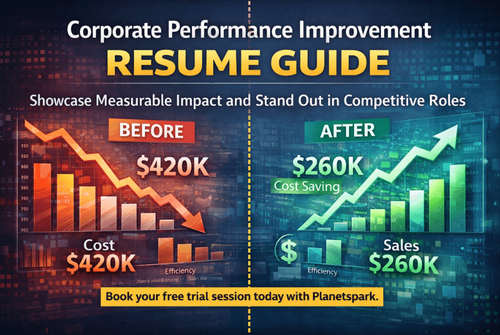

Corporate Performance Improvement Resume Guide: Showcase Measurable Impact and Stand Out in Competitive Roles
Many professionals deliver significant improvements in their organisations—reducing costs, improving efficiency, increasing revenue, or transforming processes—but fail to communicate that impact effectively on their resumes. The result? Missed opportunities, overlooked profiles, and roles that go to candidates who present their value more clearly.
The problem is not a lack of achievement. It is a lack of structure. A generic resume lists responsibilities, but a performance improvement resume must tell a transformation story—what was broken, what you changed, and what measurable results you delivered.
This is where a structured, scenario-based resume approach becomes critical. The Corporate Performance Improvement Resume Template Pack is designed to help professionals clearly showcase operational excellence, measurable outcomes, and transformation impact in a way that resonates with recruiters and hiring managers.
Book your free trial session today with Planetspark.
Download for more details or PDF file.
Who Is This Blog For?
- Working professionals with 0–15 years of experience driving performance improvements
- Operations, finance, and strategy professionals focused on measurable outcomes
- Consultants and analysts involved in process or business transformation
- Managers leading teams, systems, or operational efficiency initiatives
- Early-career professionals contributing to improvement projects
Why This Topic Matters Today?
In today’s data-driven hiring environment, recruiters are not impressed by generic job descriptions. They want clear, quantifiable proof of impact. Whether it is cost savings, process optimisation, or performance improvement, your resume must answer one question:
“How much better did things get because of you?”
As highlighted in the guide, professionals often undersell their contributions by:
- Listing duties instead of outcomes
- Using vague language like “improved performance”
- Hiding metrics within long paragraphs
- Failing to show the baseline before improvement
With organisations increasingly focused on efficiency, ROI, and measurable performance, resumes that fail to communicate impact clearly are quickly filtered out.
Core Concept or Framework Explained
The central idea behind this guide is simple but powerful: every experience should be framed as a before-and-after transformation.
Instead of writing what you did, you must show:
- The problem or inefficiency
- The action you took
- The measurable improvement achieved
This structure ensures that your resume communicates value clearly and quickly.
Across all templates, the framework focuses on:
- Quantified outcomes such as percentage improvements, cost savings, or time reductions
- Contextual baselines to show what changed
- Action-oriented language that demonstrates ownership
For example, instead of writing “Managed a team,” the guide encourages statements like “Led a 12-member team to achieve a 34% productivity increase.”
This shift transforms your resume into a performance narrative rather than a task list.
How This Blog and Guidebook Help You?
This blog and the template pack help you:
- Translate your work into measurable business impact
- Structure your resume for maximum recruiter attention
- Highlight performance improvements clearly and concisely
- Choose the right template based on your career scenario
- Improve ATS visibility with relevant keywords and formatting
Ultimately, it helps you build a resume where your value is immediately visible.
Step-by-Step Breakdown
Step 1: Choose the Right Performance Scenario
The guide offers 10 scenario-based templates tailored to different professional contexts.
Examples include:
- Operational turnaround leader
- Cost reduction specialist
- Sales performance accelerator
- Process re-engineering consultant
- Customer experience improver
- Supply chain optimiser
- Cross-functional change agent
Each template ensures your experience is positioned in the most relevant and impactful way.
Step 2: Start with a Results-Driven Summary
Your professional summary should immediately highlight:
- Your area of expertise
- Your performance improvement focus
- Key measurable achievements
This sets the expectation for a results-oriented resume.
Step 3: Lead with Quantified Outcomes
Every major bullet point should include measurable impact.
Examples of strong metrics include:
- Percentage improvements in performance
- Cost savings achieved
- Time reductions in processes
- Revenue growth or efficiency gains
The guide emphasises that at least a majority of your bullets should include numbers to demonstrate credibility.
Step 4: Provide Context and Baseline
One of the most important elements is showing what existed before your intervention.
For example:
- “Reduced process cycle time from 14 days to 5 days”
- “Improved SLA compliance from 60% to 92%”
This makes your impact tangible and easy to understand.
Step 5: Use Action-Oriented Language
Each bullet should begin with a strong action verb such as:
- Led
- Delivered
- Reduced
- Achieved
- Designed
This reinforces ownership and leadership.
Step 6: Highlight Functional Expertise Through Templates
Each template focuses on specific performance domains:
- Operations: Turnaround, efficiency, SLA improvements
- Finance: Cost reduction, budgeting, savings frameworks
- Sales: Revenue growth, quota attainment, pipeline improvement
- HR: Performance management, engagement, retention
- Technology: Automation, digital transformation, system efficiency
This ensures alignment with role-specific expectations.
Step 7: Optimise for ATS and Readability
The guide also provides practical recommendations:
- Use standard section headings
- Avoid complex formatting in ATS submissions
- Include relevant keywords such as Lean Six Sigma, cost optimisation, or digital transformation
- Save your resume in both PDF and DOCX formats
These steps improve both machine and human readability.
Common Mistakes or Pitfalls to Avoid
Professionals often weaken their resumes by:
- Focusing on responsibilities instead of results
- Using vague, non-quantified statements
- Hiding important metrics in dense paragraphs
- Ignoring baseline comparisons
- Failing to align with ATS keywords
- Leaving placeholders or incomplete sections
These mistakes reduce clarity and diminish perceived impact.
How Should You Use This Guidebook Effectively?
To maximise the value of this resource:
- Select the template that matches your experience and goals
- Replace all placeholders with real data and metrics
- Ensure each bullet communicates a clear outcome
- Prioritise your strongest achievements in the top section
- Align your resume with the job description before applying
Recommended workflow:
- 1–2 hours to customise your chosen template
- 1 hour to refine and quantify achievements
- 30 minutes to optimise for ATS and readability
Consistency and precision are key to building a strong resume.
Key Takeaways
- Performance improvement resumes must focus on measurable impact
- Recruiters prioritise outcomes over responsibilities
- Every experience should follow a before-and-after structure
- Metrics and context significantly increase credibility
- Scenario-based templates improve positioning and clarity
- ATS optimisation is essential for visibility and success
Your Next Step: Accelerate Your Career with PlanetSpark
Creating an impact-driven resume is not just about landing your next job—it’s about owning your professional story and presenting it with clarity, confidence, and credibility. When your resume clearly communicates value, results, and impact, opportunities follow naturally.
At PlanetSpark, we are committed to empowering working professionals with practical, outcome-focused resources that drive real career growth. From resume building and workplace communication to leadership presence and professional writing, our programs are designed to help you succeed in today’s fast-evolving job market.
Visit https://www.planetspark.in/resources to explore:
- Career and resume-building guides
- Workplace communication and professional writing resources
- Skill-development tools curated for working professionals
Want a deeper, hands-on experience?
You can also book a free trial session to learn more about PlanetSpark’s Working Professional Courses, designed to accelerate your career through personalised coaching, real-world practice, and expert guidance.
Your career deserves more than generic advice.
It deserves clarity, confidence, and measurable impact.
Personalized Communication Roadmaps
Record a video to get a AI generated personalized communication reports