
How to Optimize Cover Letter Tone for Career Growth:Pro Checklist
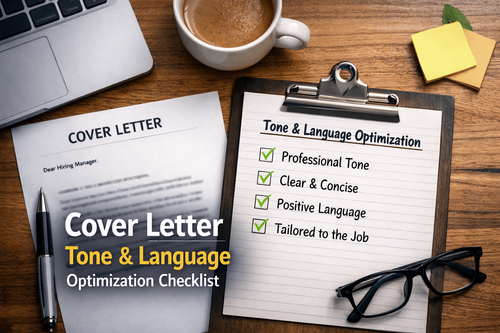

Crafting a Professional Cover Letter for Tone and Language Optimization Checklist to Create Maximum Impact
Writing a cover letter can feel
like navigating a minefield. Many professionals struggle to strike the perfect balance between professionalism and personality, often ending up with letters that feel either bland or overly casual. The consequence? Missed interview opportunities, despite having the right qualifications.
This guide focuses on tone and language optimization in cover letters. By following these principles, you can ensure your cover letter communicates confidence, clarity, and credibility—making recruiters take notice from the very first line.
Who Is This Blog For?
- Early-career professionals looking to create compelling cover letters
- Job seekers aiming to stand out in competitive industries
- Experienced professionals transitioning roles or industries
- Career switchers who need to communicate transferable skills effectively
- Students and interns applying for their first professional roles
Why This Topic Matters Today?
Recruiters spend an average of 6–8 seconds on a resume and slightly longer on a cover letter if it immediately engages them. In a highly competitive job market, the tone and language of your cover letter can make or break your application. Mistakes such as being too generic, overly formal, or inconsistent in tone reduce your chances of making a memorable impression. According to career surveys, a well-optimized cover letter increases callback rates by up to 30%, highlighting the importance of tone and language precision.
Core Concept or Framework Explained
The guidebook focuses on a systematic approach to optimizing tone and language in cover letters. It emphasizes three pillars:
- Professionalism: Maintaining a respectful and competent voice
- Authenticity: Reflecting your personal style without being casual or unprofessional
- Clarity: Ensuring sentences are concise, action-oriented, and free of jargon
This framework ensures your cover letter communicates credibility, confidence, and fit for the role, while avoiding common pitfalls like verbosity, passive phrasing, or mismatched tone.
How this Blog and Guidebook Help You?
Following this checklist ensures your cover letter:
- Immediately communicates your value to recruiters
- Demonstrates alignment with company culture and role expectations
- Highlights accomplishments and impact using precise, confident language
- Enhances readability and professional presentation, increasing interview chances
Step-by-Step Breakdown
Understanding Your Audience and Purpose
- Tailor your tone based on the company culture and job role
- Use professional language for traditional industries and a slightly approachable tone for startups or creative sectors
- Avoid overly casual phrases or clichés that may undermine credibility
Opening Lines That Engage
- Start with a concise statement that highlights your motivation and unique qualifications
- Avoid generic openings like "I am writing to apply for…"
- Use active voice and specific details to convey enthusiasm and fit
Maintaining Consistent Tone Throughout
- Keep a balance between professionalism and personal voice
- Avoid switching between formal and casual language
- Use confident phrasing like "I led," "I developed," or "I achieved" instead of weak verbs like "I was responsible for"
Clarity and Conciseness
- Limit paragraphs to 3–4 sentences for readability
- Use bullet points to highlight key achievements and impact metrics
- Replace long-winded sentences with clear, actionable statements
Strategic Language Choices
- Prioritize action verbs to convey proactivity and results
- Avoid filler words like "very," "somewhat," or "basically" that dilute impact
- Use industry-specific terms sparingly to demonstrate knowledge without overwhelming the reader
Closing with Confidence
- End with a call to action that reflects professionalism and initiative, such as requesting an interview or expressing enthusiasm for a discussion
- Reaffirm your fit and contribution without sounding presumptuous
- Thank the reader succinctly, maintaining the professional tone
Common Mistakes or Pitfalls to Avoid
- Overly formal or outdated language that creates distance
- Excessive use of buzzwords without substantiated examples
- Switching tone mid-letter, causing confusion about personality or professionalism
- Writing generic content instead of tailored statements for the specific role
- Overloading sentences with multiple ideas, reducing clarity and readability
How Should You Use This Guidebook Effectively?
- Allocate 45–60 minutes per cover letter to ensure thoughtful tailoring
- Review company culture and job description before drafting to adjust tone appropriately
- Use the checklist iteratively: draft, optimize tone, check language, and refine for impact
- Incorporate peer or mentor feedback for an external perspective on tone and clarity
Key Takeaways
- Tailor tone to company culture and role expectations
- Use confident, active language to highlight achievements
- Maintain consistency, clarity, and professionalism throughout
- Avoid filler words, clichés, and tone mismatches
- End with a professional, action-oriented closing
- Review and refine each cover letter for maximum impact
Your Next Step: Accelerate Your Career with PlanetSpark
Creating an impact-driven resume is not just about landing your next job—it’s about owning your professional story and presenting it with clarity, confidence, and credibility. When your resume clearly communicates value, results, and impact, opportunities follow naturally.
At PlanetSpark, we are committed to empowering working professionals with practical, outcome-focused resources that drive real career growth. From resume building and workplace communication to leadership presence and professional writing, our programs are designed to help you succeed in today’s fast-evolving job market.
Visit https://www.planetspark.in/resources to explore:
- Career and resume-building guides
- Workplace communication and professional writing resources
- Skill-development tools curated for working professionals
Want a deeper, hands-on experience?
You can also book a free trial session to learn more about PlanetSpark’s Working Professional Courses, designed to accelerate your career through personalised coaching, real-world practice, and expert guidance.
Your career deserves more than generic advice.
It deserves clarity, confidence, and measurable impact.
Personalized Communication Roadmaps
Record a video to get a AI generated personalized communication reports