
Crafting a Cover Letter That Highlights Measurable Achievements
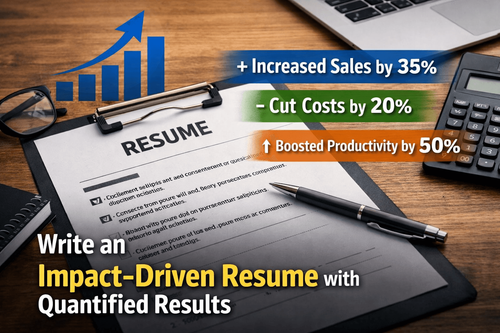

How to Write an Impact-Driven Resume with Quantified Results to Accelerate Your Career
Recruiters spend only a few seconds reviewing a resume before deciding whether to continue reading. In that short window, most candidates lose the opportunity to demonstrate their value. The problem is rarely a lack of skills or experience. Instead, the real issue is that many resumes fail to communicate impact clearly and convincingly.
Traditional resumes often describe responsibilities rather than results. They list tasks, outline job duties, and highlight collaboration. While these details may be accurate, they rarely answer the most important question hiring managers ask: what measurable value did this professional create?
An impact-driven resume solves this problem by focusing on outcomes rather than activities. Instead of simply describing what you were responsible for, it demonstrates how your work improved results, solved problems, or generated measurable value.
The PlanetSpark guidebook on achievement-focused professional communication explains that evidence-based achievements consistently outperform vague claims in hiring decisions. Recruiters respond to clear proof of results, particularly when those results are supported by numbers, metrics, and measurable outcomes.
This blog translates those insights into a practical roadmap for professionals who want to transform ordinary resumes into powerful career assets. Book your free trial session today with Planetspark.
Download for more details or PDF file.
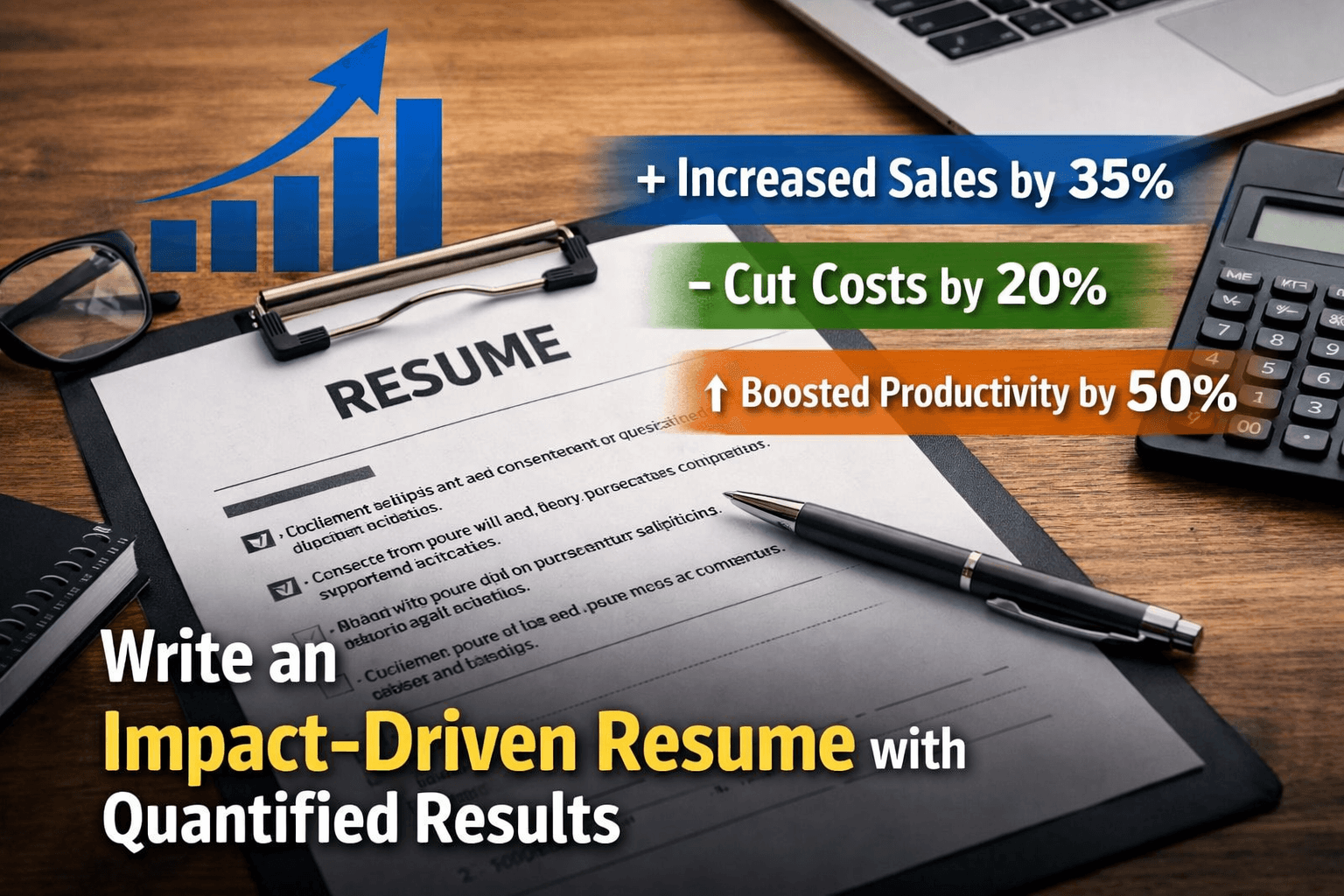
Who Is This Blog For?
This blog and the accompanying guidebook
are designed for:
- Working professionals with 0–15 years of experience seeking faster career growth
- Career changers repositioning their experience for a new industry or role
- Mid-career professionals aiming for promotions or leadership opportunities
- Consultants and specialists building a strong professional brand
- Job seekers who struggle to secure interviews despite strong experience.
Why This Topic Matters Today?
Modern hiring has evolved dramatically over the past decade. Recruiters now evaluate candidates at high speed while relying heavily on digital systems and data-driven decision-making.
Many organisations use Applicant Tracking Systems to filter resumes before a human reviewer ever reads them. These systems scan resumes for relevance, keywords, and measurable indicators of value.
At the same time, hiring managers often review dozens of applications in a single session. When time is limited, candidates who clearly demonstrate results gain immediate attention.
Evidence-driven communication is therefore essential. As the PlanetSpark guidebook explains, vague claims such as “strong communication skills” or “results-driven professional” rarely differentiate a candidate. Specific achievements, supported by numbers, immediately demonstrate credibility and impact. :contentReference[oaicite:1]{index=1}
In this environment, professionals who present quantified achievements stand out quickly. Their resumes communicate value within seconds, increasing the likelihood of progressing to interviews.
Core Concept or Framework Explained:
The foundation of an impact-driven resume is a shift in mindset: from responsibilities to results.
Traditional resumes describe what someone was responsible for doing. Impact-driven resumes explain what actually changed because of their work.
A structured framework helps professionals transform routine responsibilities into compelling achievement statements. The guidebook emphasises a results-based storytelling structure similar to professional achievement frameworks used in hiring conversations.
This structure encourages professionals to clearly communicate three essential elements:
- The situation or challenge that existed
- The actions taken to address the challenge
- The measurable results that followed
This approach ensures that achievements are complete, credible, and persuasive.
For example, instead of writing a vague statement such as “managed client onboarding,” a results-driven professional might write something like:
Reduced client onboarding time from three weeks to nine days by redesigning the onboarding workflow and introducing structured documentation processes.
This type of statement immediately communicates three things:
- The problem addressed
- The solution implemented
- The measurable impact created
When applied consistently throughout a resume, this structure transforms an ordinary document into a powerful narrative of professional impact.
How This Blog and Guidebook Help You?
The purpose of this guide is not simply to explain resume writing concepts. It provides a practical framework professionals can apply immediately.
By following the methods described in the guidebook, professionals can:
- Identify hidden achievements across their career history
- Translate everyday work into measurable outcomes
- Write powerful achievement statements recruiters recognise instantly
- Structure their resumes for maximum clarity and strategic impact
- Adapt their resumes efficiently for different job opportunities
The result is a resume that communicates professional value quickly, clearly, and persuasively.
Instead of blending into the crowd of generic applications, professionals present themselves as outcome-driven contributors who deliver measurable results.
Step-by-Step Breakdown:
Step 1: Audit Your Professional Experience
The first step in creating an impact-driven resume is conducting a thorough experience audit.
Many professionals underestimate their achievements because they focus only on job titles or responsibilities. A structured review of past work reveals far more evidence of impact than most candidates initially realise.
Start by reviewing your last two or three professional roles. Capture every example of meaningful contribution without filtering too early.
Consider questions such as:
- Which projects did you lead or influence?
- What operational problems did you solve?
- Did your work improve efficiency or productivity?
- Did you generate revenue, reduce costs, or prevent risk?
- Did you mentor team members or influence stakeholders?
- Were you recognised through awards or performance feedback?
Even small improvements can represent meaningful achievements when measured clearly.
The guidebook describes this process as building an achievement inventory before writing any professional communication. This inventory becomes the raw material for high-impact career narratives. :contentReference[oaicite:2]{index=2}
Step 2: Identify Meaningful Metrics
Numbers give achievements credibility.
Without measurable indicators, claims remain abstract. With numbers, they become tangible proof of impact.
Professionals can identify metrics across several common categories:
- Financial impact such as revenue growth, cost reduction, or return on investment
- Efficiency improvements including faster delivery or time savings
- Growth indicators such as increased engagement or conversion rates
- Team or leadership metrics including number of people trained or managed
- Quality improvements such as reduced error rates or improved compliance
- Scope and scale such as geographic coverage or project complexity
Even when exact numbers are unavailable, approximate estimates can still demonstrate impact.
For example, a statement such as “reduced operational delays by approximately 30 percent” communicates far more value than a vague claim about improving efficiency.
Step 3: Craft Powerful Achievement Statements
Once metrics are identified, achievements must be written in a concise and structured format.
Strong achievement statements typically include:
- A decisive action verb
- A clear description of the initiative
- The approach or method used
- A measurable outcome or result
For example:
Optimised customer support workflows by introducing automated ticket routing, reducing average response time by 45 percent and improving satisfaction ratings.
Action verbs such as led, transformed, optimised, delivered, or launched create immediate clarity.
These statements shift attention from responsibilities to results, helping recruiters quickly recognise professional impact.
Step 4: Structure Your Resume Strategically
An effective resume guides the recruiter’s attention logically.
An impact-driven resume typically follows a clear structure:
- Professional summary highlighting experience and key results
- Core competencies aligned with the target role
- Professional experience featuring quantified achievements
- Education and certifications
Within each role, achievements should be prioritised according to relevance, impact, recency, and scope.
Your most impressive accomplishments should appear first.
This strategic ordering ensures that recruiters encounter your strongest signals of value immediately.
Step 5: Write a High-Impact Professional Summary
The professional summary is one of the most influential sections of a resume.
It should capture the essence of your career in three or four concise lines.
A strong summary typically includes:
- Your professional role or specialisation
- Years of relevant experience
- Key areas of expertise
- One or two quantified achievements
For example:
Operations manager with eight years of experience optimising logistics and supply chain performance. Reduced distribution costs by 18 percent while improving delivery reliability across multi-regional operations.
This type of summary quickly signals value and encourages recruiters to continue reading.
Step 6: Apply a Final Resume Review Checklist
Before submitting your resume, conduct a structured quality check.
Review your document to ensure:
- Achievements are quantified wherever possible
- Statements use active voice rather than passive language
- Each bullet point communicates results rather than duties
- Formatting is consistent and easy to scan
- Language is concise and professional
Small refinements at this stage can significantly improve clarity and credibility.
Common Mistakes or Pitfalls to Avoid:
Even experienced professionals make mistakes that weaken their resumes.
Common issues include:
- Listing responsibilities rather than achievements
- Using vague language instead of measurable results
- Including outdated or irrelevant skills
- Writing overly long descriptions of routine tasks
- Submitting identical resumes for multiple roles
These mistakes reduce the effectiveness of otherwise strong experience.
By focusing on measurable outcomes and targeted communication, professionals avoid these pitfalls and strengthen their professional positioning.
How Should You Use This Guidebook Effectively?
The guidebook is designed to be practical and efficient.
A recommended workflow includes:
- Reading the guide once to understand the framework
- Completing the exercises or worksheets alongside each section
- Converting insights directly into resume improvements
- Allocating two to three focused hours for full implementation
- Revisiting the framework for future applications or updates
Because career documents evolve over time, this guide can be reused whenever professionals update their resumes or prepare for new opportunities.
Key Takeaways:
- Recruiters respond most strongly to measurable evidence of results
- An impact-driven resume focuses on achievements rather than responsibilities
- Numbers and metrics transform vague claims into credible proof of value
- Structured achievement statements improve clarity and persuasiveness
- Strategic resume organisation helps recruiters identify value quickly
- Consistent review and refinement strengthen professional positioning.
Your Next Step: Accelerate Your Career with PlanetSpark
Creating an impact-driven resume is not just about landing your next job—it’s about owning your professional story and presenting it with clarity, confidence, and credibility. When your resume clearly communicates value, results, and impact, opportunities follow naturally.
At PlanetSpark, we are committed to empowering working professionals with practical, outcome-focused resources that drive real career growth. From resume building and workplace communication to leadership presence and professional writing, our programs are designed to help you succeed in today’s fast-evolving job market.
Visit https://www.planetspark.in/resources to explore:
- Career and resume-building guides
- Workplace communication and professional writing resources
- Skill-development tools curated for working professionals.
Want a deeper, hands-on experience?
You can also book a free trial session to learn more about PlanetSpark’s Working Professional Courses, designed to accelerate your career through personalised coaching, real-world practice, and expert guidance.
Your career deserves more than generic advice.
It deserves clarity, confidence, and measurable impact.
Start building that advantage today—with PlanetSpark.
Personalized Communication Roadmaps
Record a video to get a AI generated personalized communication reports