
Creating a Personal System for Emotional Self-Regulation in Professional Settings
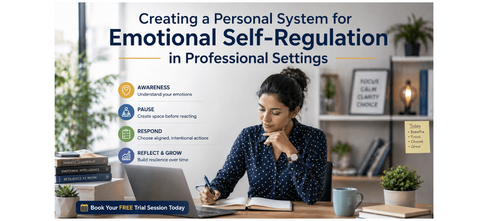

Mastering Emotional Self-Regulation at Work: A Practical System to Stay Calm, Focused, and Professionally Effective
In today’s high-pressure work environment, it’s rarely the workload alone that overwhelms professionals—it’s the emotional weight that comes with it. A single comment in a meeting can derail your focus for hours. A tough performance review can quietly chip away at your confidence. A rejection email or missed opportunity can spiral into self-doubt that lingers far beyond the moment.
Think about a typical workday. You move from one meeting to another, respond to urgent emails, manage expectations, and try to stay productive. But beneath all of this, there’s a constant stream of emotional triggers—uncertainty about decisions, frustration with colleagues, pressure to perform, and fear of judgment. These moments don’t just pass; they accumulate, affecting how you think, communicate, and show up professionally.
Most professionals are told to “stay positive,” “be resilient,” or “not take things personally.” But these are outcomes—not actionable skills. Very few people are actually taught how to manage emotions in real time, especially when stakes are high. As a result, reactions take over. You may send an email you later regret, withdraw from important conversations, or overcompensate in ways that drain your energy.
Over time, this lack of emotional control leads to bigger challenges:
- Reduced clarity in decision-making during critical moments
- Strained professional relationships due to reactive communication
- Loss of confidence after setbacks or feedback
- Increased stress and emotional exhaustion that impacts performance
What separates high-performing professionals is not the absence of emotion, but the ability to regulate it effectively. They don’t avoid pressure—they navigate it with clarity. They don’t suppress emotions—they understand and channel them productively. This ability allows them to stay composed, make better decisions, and communicate with intention, even in difficult situations.
This is exactly where a structured system for emotional self-regulation becomes essential. Instead of relying on willpower or guessing how to respond, you can build a repeatable framework that helps you pause, process, and act with purpose. With the right system in place, you move from reacting impulsively to responding strategically—turning emotionally charged situations into opportunities for growth and impact.
Download these resources and apply them alongside your daily work for improved clarity, productivity, and professional growth. You can also book a free trial to gain expert guidance and enhance your communication, problem-solving, and decision-making skills. The materials are designed in a clear, structured format to help professionals learn efficiently and implement insights with confidence.
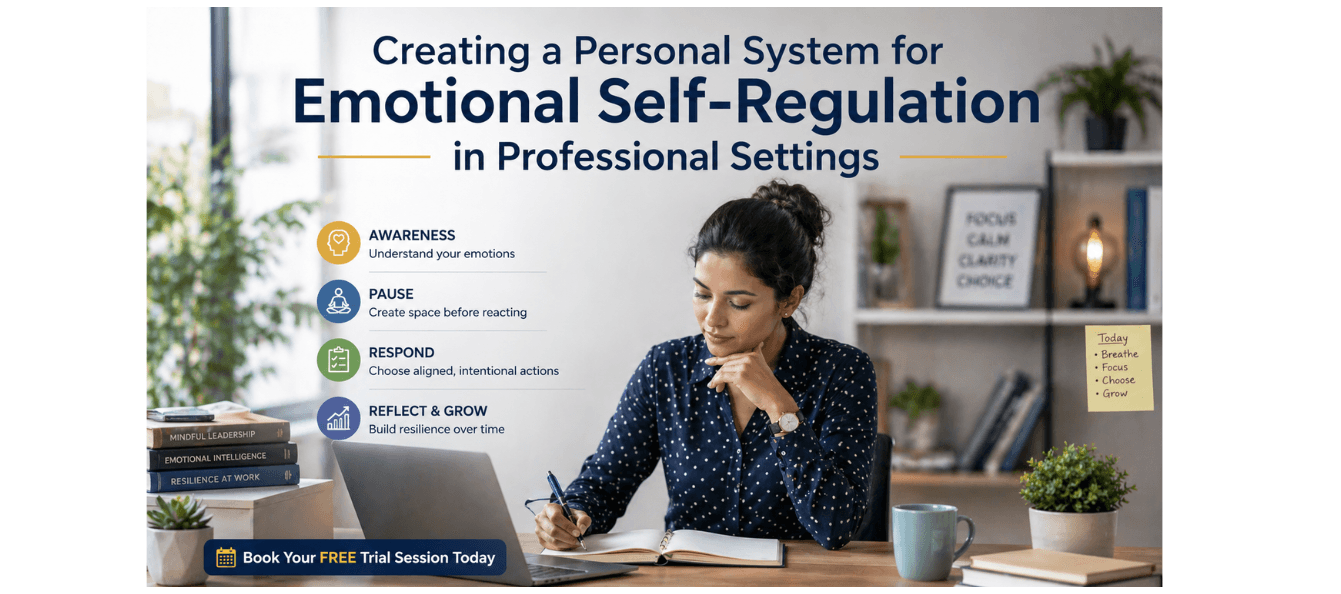
Who Is This Blog For?
- Working professionals dealing with high-pressure environments and demanding roles
- Managers and team leaders handling conflict, feedback, and decision-making
- Job seekers navigating interviews, rejections, and career uncertainty
- Consultants and client-facing professionals managing expectations and relationships
- Individuals looking to improve emotional resilience and workplace performance
Why This Topic Matters Today?
Modern workplaces are fast, complex, and emotionally demanding. Professionals are expected to perform consistently while navigating uncertainty, feedback, and interpersonal dynamics.
Yet, most career challenges today are not purely technical—they are emotional and behavioral.
Key challenges include:
- Reactive communication that damages professional relationships
- Emotional exhaustion caused by unmanaged stress and triggers
- Loss of confidence after setbacks or criticism
- Poor decision-making under pressure
Research consistently shows that professionals with strong emotional regulation skills experience:
- Higher job satisfaction
- Better workplace relationships
- Improved performance under pressure
- Lower burnout levels
Despite this, very few professionals have a structured system to manage emotions effectively. This creates a gap between capability and performance—one that emotional self-regulation can bridge.
Core Concept or Framework Explained
At the heart of emotional self-regulation lies a simple but powerful three-phase framework:
Awareness, Application, and Mastery.
This progression ensures that emotional control is not temporary but sustainable.
Phase 1: Awareness
This phase focuses on identifying your emotional triggers, patterns, and early warning signals. Without awareness, regulation is impossible. You need to understand what activates your emotions and why.
Phase 2: Application
Once aware, you apply practical techniques in real time. This includes tools to pause reactions, reframe situations, and calm your nervous system during high-pressure moments.
Phase 3: Mastery
This final phase is about building habits and systems that make emotional regulation automatic. Through daily rituals and consistent practice, regulation becomes your default response rather than a conscious effort.
This framework transforms emotional control from a vague concept into a structured, actionable system.
How This Blog and Guidebook Help You?
This blog and the underlying toolkit provide a complete system for emotional self-regulation that you can apply immediately.
Key benefits include:
- A structured approach to understanding and managing emotions
- Practical tools you can use in real-time workplace situations
- Techniques to improve communication and decision-making
- Systems to reduce stress and prevent emotional burnout
- A personalised framework that evolves with your career
The result is greater clarity, stronger relationships, and more consistent professional performance.
Step-by-Step Breakdown
Step 1: Map Your Emotional Triggers
The first step is identifying what triggers your emotional reactions.
A trigger is not just an event—it is the meaning you assign to it based on your values and past experiences.
Common workplace triggers include:
- Being interrupted in meetings
- Receiving critical feedback
- Lack of clarity in roles or expectations
- Interpersonal conflict
Track your triggers using a simple structure:
- Situation or event
- Emotion felt
- Intensity level
- Your reaction
Over time, patterns will emerge, helping you understand your emotional landscape more clearly.
Step 2: Expand Your Emotional Vocabulary
Most professionals describe emotions in vague terms like “stressed” or “frustrated.” This limits your ability to regulate them.
Instead, develop emotional precision:
- Replace “angry” with irritated, frustrated, or disappointed
- Replace “anxious” with worried, uncertain, or overwhelmed
This concept, known as emotional granularity, improves your brain’s ability to process and regulate emotions effectively.
Step 3: Use the PAUSE Protocol
The PAUSE Protocol is a powerful in-the-moment tool designed to interrupt emotional reactions.
- Pause: Stop immediately before reacting
- Acknowledge: Name the emotion
- Unpack: Identify the trigger and assess the reaction
- Shift: Take a deliberate breath and relax your body
- Engage: Respond thoughtfully based on your values
This process takes less than a minute but can completely change the outcome of a situation.
Step 4: Apply Regulation Techniques for High-Pressure Moments
Different emotions require different strategies.
Key techniques include:
- Box Breathing for anxiety and overwhelm
- Grounding techniques for panic or distraction
- Cognitive reframing for frustration or anger
- Psychological distancing for conflict situations
Choosing the right technique for the right emotion is critical for effectiveness.
Step 5: Navigate High-Stakes Scenarios
Certain workplace situations are emotionally intense and require preparation.
Examples include:
- Receiving critical feedback in public
- Facing job rejection or career setbacks
- Handling conflict with colleagues
- Delivering presentations or leading meetings
In these moments:
- Avoid immediate reactions
- Process emotions privately when needed
- Reframe the situation constructively
- Respond with clarity and professionalism
The goal is not to eliminate emotion but to prevent it from controlling your behavior.
Step 6: Build Daily Regulation Rituals
Consistency is what transforms emotional regulation into a habit.
Simple daily practices include:
- Morning: Set an intention for how you want to respond emotionally
- Midday: Take a short reset to release accumulated stress
- Evening: Reflect on emotional experiences and responses
These small rituals strengthen your baseline emotional resilience over time.
Step 7: Create Your Personal Regulation Playbook
Your playbook is a personalised system that includes:
- Your top emotional triggers
- Early warning signals
- Go-to regulation techniques
- Daily rituals
This becomes your reference guide for handling emotional challenges effectively.
Regularly review and update your playbook to reflect your growth and changing professional environment.
Common Mistakes or Pitfalls to Avoid
Many professionals struggle with emotional regulation due to avoidable mistakes.
Common pitfalls include:
- Trying to suppress emotions instead of acknowledging them
- Only practising techniques during high-stress moments
- Pretending to be calm instead of genuinely processing emotions
- Skipping reflection and review processes
A better approach is to:
- Accept emotions as normal and manageable
- Practise techniques consistently
- Build internal awareness
- Review and refine your approach regularly
How Should You Use This Guidebook Effectively?
To maximise results, follow a structured approach:
- Start with awareness by mapping your triggers
- Practise one technique consistently before adding more
- Use tools like the PAUSE Protocol in low-stakes situations first
- Build daily rituals gradually
- Maintain and update your personal playbook
Time investment:
- 5–10 minutes daily for reflection and practice
- Short in-the-moment interventions during work situations
Consistency matters more than intensity. Small, repeated actions lead to lasting change.
Key Takeaways
- Emotional self-regulation is a learnable professional skill
- Awareness is the foundation of effective emotional control
- The PAUSE Protocol helps interrupt reactive behavior instantly
- Different emotions require different regulation strategies
- Daily rituals build long-term resilience
- Personalised systems are more effective than generic advice
- Consistent practice leads to measurable professional improvement
Your Next Step: Accelerate Your Career with PlanetSpark
Creating an impact-driven resume is not just about landing your next job—it’s about owning your professional story and presenting it with clarity, confidence, and credibility. When your resume clearly communicates value, results, and impact, opportunities follow naturally.
At PlanetSpark, we are committed to empowering working professionals with practical, outcome-focused resources that drive real career growth. From resume building and workplace communication to leadership presence and professional writing, our programs are designed to help you succeed in today’s fast-evolving job market.
Visit https://www.planetspark.in/resources to explore:
- Career and resume-building guides
- Workplace communication and professional writing resources
- Skill-development tools curated for working professionals
Want a deeper, hands-on experience?
You can also book a free trial session to learn more about PlanetSpark’s Working Professional Courses, designed to accelerate your career through personalised coaching, real-world practice, and expert guidance.
Your career deserves more than generic advice.
It deserves clarity, confidence, and measurable impact.
Start building that advantage today—with PlanetSpark.
Personalized Communication Roadmaps
Record a video to get a AI generated personalized communication reports