
Creating Systems for Successful Team Management as a New Manager
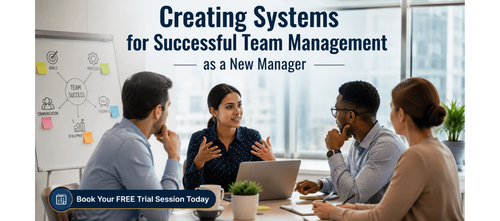

Building Scalable Team Management Systems for Long-Term Success
Most managers do not start their day planning strategic leadership conversations, coaching sessions, or long-term team development. Instead, they spend hours responding to urgent messages, clarifying tasks, fixing avoidable mistakes, chasing updates, attending excessive meetings, and solving recurring operational problems that should not require constant intervention in the first place.
Over time, this creates a frustrating cycle. Teams become increasingly dependent on the manager for coordination, approvals, and direction. Managers feel overwhelmed because every decision flows through them. Employees become confused because priorities keep shifting, communication is inconsistent, and accountability is unclear. Even highly capable teams begin struggling when there is no structured system guiding how work gets done.
This is one of the biggest hidden challenges in modern workplaces: many organisations have talented professionals, but very few have intentional team management systems.
Without strong systems:
- Communication becomes fragmented across multiple tools and channels
- Meetings multiply without producing meaningful progress
- Ownership becomes unclear
- Managers repeat the same instructions constantly
- Deadlines slip despite everyone working hard
- Accountability feels inconsistent or unfair
- Team morale slowly declines under operational chaos
What makes this even more challenging is that many managers assume these issues are caused by individual performance problems. In reality, they are often system failures.
A team may appear disorganised not because employees lack skill or motivation, but because there is no clear structure for communication, prioritisation, collaboration, or decision-making. When expectations are vague and workflows are reactive, even strong professionals struggle to perform consistently.
This becomes especially common in fast-growing companies, hybrid work environments, and teams managing multiple priorities simultaneously. As organisations scale, informal coordination stops working. Teams can no longer rely on scattered conversations, memory, or individual effort alone. They need repeatable systems that create clarity and alignment automatically.
This is exactly why the resource “Creating Systems for Effective Team Management” was developed.
The guidebook is designed to help managers move away from constant firefighting and toward structured, scalable leadership. Instead of offering generic leadership advice, the resource provides actionable systems that managers can immediately implement to improve communication, accountability, operational clarity, and team performance.
Inside the guide, professionals learn how to:
- Build communication systems that reduce confusion
- Create accountability structures without micromanaging
- Clarify ownership and decision-making responsibilities
- Design effective meeting rhythms and workflows
- Diagnose recurring breakdowns systematically
- Handle difficult conversations using structured frameworks
- Build high-performing teams through repeatable operational systems
The resource also reinforces a critical leadership principle: great teams are not built through heroics or constant supervision. They are built through well-designed systems that help ordinary professionals perform consistently at a high level.
Whether you are a first-time manager learning how to lead a team, an experienced leader trying to improve operational efficiency, or a professional overwhelmed by recurring team challenges, this guidebook provides practical frameworks that can significantly improve how your team functions day to day.
Most importantly, the guide shifts leadership from reactive management to intentional system design. Instead of asking, “How do I work harder as a manager?” it encourages professionals to ask a more powerful question: “What systems would make this team operate better even without constant intervention?”
That mindset shift alone can transform how teams collaborate, communicate, and perform.
Download these resources and apply them alongside your daily work for improved clarity, productivity, and professional growth. You can also book a free trial to gain expert guidance and enhance your communication, problem-solving, and decision-making skills. The materials are designed in a clear, structured format to help professionals learn efficiently and implement insights with confidence.
Who Is This Blog For?
- First-time managers learning how to lead teams effectively
- Team leads struggling with communication and accountability gaps
- Mid-level managers handling growing or distributed teams
- Startup founders building scalable operational systems
- Consultants improving organisational workflows and collaboration
- HR professionals supporting leadership and performance systems
- Professionals transitioning from individual contributor to leadership roles
- Managers overwhelmed by constant follow-ups and firefighting
Why Does Effective Team Management Matter Today?
Modern workplaces are more collaborative, fast-paced, and cross-functional than ever before. Teams now operate across hybrid environments, multiple communication platforms, and rapidly changing priorities.
Without systems, even highly talented teams experience:
- Missed deadlines
- Confusion around ownership
- Excessive meetings
- Fragmented communication
- Repeated operational breakdowns
- Manager burnout
- Reduced morale and accountability
The guidebook explains an important leadership principle: high-performing teams are not built through constant supervision. They are built through intentional systems that create alignment and clarity.
Many managers mistakenly treat recurring problems as individual performance issues when the real problem is structural.
For example:
- Team members may miss deadlines because priorities are unclear
- Communication gaps may exist because no standard communication system exists
- Accountability may weaken because ownership is poorly defined
- Managers may become overwhelmed because processes rely too heavily on them directly
This is why operational systems are now a core leadership skill, not just an administrative function.
Core Concept or Framework Explained
The guidebook introduces several practical frameworks designed to improve how teams operate.
Foundation Before Framework
One of the central ideas in the resource is that tools alone cannot fix team dysfunction.
Before implementing systems, managers must first establish:
- Team purpose
- Shared norms
- Role clarity
- Decision-making expectations
The guide emphasises that weak foundations create recurring operational instability.
Communication as Architecture
Another key framework in the resource is the idea that communication should be intentionally designed rather than left to habit or personality.
The toolkit encourages managers to define:
- Which communication channels are used for what purpose
- When synchronous discussions are necessary
- What information should be documented
- How decisions are communicated across the team
This reduces confusion and communication overload significantly.
Accountability as a Structural System
The guidebook strongly emphasises that accountability problems are often system problems first.
Rather than immediately blaming motivation, managers should examine:
- Whether ownership is clearly defined
- Whether goals are measurable
- Whether workflows are visible
- Whether expectations are consistent
This creates more sustainable accountability without micromanagement.
The SBI Feedback Framework
The resource also introduces the SBI Model for difficult conversations.
The framework follows three steps:
- Situation — describe the exact situation
- Behaviour — explain the observable behaviour
- Impact — clarify the impact on the team or project
This approach keeps feedback objective, respectful, and solution-focused rather than emotional or accusatory.
How Does This Blog and Guidebook Help You?
This guidebook helps professionals transition from reactive management to intentional leadership.
By implementing the frameworks inside the resource, managers can:
- Improve team communication and coordination
- Reduce dependency on constant supervision
- Clarify ownership and responsibilities
- Build stronger accountability systems
- Create more productive meeting structures
- Reduce operational confusion and delays
- Strengthen team trust and collaboration
- Improve execution consistency across projects
- Reduce burnout caused by continuous firefighting
One of the biggest advantages of the resource is its practicality. Instead of focusing on abstract leadership theory, the guide provides implementation tools managers can use immediately within real workplace environments.
The resource also helps managers identify whether recurring team problems stem from:
- Systems failures
- Skill gaps
- Motivation issues
This diagnosis prevents managers from repeatedly addressing symptoms instead of root causes.
Step-by-Step Breakdown
Step 1: Build a Strong Team Foundation
The guidebook explains that effective systems begin with operational clarity.
Managers are encouraged to establish:
- A clear team purpose
- Shared behavioural norms
- Defined ownership structures
- Clear expectations around communication and collaboration
Without this foundation, even well-designed systems eventually fail.
The toolkit includes exercises and worksheets that help teams co-create these operating principles together.
Step 2: Design Communication Systems Intentionally
Communication confusion is one of the most common causes of operational inefficiency.
The resource recommends separating communication into categories such as:
- Strategic discussions
- Status updates
- Decision-making conversations
- Documentation and reference material
Managers are encouraged to reduce unnecessary channel-switching and establish clearer communication rhythms.
The goal is not more communication. The goal is more intentional communication.
Step 3: Audit and Simplify Meetings
Many teams waste significant time in recurring meetings that create little value.
The toolkit includes a meeting audit framework that helps managers evaluate:
- Which meetings are necessary
- Which meetings should be shortened
- Which meetings should become asynchronous updates
- Which meetings lack clear outcomes
This helps reduce calendar overload while improving team focus and execution.
Step 4: Clarify Accountability Using Structural Systems
The guidebook introduces the RACI framework for ownership clarity.
This helps define:
- Who is responsible
- Who is accountable
- Who should be consulted
- Who should remain informed
When ownership becomes visible and structured, teams require less follow-up and fewer escalations.
The guide repeatedly reinforces the idea that accountability should be built into systems rather than enforced through constant reminders.
Step 5: Create Performance Rhythms
Another important concept in the resource is the importance of operational cadence.
The guide recommends creating predictable rhythms such as:
- Weekly stand-ups
- Monthly reviews
- Quarterly planning sessions
- Regular one-on-ones
These rhythms create stability, visibility, and alignment without requiring excessive management effort.
The resource explains that consistency is often more valuable than complexity.
Step 6: Diagnose Breakdowns Correctly
When problems arise, many managers respond reactively.
The toolkit encourages leaders to identify whether breakdowns stem from:
- Systems issues
- Skill limitations
- Motivation problems
This root-cause approach prevents recurring operational issues.
The guidebook specifically warns against repeatedly solving symptoms while ignoring structural weaknesses.
Step 7: Handle Difficult Conversations Professionally
One of the most practical sections introduces the SBI feedback framework. :contentReference[oaicite:1]{index=1}
The process involves:
- Describing the specific situation
- Explaining the observable behaviour
- Clarifying the impact objectively
The framework helps managers deliver difficult feedback without escalating defensiveness or damaging trust.
The guide emphasises that difficult conversations should happen quickly rather than being delayed until frustration builds.
Step 8: Learn Through Real-World Team Transformation
The resource includes a detailed case study about Priya, a Team Lead at an EdTech company struggling with fragmented communication and constant firefighting.
Her team faced:
- Missed deadlines
- Communication spread across multiple platforms
- Lack of accountability systems
- Operational confusion
Using the guide’s frameworks, she implemented:
- Team norms and purpose statements
- Structured stand-ups
- Shared visibility systems
- Quarterly OKRs
- Accountability conversations using the SBI framework
Within 90 days:
- Firefighting time dropped dramatically
- Delivery performance improved significantly
- Team coordination became more stable and predictable
The case study demonstrates how relatively simple systems can create major operational improvements when implemented consistently.
Common Mistakes or Pitfalls to Avoid
The guidebook identifies several common management mistakes that weaken team systems.
Building Systems Without Team Involvement
Managers sometimes create systems independently and then impose them on teams. This reduces ownership and engagement.
A better approach is collaborative system design.
Treating Symptoms Instead of Root Causes
Repeatedly solving the same operational issues without analysing the underlying cause leads to long-term inefficiency.
The guide encourages managers to conduct deeper root-cause analysis before implementing solutions.
Letting Systems Decay Over Time
Even good systems fail if they are not maintained consistently.
Examples include:
- Meetings losing structure
- Dashboards becoming outdated
- One-on-ones being cancelled regularly
The guide recommends regular system reviews and ongoing refinement.
Measuring Activity Instead of Outcomes
Busy teams are not always productive teams.
Managers should focus on measurable outcomes rather than visible activity alone.
Avoiding Accountability Conversations
Delaying difficult conversations damages team trust and lowers standards over time.
The guide recommends addressing issues early using structured feedback frameworks.
How Should You Use This Guidebook Effectively?
To get the maximum value from this resource, approach it as a practical implementation guide rather than passive reading material.
Suggested workflow:
Week 1
- Read the full guide once
- Identify your biggest operational pain points
- Assess communication and accountability gaps
Week 2
- Implement foundational systems
- Clarify roles and team norms
- Audit recurring meetings
Week 3
- Introduce communication structures
- Create visibility and accountability systems
- Begin structured check-ins
Week 4 and Beyond
- Review system effectiveness regularly
- Refine workflows collaboratively
- Use feedback frameworks consistently
- Revisit performance rhythms quarterly
Recommended time investment:
- 20–30 minutes daily during implementation
- Monthly system review sessions thereafter
The guidebook works best when systems are introduced gradually and consistently rather than all at once.
Key Takeaways
- High-performing teams rely on systems, not constant supervision
- Clear communication structures reduce confusion and delays
- Accountability should be embedded into workflows and ownership systems
- Operational clarity improves trust, collaboration, and execution
- Meeting overload often signals deeper system inefficiencies
- Root-cause analysis prevents recurring team breakdowns
- The SBI feedback framework improves difficult conversations professionally
- Consistent performance rhythms sustain long-term team alignment
- Managers should focus on outcomes, not just visible activity
- Small system improvements create significant long-term operational gains
Your Next Step: Accelerate Your Career with PlanetSpark
Creating an impact-driven resume is not just about landing your next job—it’s about owning your professional story and presenting it with clarity, confidence, and credibility. When your resume clearly communicates value, results, and impact, opportunities follow naturally.
At PlanetSpark, we are committed to empowering working professionals with practical, outcome-focused resources that drive real career growth. From resume building and workplace communication to leadership presence and professional writing, our programs are designed to help you succeed in today’s fast-evolving job market.
Visit https://www.planetspark.in/resources to explore:
- Career and resume-building guides
- Workplace communication and professional writing resources
- Skill-development tools curated for working professionals
Want a deeper, hands-on experience?
You can also book a free trial session to learn more about PlanetSpark’s Working Professional Courses, designed to accelerate your career through personalised coaching, real-world practice, and expert guidance.
Your career deserves more than generic advice.
It deserves clarity, confidence, and measurable impact.
Start building that advantage today—with PlanetSpark.
Personalized Communication Roadmaps
Record a video to get a AI generated personalized communication reports