
Designing Personal Risk Thresholds for Smarter Decision-Making
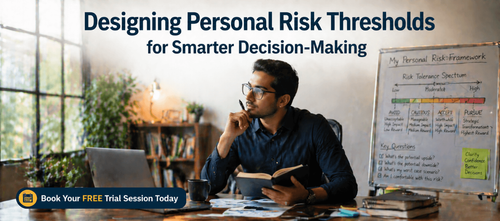

Creating Personal Boundaries for Managing Decision-Making Risk: A Practical Guide for Professionals
In the fast-paced world of professional growth, decision-making is a constant challenge. Whether you’re choosing between two job offers, deciding to pivot your career path, or navigating a crucial business opportunity, the pressure to get it right can be overwhelming. Without a clear system in place, decision-making can feel like a gamble, leaving you with regret or uncertainty.
That’s where the Personal Thresholds for Decision-Making Risk framework comes in. This structured approach helps you set clear personal risk thresholds, ensuring that each decision you make is deliberate, informed, and aligned with your professional goals. By understanding when to act, pause, or stop, you can make confident decisions without second-guessing yourself.
Download these resources and apply them alongside your daily work for improved clarity, productivity, and professional growth. You can also book a free trial to gain expert guidance and enhance your communication, problem-solving, and decision-making skills. The materials are designed in a clear, structured format to help professionals learn efficiently and implement insights with confidence.
Who Is This Blog For?
- Career changers and job seekers facing critical decisions
- Consultants and managers navigating high-stakes professional choices
- Professionals seeking more confidence in their decision-making process
- Individuals looking to gain clarity on their personal risk tolerance
- Anyone struggling with decision fatigue or analysis paralysis
Why This Topic Matters Today?
In today’s fast-paced job market, professionals are constantly faced with high-stakes decisions. Whether it’s choosing between two career opportunities or deciding how to approach a difficult conversation with a colleague, the ability to make sound decisions quickly can be the difference between success and missed opportunity. Yet, many professionals struggle with indecision or make rash choices due to a lack of clear guidelines or a structured decision-making process.
According to the resource, professionals often face decision fatigue, where the constant need to make choices leads to burnout and poor decision-making. By implementing a personal risk threshold framework, professionals can reduce the mental load of decision-making and ensure they act with confidence and clarity, especially in high-pressure situations.
Core Concept or Framework Explained
The Personal Thresholds for Decision-Making Risk framework is designed to help you define and document your personal risk thresholds. This tool consists of four key stages:
Risk Awareness: Identify where you currently stand in terms of career stability, financial cushion, emotional bandwidth, and professional reputation.
Risk Calibration: Define personal thresholds for each risk domain (financial, career trajectory, reputational, relational, operational) that are specific to your current situation.
Risk Documentation: Write these thresholds down to create a personal decision-making operating system.
Risk Review: Regularly revisit and update your thresholds as your career and personal context evolve.
The framework is practical, focusing on helping you make decisions that are aligned with your values and circumstances. By mapping out the different domains of risk and setting clear thresholds for each, you can avoid overthinking minor decisions while ensuring major decisions are given the necessary attention and strategy.
How This Blog and Guidebook Help You?
This guidebook equips you with a clear, actionable framework to approach decision-making with confidence. By setting personal risk thresholds, you’ll be able to:
Eliminate decision fatigue: Make quicker decisions by knowing when to act and when to pause.
Boost confidence: Stop second-guessing yourself by having a structured decision-making process.
Increase decision quality: Make smarter choices by aligning them with your personal risk tolerance and career goals.
Enhance career trajectory: Reduce the risk of poor decisions derailing your career path.
Ultimately, this guidebook will help you make decisions that reflect your true career ambitions, without unnecessary stress or hesitation.
Step-by-Step Breakdown
Step 1: Map Your Risk Domains
Identify the key areas in which you face decision-making risks. These include:
- Financial Risk: Decisions affecting income, savings, investments, and financial obligations.
- Reputational Risk: Decisions that could impact your professional reputation.
- Career Trajectory Risk: Decisions that affect your long-term career path.
- Relational Risk: Decisions that impact professional relationships.
- Operational Risk: Decisions that affect your work projects and team dynamics.
For each domain, rate your personal sensitivity from 1 (low) to 5 (high).
Step 2: Define Your Risk Threshold Bands
For each domain, set three distinct threshold bands:
- Green: Low risk; you can act freely within this band.
- Amber: Moderate risk; apply the 3-Question Amber Check before acting.
- Red: High risk; do not act without pausing and reassessing.
This ensures that you have clear guidelines for when to move forward, pause, or stop.
Step 3: Build Your Personal Risk Threshold Profile
Document your thresholds for each domain. This step forces you to be specific about what constitutes acceptable or unacceptable risk in each area. For example, under financial risk, you might define your green threshold as a risk of losing up to 10% of your monthly income, while the red threshold might be a risk that exceeds 50%.
Step 4: Apply Your Thresholds with the Decision Activation Protocol
Once your thresholds are documented, activate them whenever you face a significant decision. Use the 3-Question Amber Check to evaluate moderate-risk decisions. This simple, repeatable process helps you apply your thresholds effectively and confidently in real-world situations.
Common Mistakes or Pitfalls to Avoid
Many professionals make common mistakes when applying risk thresholds:
Not calibrating thresholds to personal context: It’s easy to borrow thresholds from mentors or peers, but these need to be tailored to your own life situation.
Using thresholds only in crisis situations: Thresholds are most effective when applied regularly, not just in moments of high stress. Regularly update your profile to ensure it stays relevant.
Setting thresholds too wide: If everything is green, your thresholds are not doing their job. Make sure your thresholds reflect the level of risk in your decisions.
How Should You Use This Guidebook Effectively?
To get the most out of this resource:
- Invest 1–2 hours upfront to map your risk domains and define your thresholds.
- Review your profile quarterly or after any major life changes.
- Use the activation protocol each time you face a big decision, especially for decisions that fall in the Amber or Red bands.
By dedicating time upfront to design your risk thresholds, you’ll save time and stress in the long run by making quicker, more confident decisions.
Key Takeaways
- Personal risk thresholds help you make smarter, more confident decisions.
- Regularly review your thresholds to ensure they reflect your current situation.
- Use the 3-Question Amber Check to evaluate moderate-risk decisions.
- Document your thresholds to reduce decision fatigue and increase clarity.
- Be specific in your thresholds to make them effective and actionable.
Your Next Step: Accelerate Your Career with PlanetSpark
Creating an impact-driven resume is not just about landing your next job—it’s about owning your professional story and presenting it with clarity, confidence, and credibility. When your resume clearly communicates value, results, and impact, opportunities follow naturally.
At PlanetSpark, we are committed to empowering working professionals with practical, outcome-focused resources that drive real career growth. From resume building and workplace communication to leadership presence and professional writing, our programs are designed to help you succeed in today’s fast-evolving job market.
Visit https://www.planetspark.in/resources to explore:
- Career and resume-building guides
- Workplace communication and professional writing resources
- Skill-development tools curated for working professionals
Want a deeper, hands-on experience?
You can also book a free trial session to learn more about PlanetSpark’s Working Professional Courses, designed to accelerate your career through personalised coaching, real-world practice, and expert guidance.
Your career deserves more than generic advice.
It deserves clarity, confidence, and measurable impact.
Personalized Communication Roadmaps
Record a video to get a AI generated personalized communication reports