
Develop Long-Term Judgment for Professional Growth and Leadership
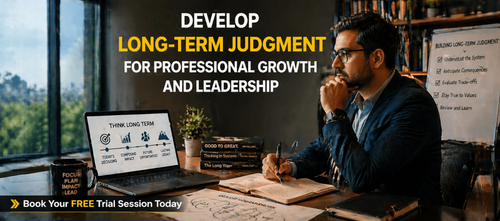

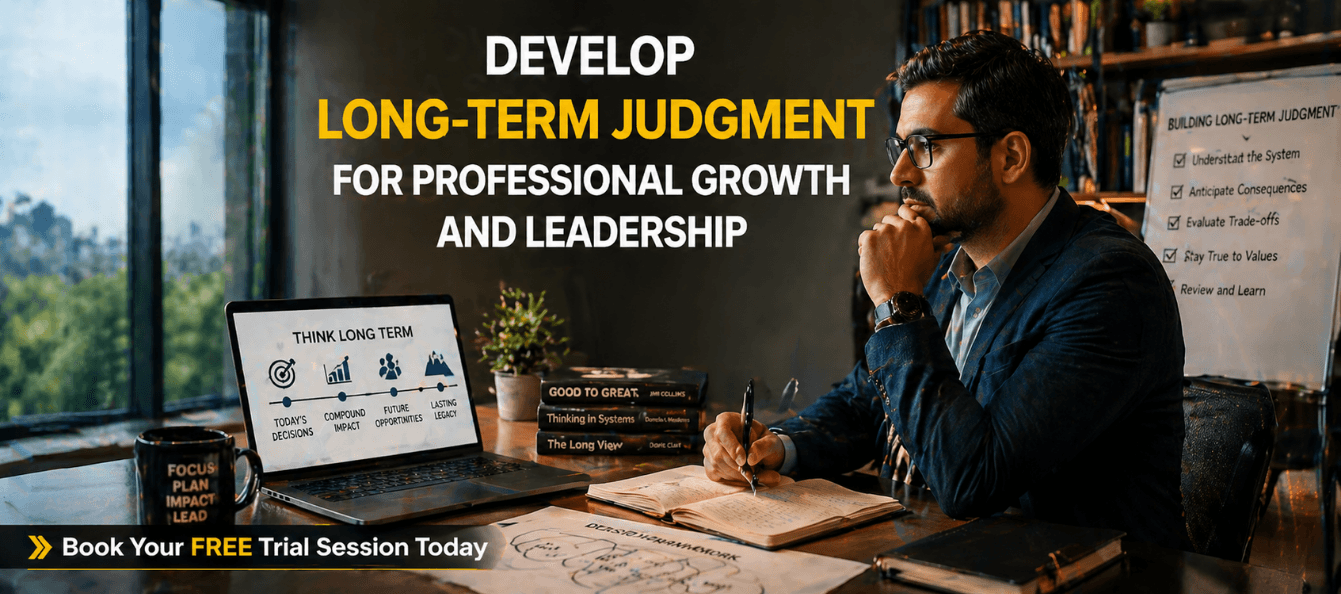
How to Strengthen Long-Term Judgment for Career Advancement: A Critical Skill for Professional Growth
In the fast-paced world of professional growth, one skill often remains overlooked: judgment. While technical expertise can get you hired and communication skills can help you get promoted, judgment is the real differentiator. It's the ability to make decisions that hold up over time, weigh incomplete information, and anticipate long-term consequences. This skill doesn’t come naturally for most professionals—it’s developed through consistent effort and the right frameworks. The good news? It can be learned and systematically strengthened.
Developing Long-Term Judgment as a Core Professional Skill is the guide you need to accelerate this learning process. With actionable frameworks, structured exercises, and expert advice, this resource equips you with the tools to refine your judgment and make better decisions throughout your career.
Download these resources and apply them alongside your daily work for improved clarity, productivity, and professional growth. You can also book a free trial to gain expert guidance and enhance your communication, problem-solving, and decision-making skills. The materials are designed in a clear, structured format to help professionals learn efficiently and implement insights with confidence.
Who Is This Blog For?
- Early–mid career professionals looking to improve their decision-making
- Career changers seeking to make more confident and strategic moves
- Managers and consultants navigating high-stakes decisions
- Professionals aiming to build judgment as a career-defining skill
- Anyone who wants to transition from reactive decisions to strategic thinking
Why This Topic Matters Today?
In today's competitive environment, judgment plays a key role in distinguishing successful professionals. It's not just about making good decisions today but making decisions that continue to add value over the long term. Many professionals get stuck at the tactical level—optimizing for short-term outcomes instead of thinking about long-term growth. This shift from short-term to long-term thinking is essential for building a career that compounds positively over time. According to the resource, professionals who develop strong judgment are able to navigate uncertainty, handle high-stakes situations, and build a career narrative that stands out to senior leaders.
Core Concept or Framework Explained
At the heart of Developing Long-Term Judgment is the understanding that judgment is not just an innate ability—it’s a trainable skill. The resource breaks judgment down into four distinct dimensions:
- Pattern Recognition: The ability to see underlying patterns in situations. Professionals with strong pattern recognition rarely get caught off guard because they understand how past situations played out and use this knowledge to anticipate future challenges.
- Consequence Mapping: This is the ability to foresee second- and third-order consequences. Professionals who master consequence mapping don't just ask "What happens next?" but also "What happens after that?" and "How will this affect my options in the future?"
- Stakeholder Empathy: Good judgment requires understanding the needs, fears, and incentives of others. By building genuine stakeholder empathy, professionals can make more informed decisions that take into account the human landscape they are navigating.
- Principled Consistency: This is about making decisions that align with your core values, even when short-term costs are high. Professionals who demonstrate principled consistency are respected for their predictability and integrity.
How This Blog and Guidebook Help You?
This blog and the accompanying guidebook provide you with clear, structured tools to improve your judgment systematically. Instead of trial and error or waiting for experience to teach you, the frameworks in this resource allow you to fast-track your development. You'll learn how to apply these frameworks to real-world situations, analyze the consequences of your decisions, and build a strong, principled foundation for long-term growth.
Step-by-Step Breakdown
The resource follows a clear, five-stage roadmap to help you develop your judgment. Each stage builds on the previous one, allowing you to progressively strengthen this skill:
- Stage 1: Awareness
Recognize that judgment is a skill, not a trait. This stage includes conducting a self-assessment and identifying cognitive biases that may be affecting your decisions.
- Stage 2: Data Collection
Build your knowledge base deliberately. Seek diverse perspectives, and start keeping a decision journal to track your reasoning and decisions over time.
- Stage 3: Framework Application
Learn and apply structured decision frameworks such as pre-mortems, second-order thinking, and regret minimization tests before making important decisions.
- Stage 4: Calibration
Regularly review past decisions and compare predictions with actual outcomes. This allows you to refine your mental models and improve future decision-making.
- Stage 5: Integration
At this stage, applying long-term thinking becomes instinctive. You’ll use the frameworks without thinking about them, and start mentoring others through high-stakes decisions.
Common Mistakes or Pitfalls to Avoid
Many professionals make the mistake of relying on short-term thinking when faced with difficult decisions. This often leads to reactive, suboptimal choices. Key mistakes to avoid include:
- Overvaluing short-term comfort: Professionals often choose easier, short-term options instead of investing in more difficult, long-term decisions that have greater rewards.
- Ignoring second-order consequences: Not considering the long-term effects of decisions can result in missed opportunities or unforeseen challenges.
- Failure to seek diverse perspectives: Without considering different viewpoints, professionals can make decisions that lack depth or fail to anticipate challenges.
How Should You Use This Guidebook Effectively?
To get the most out of this resource, it’s best to follow a structured approach. Start by skimming the guide to get an overview of the concepts. Then, dive deeper into each framework, working through the exercises and reflecting on your past decisions. The decision journal is a crucial tool, as it helps you track your progress over time. Revisit the guide whenever you’re facing a high-stakes decision to ensure you’re applying the frameworks effectively.
Key Takeaways
- Judgment is a learnable skill that can be developed systematically
- The four dimensions of judgment—pattern recognition, consequence mapping, stakeholder empathy, and principled consistency—must be strengthened together
- Building long-term judgment requires deliberate practice and self-reflection
- Regular calibration and feedback loops are essential for continuous improvement
- Start applying these frameworks now to accelerate your career growth
Your Next Step: Accelerate Your Career with PlanetSpark
Creating an impact-driven resume is not just about landing your next job—it’s about owning your professional story and presenting it with clarity, confidence, and credibility. When your resume clearly communicates value, results, and impact, opportunities follow naturally.
At PlanetSpark, we are committed to empowering working professionals with practical, outcome-focused resources that drive real career growth. From resume building and workplace communication to leadership presence and professional writing, our programs are designed to help you succeed in today’s fast-evolving job market.
Visit https://www.planetspark.in/resources to explore:
- Career and resume-building guides
- Workplace communication and professional writing resources
- Skill-development tools curated for working professionals
Want a deeper, hands-on experience?
You can also book a free trial session to learn more about PlanetSpark’s Working Professional Courses, designed to accelerate your career through personalised coaching, real-world practice, and expert guidance.
Your career deserves more than generic advice.
It deserves clarity, confidence, and measurable impact.
Personalized Communication Roadmaps
Record a video to get a AI generated personalized communication reports