
Diagnosing and Overcoming System Overload in Your Daily Life

Diagnosing System Overload: A Practical Guide to Streamlining Your Life
In today’s fast-paced world, it’s easy to feel overwhelmed by the constant demands on our time and energy. We live and work within systems — from habits and routines to relationships and tools. When these systems become overloaded, they create invisible friction that drains our energy, focus, and clarity. Yet, system overload is often misidentified as mere busyness or stress, when in fact, it's a deeper issue that needs a strategic solution.
This blog will help you pinpoint the overload in your personal and professional systems, offering you the tools and frameworks to diagnose, reduce, and ultimately transform your work-life balance.
Download these resources and apply them alongside your daily work for improved clarity, productivity, and professional growth. You can also book a free trial to gain expert guidance and enhance your communication, problem-solving, and decision-making skills. The materials are designed in a clear, structured format to help professionals learn efficiently and implement insights with confidence.
Who Is This Blog For?
This blog is for individuals who find themselves constantly battling a sense of overload but are unsure of where to start in fixing it. If you’re feeling stretched thin, this resource will help you identify the root causes and take action.
Career switchers aiming to align their systems with new professional goals
Consultants managing multiple clients and projects at once
Managers responsible for teams and tasks across diverse areas
Early to mid-career professionals (0–15 years of experience) navigating increased responsibilities
Anyone looking to build more sustainable work habits and eliminate unnecessary complexity
Why This Topic Matters Today?
Professionals today are experiencing higher levels of complexity and overload than ever before. Modern systems — from communication channels to work processes — are becoming increasingly complicated, leading to cognitive, emotional, and time-related strain.
The problem? Many professionals don’t recognize the underlying issue — they simply feel "busy," leading to an endless cycle of reacting rather than proactively managing their time and energy. This constant overload can result in burnout, decreased productivity, and lost opportunities.
Understanding and diagnosing system overload is a crucial first step in restoring balance and effectiveness in your professional life. By implementing the insights from this guide, you can reduce complexity, enhance your decision-making ability, and ultimately regain control over your time and well-being.
Core Concept or Framework Explained
System overload isn’t just about working long hours — it’s about the architecture of your daily life. The key is understanding that system overload is not a personal failure but an architectural problem. The overloaded systems within our daily lives require a structural solution.
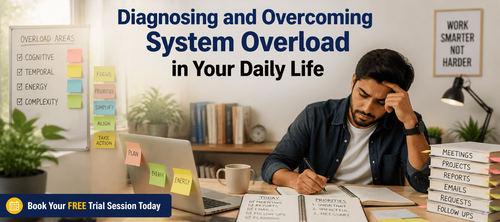
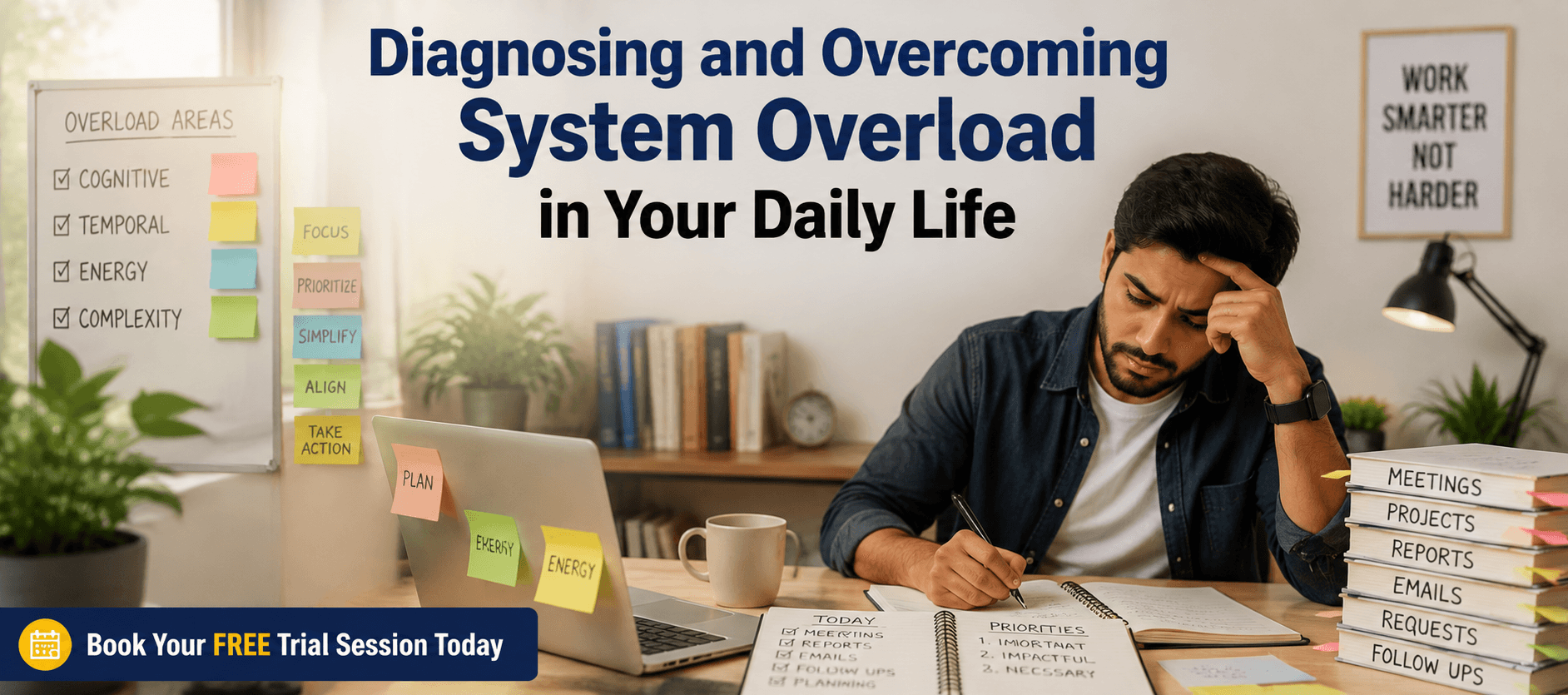
Here are the four key overload categories to be aware of:
Cognitive Overload: This occurs when your mind is overwhelmed with too many tasks, decisions, and unresolved questions. The result? Forgetfulness, mental fog, and difficulty concentrating.
Temporal Overload: When your calendar is filled beyond capacity, leaving no time for strategic thinking or rest. It’s not just about having a busy schedule but about spending time on the wrong types of activities.
Energy Overload: When your physical, emotional, or motivational energy is depleted, leaving you constantly feeling drained. Recovery becomes difficult, and even enjoyable tasks start to feel like burdens.
Complexity Overload: This happens when you’re managing too many interdependent tasks, tools, or stakeholders. This leads to systemic fragility, where you can no longer hold everything in your mind clearly.
By diagnosing where the overload is coming from, you can better address the underlying issues and begin to design a system that supports your goals and well-being.
How This Blog and Guidebook Help You?
This guide is designed to help you assess your systems and make intentional decisions to eliminate unnecessary complexity. The diagnostic tools, reflection prompts, and worksheets will guide you in identifying the most pressing sources of overload.
By using these tools, you’ll be able to:
Diagnose overload and identify which areas need immediate attention
Eliminate unnecessary complexity by taking a structured approach to simplify systems
Re-align your tasks with your energy and cognitive capacity for maximum efficiency
Create space for strategic work, while reducing busywork and time-wasters
The result is improved clarity, productivity, and ultimately, career growth.
Step-by-Step Breakdown
Step 1: Understand System Overload
System overload occurs when the demands placed on a system exceed its capacity to process them effectively. This section will help you understand the different types of overload (cognitive, temporal, energy, and complexity) and how they affect your work and life.
Step 2: Take the Overload Diagnostic
Rate yourself on various dimensions of overload (task volume, decision fatigue, context switching, communication load, etc.) to pinpoint where your system is under the most strain. The goal is to create a clear picture of where the biggest challenges lie.
Step 3: Complete the Complexity Audit
Inventory your current tasks, tools, relationships, and commitments. This audit will help you visualize the complexity within your system, enabling you to identify areas for simplification.
Step 4: Identify Your Overload Quadrant
Use the framework of four quadrants (external-acute, external-chronic, internal-acute, and internal-chronic) to determine the root cause of your overload. By identifying which quadrant applies to you, you can choose the most effective solutions.
Step 5: Use the Energy Mapping Exercise
Track your energy levels throughout the day and match your tasks to the times when you have the most cognitive capacity. This will help you schedule your most demanding work during your peak energy windows and reserve low-energy times for routine tasks.
Step 6: Reflection Prompts
Deepen your understanding of your system’s overload by reflecting on key questions regarding complexity, overcommitment, recovery, and capacity. These prompts will help you gain insights into the root causes of your challenges.
Common Mistakes or Pitfalls to Avoid
While diagnosing overload, it’s easy to make common mistakes that may delay progress. Be aware of these pitfalls:
Treating symptoms, not systems: Don’t just react to stress — address the underlying system failure.
Adding solutions instead of removing causes: Don’t add more tools or processes — retire unnecessary ones.
Confusing urgency with importance: Triage your tasks and focus on what truly matters.
Optimizing alone: Don’t try to fix overload on your own. Have a conversation with your team or manager to address organizational factors.
Waiting for "calmer" times: Act now, even if imperfectly, to prevent further overload.
How Should You Use This Guidebook Effectively?
To make the most of this guidebook, follow these steps:
Identify your dominant overload quadrant and complete your complexity inventory.
Implement at least one change this week to simplify your system.
Protect your peak energy windows and create space for deep work.
Set aside 60–90 minutes for the deeper diagnostic work, and keep a journal or notes app to track your reflections.
Key Takeaways:
System overload is an architectural problem, not a personal failure.
Regular complexity audits are essential for maintaining a healthy work system.
Align your tasks with your energy levels to work more efficiently.
Focus on reducing unnecessary complexity to free up time and cognitive resources.
Implement actionable steps immediately to redesign your system for greater clarity and effectiveness.
Your Next Step: Accelerate Your Career with PlanetSpark
Creating an impact-driven resume is not just about landing your next job—it’s about owning your professional story and presenting it with clarity, confidence, and credibility. When your resume clearly communicates value, results, and impact, opportunities follow naturally.
At PlanetSpark, we are committed to empowering working professionals with practical, outcome-focused resources that drive real career growth. From resume building and workplace communication to leadership presence and professional writing, our programs are designed to help you succeed in today’s fast-evolving job market.
Visit https://www.planetspark.in/resources
to explore:
Career and resume-building guides
Workplace communication and professional writing resources
Skill-development tools curated for working professionals
Want a deeper, hands-on experience?
You can also book a free trial session to learn more about PlanetSpark’s Working Professional Courses, designed to accelerate your career through personalised coaching, real-world practice, and expert guidance.
Your career deserves more than generic advice.
It deserves clarity, confidence, and measurable impact.
Start building that advantage today—with PlanetSpark.
Personalized Communication Roadmaps
Record a video to get a AI generated personalized communication reports