
Effective Communication Tactics for Influencing Without Causing Resistance
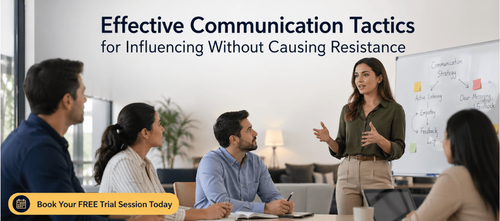

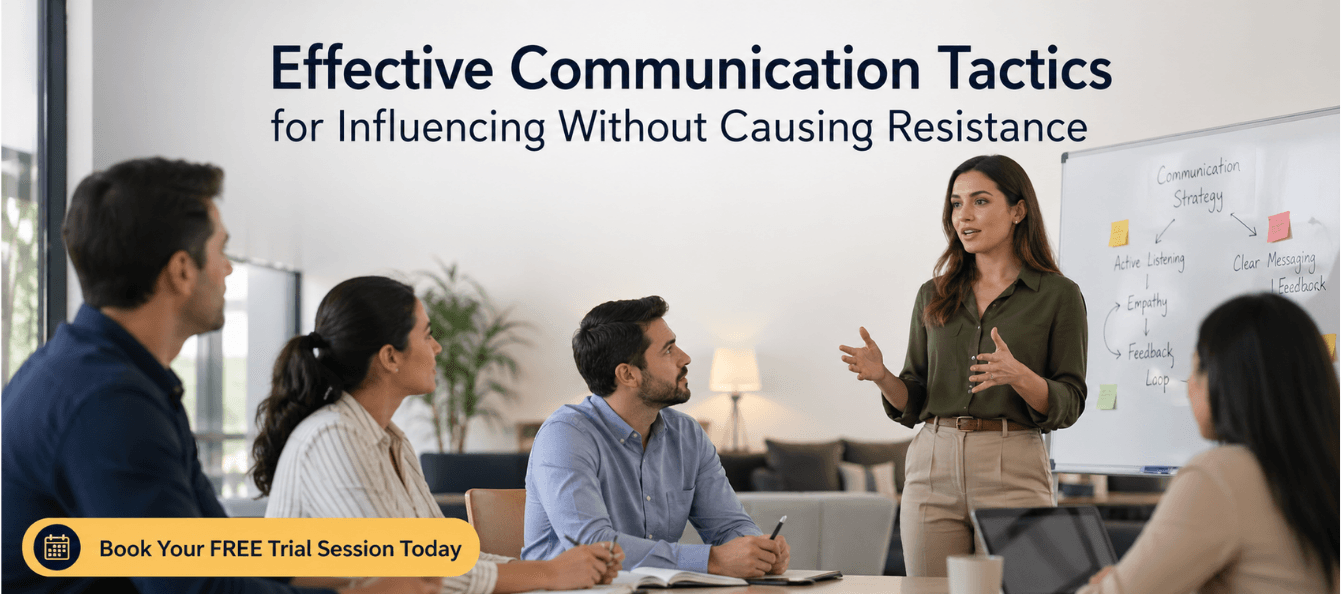
Winning Support at Work Without Provoking Pushback for Stronger Leadership and Career Growth
Every professional has experienced it: a strong idea gets ignored, feedback sparks resistance, or a conversation meant to create progress somehow creates pushback instead. Often, the issue is not the strength of the idea but the way influence is being exercised. In today’s workplace, technical expertise alone rarely drives outcomes. The professionals who create momentum are the ones who know how to influence without activating defensiveness.
This challenge is growing more relevant in modern workplaces shaped by hybrid collaboration, matrix reporting, stakeholder complexity, and constant change. Managers need buy-in without authority. Consultants need to shift thinking without friction. Individual contributors need to advocate for ideas without sounding combative. That is where the SAFE Influence Framework from this guidebook offers a practical advantage. fileciteturn0file0
This guide explores how to build trust, navigate pushback, reduce resistance, and create genuine alignment through ethical influence. Rather than relying on pressure, persuasion battles, or over-explaining, it offers a practical framework to help professionals lead conversations in a way people want to engage with.
Download these resources and apply them alongside your daily work for improved clarity, productivity, and professional growth. You can also book a free trial to gain expert guidance and enhance your communication, problem-solving, and decision-making skills. The materials are designed in a clear, structured format to help professionals learn efficiently and implement insights with confidence.
Who Is This Blog For?
This blog is especially valuable for:
- Managers who need to lead change without resistance
- Consultants influencing clients and stakeholders
- Career changers building credibility in new environments
- Team leads navigating difficult conversations and buy-in challenges
- Working professionals seeking stronger workplace communication and influence skills
- Professionals in client-facing, cross-functional, or politically complex roles
Why This Topic Matters Today?
Influence has become a career accelerator.
In many organizations, success depends less on authority and more on persuasion, collaboration, and stakeholder alignment. Yet many professionals were taught to present harder, argue better, or escalate faster. Ironically, those approaches often trigger the very resistance they are trying to overcome.
The guidebook highlights a critical truth: people rarely resist ideas alone. They resist perceived threats.
That threat may be to:
- Status
- Autonomy
- Certainty
- Fairness
- Identity
- Professional competence
Once that defensive response activates, logic often loses power.
That matters because defensiveness can quietly derail:
- Change initiatives
- Feedback conversations
- Project approvals
- Client recommendations
- Cross-functional collaboration
- Leadership credibility
Professionals who understand this psychological dynamic gain a major strategic edge.
Core Concept or Framework Explained
At the center of the guidebook is the SAFE Influence Framework, a practical model for influencing without creating resistance. fileciteturn0file0
SAFE stands for:
S — See Their World
Influence starts with understanding before advocacy.
Instead of entering conversations focused only on your objective, begin by understanding:
- Their pressures
- Their priorities
- Their fears
- Their incentives
- Their history with the issue
This reduces perceived threat and increases psychological safety.
A useful mindset shift:
Stop asking,
“How do I convince them?”
Start asking,
“What would make saying yes feel safe for them?”
A — Align on Common Ground
Alignment creates collaboration before difference enters the conversation.
Before proposing your idea, name what both parties care about.
Examples:
- Shared performance goals
- Mutual concern about outcomes
- Common commitment to project success
- Joint focus on reducing risk
This moves the conversation from opposition to partnership.
F — Frame for Them, Not You
This is the highest-leverage move in the framework.
Many professionals present ideas from their own logic.
Influential professionals translate ideas into the listener’s priorities.
Instead of:
“Here’s why this makes sense.”
Use:
“Here’s how this helps you solve a problem you already care about.”
That changes everything.
E — Engage Their Agency
People defend themselves when they feel controlled.
People collaborate when they feel choice.
Preserving agency means:
- Inviting input
- Offering options
- Asking rather than imposing
- Making decisions feel co-created
Influence becomes far stronger when people feel ownership.
How This Blog and Guidebook Help You?
This framework helps professionals:
- Gain buy-in without appearing pushy
- Navigate difficult conversations with less conflict
- Reduce resistance in meetings and stakeholder discussions
- Position ideas in ways others can support
- Strengthen leadership presence through trust-based influence
- Improve upward influence with senior stakeholders
Real-world impact includes:
- Better decisions move faster
- Stakeholder conversations become less political
- Pushback becomes productive dialogue
- Relationships strengthen rather than strain
- Professional credibility compounds over time
That is not soft communication.
That is strategic communication.
Step-by-Step Breakdown
Step 1: See Their World First
Most professionals skip this and pay for it later.
Before any high-stakes conversation, investigate:
- What pressures are they under?
- What does success look like for them?
- What are they protecting?
- What failed before?
- What might they fear losing?
The guidebook frames this as building an internal model of the other person’s world.
That model allows your message to land.
Mini practice:
Before your next difficult conversation, answer those five questions first.
Watch how different your approach becomes.
Step 2: Align on Common Ground
Use the alignment opening formula from the guide:
- Name shared goal
- Acknowledge their concern
- Explore your idea collaboratively
This transforms:
Me vs You
into
Us vs The Problem
Example:
Instead of leading with recommendations, lead with:
“We both care about improving this outcome. I know there’s concern around disruption. I want to explore something that may help with both.”
That framing lowers resistance almost immediately.
Step 3: Frame for Them, Not You
Use the Frame Flip.
Take your message.
Rewrite it in their priorities.
Ask:
- What problem does this solve for them?
- What metric matters to them?
- What language would they use?
The guidebook’s resistant manager example shows how changing the frame—not the idea—changed the outcome.
That is a powerful lesson.
Often the idea isn’t weak.
The packaging is.
Step 4: Engage Their Agency
Preserve choice.
Use language like:
- What would make this work for you?
- Which option feels stronger from your perspective?
- What would you need to feel comfortable moving ahead?
Avoid agency-killing phrases like:
- This is the only logical option
- You need to do this
- Trust me, I’ve thought this through
That language invites resistance.
Choice invites collaboration.
Step 5: Use Pre-Conversation Planning
One standout tool in the guidebook is the planning template.
Before high-stakes conversations, prepare:
- Their world
- Common ground
- Your reframed message
- Their decision space
- Questions for pushback moments
Five minutes of planning often saves weeks of friction.
Step 6: Read Defensive Signals Early
The guidebook adds an advanced layer many influence models miss.
Spot early signals:
- Arms crossed
- Sudden disengagement
- Technical nitpicking
- Clipped responses
- “We tried that already” reactions
These are not annoyances.
They are data.
Course-correct early.
Don’t push harder.
Get curious.
Step 7: Navigate Pushback Without Escalating
Use the four-part response model:
- Pause
- Acknowledge
- Ask
- Adjust
This is gold.
Most people counter-argue.
Skilled influencers stay curious.
Pushback is often hidden information.
Treat it that way.
Common Mistakes or Pitfalls to Avoid
The guidebook highlights several patterns that sabotage influence.
Leading with your conclusion too early
Why it fails:
Feels like a demand.
Better alternative:
Lead with context and questions.
Overloading people with data
Why it fails:
Turns dialogue into debate.
Better alternative:
Use one compelling insight, not a data dump.
Treating resistance as wrong
Why it fails:
People defend harder.
Better alternative:
Treat resistance as information.
Escalating under pressure
Why it fails:
Activates more threat.
Better alternative:
Lower intensity when tension rises.
Framing everything around “I”
Why it fails:
Sounds self-oriented.
Better alternative:
Use “we” and “you” framing.
Seeking agreement too quickly
Why it fails:
Creates compliance, not commitment.
Better alternative:
Prioritize understanding before closure.
How Should You Use This Guidebook Effectively?
Use it as a practical operating manual, not a one-time read.
Suggested workflow:
Weekly:
- Review one SAFE principle each week
- Apply it intentionally in real conversations
Before high-stakes meetings:
- Use the pre-conversation planning template
- Review the SAFE quick reference card
After difficult conversations:
- Use the reflection worksheet
- Identify where defensiveness showed up
- Adjust for next time
Follow the 30-day practice model from the guide:
Week 1
Build awareness of which SAFE principle you tend to skip.
Week 2
Practice S and A consistently.
Week 3
Practice F and E deliberately.
Week 4
Integrate the full framework in important relationships.
Time investment:
- 5–10 minutes for conversation planning
- 10 minutes daily for deliberate practice
- 25–30 minutes for a full guidebook read-through
That is a tiny investment for a career-defining skill.
Key Takeaways
- Influence fails less from weak ideas and more from triggered defensiveness
- Defensiveness is often a predictable threat response, not irrational resistance
- The SAFE Framework gives professionals a practical model for trust-based influence
- Seeing their world first dramatically improves receptivity
- Common ground reduces friction before disagreement appears
- Framing ideas around their goals increases buy-in
- Preserving agency makes agreement feel voluntary, not pressured
- Pushback should be treated as information, not opposition
- Small planning habits before conversations can create outsized professional results
- Trust-based influence compounds into stronger relationships, faster decisions, and greater career momentum
Your Next Step: Accelerate Your Career with PlanetSpark
Creating an impact-driven resume is not just about landing your next job—it’s about owning your professional story and presenting it with clarity, confidence, and credibility. When your resume clearly communicates value, results, and impact, opportunities follow naturally.
At PlanetSpark, we are committed to empowering working professionals with practical, outcome-focused resources that drive real career growth. From resume building and workplace communication to leadership presence and professional writing, our programs are designed to help you succeed in today’s fast-evolving job market.
Visit https://www.planetspark.in/resources to explore:
- Career and resume-building guides
- Workplace communication and professional writing resources
- Skill-development tools curated for working professionals
Want a deeper, hands-on experience?
You can also book a free trial session to learn more about PlanetSpark’s Working Professional Courses, designed to accelerate your career through personalised coaching, real-world practice, and expert guidance.
Your career deserves more than generic advice.
It deserves clarity, confidence, and measurable impact.
Start building that advantage today—with PlanetSpark.
Personalized Communication Roadmaps
Record a video to get a AI generated personalized communication reports