
Everything You Need to Know About Creating a Strong Team Culture
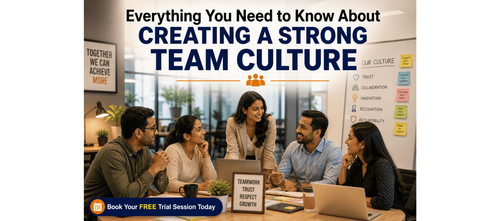

Building High-Impact Team Culture: A Practical Guide to Building High-Performing, Engaged Teams at Work
Most teams don’t struggle because of a lack of talent—they struggle because of invisible cultural gaps. Misaligned expectations, unclear norms, lack of trust, and inconsistent communication quietly erode performance over time. You may have a team that delivers results occasionally, but underneath, there’s disengagement, hesitation to speak up, or a lack of shared ownership.
The truth is, culture is not something that “just happens.” It is intentionally built through everyday actions, leadership behavior, and structured practices. Yet, most professionals are never formally trained in how to build or sustain a strong team culture.
That’s exactly where the Team Culture Building Checklist becomes valuable. It provides a clear, actionable roadmap to help you define, build, and sustain a culture where people feel motivated, aligned, and accountable—whether you’re leading a new team, managing change, or improving an existing setup.
Download these resources and apply them alongside your daily work for improved clarity, productivity, and professional growth. You can also book a free trial to gain expert guidance and enhance your communication, problem-solving, and decision-making skills. The materials are designed in a clear, structured format to help professionals learn efficiently and implement insights with confidence.
Who Is This Blog For?
- Managers and team leaders responsible for performance and team dynamics
- Early to mid-career professionals stepping into leadership roles
- Consultants working on organizational effectiveness and team transformation
- Professionals managing remote or hybrid teams
- Career switchers transitioning into people management roles
- Anyone dealing with disengagement, low trust, or unclear team expectations
Why This Topic Matters Today?
In today’s fast-evolving workplace, culture has become a defining factor in team success. High-performing teams are not just skilled—they are aligned, communicative, and psychologically safe.
However, many teams still operate without clear cultural foundations. This leads to common challenges such as:
- High employee turnover and disengagement
- Toxic or passive team dynamics
- Lack of clarity around expectations and behaviors
- Communication breakdowns in remote or hybrid setups
- Post-merger or cross-functional misalignment
Research highlighted in the guide emphasizes that teams with strong, intentional cultures consistently outperform others in productivity, innovation, and retention. Despite this, most managers are expected to “figure it out” without structured guidance.
This makes culture-building not just important—but essential for long-term professional and organizational success.
Core Concept
At its core, the Team Culture Building Checklist treats culture as a leadership practice rather than an abstract idea. It introduces a structured approach built on five foundational pillars:
Foundation and Clarity
Culture begins with clearly defined values, norms, and expectations. High-performing teams explicitly define what they stand for and what good behavior looks like.
Psychological Safety
Teams perform best when individuals feel safe to speak up, share ideas, and admit mistakes without fear of judgment or punishment.
Communication Rituals
Culture is shaped through consistent daily interactions. Structured rituals like check-ins, 1:1 conversations, and retrospectives create alignment and trust.
Inclusion and Belonging
A strong culture ensures that every team member feels heard, respected, and able to contribute fully, regardless of background or role.
Feedback Culture
Honest, structured, and timely feedback accelerates growth and builds trust. The guide introduces the SBI framework to make feedback actionable and effective.
These pillars work together to transform culture from something reactive into something intentional and measurable.
How This Blog and Guidebook Help You?
This blog and the accompanying checklist provide a practical system to improve how your team operates on a daily basis.
You will gain:
- Clarity on defining and communicating team values
- Tools to build trust and psychological safety
- Structured communication methods that reduce confusion
- Practical ways to improve inclusion and participation
- A repeatable system for giving and receiving feedback
The real impact goes beyond theory. When applied consistently, these practices lead to stronger collaboration, faster decision-making, improved morale, and better retention.
Step-by-Step Breakdown
Foundation: Define What Your Culture Stands For
Before building culture, you need to define it clearly. Many teams skip this step and assume culture will evolve naturally.
The checklist emphasizes:
- Defining 3–5 core team values that are specific and behavior-based
- Creating a documented team working agreement covering communication, meetings, and decision-making
- Ensuring every team member understands and can articulate the culture vision
- Aligning leadership before communicating expectations
This stage is about clarity. Without it, teams operate on assumptions rather than shared understanding.
Psychological Safety: Build a Speak-Up Culture
Psychological safety is identified as the most critical factor in team performance. It determines whether team members feel comfortable contributing ideas, asking questions, or admitting mistakes.
The checklist provides practical actions such as:
- Publicly sharing your own mistakes as a leader to model openness
- Responding to bad news with curiosity instead of blame
- Creating structured opportunities for everyone to contribute
When safety is present, teams communicate openly. When it is absent, issues remain hidden until they escalate.
Communication Rituals: Create Consistency in Interaction
Culture is shaped through everyday interactions, not occasional events. The guide introduces simple but powerful communication rituals:
- Weekly team check-ins focused on priorities and blockers
- Monthly 1:1 conversations that include cultural discussions
- Recognition practices that reinforce team values
- Retrospectives to reflect and improve continuously
These rituals create predictability, reduce ambiguity, and strengthen team connection.
Inclusion and Belonging: Design for Everyone
Inclusion is treated as a structural design challenge, not just a mindset. The checklist highlights:
- Auditing who speaks in meetings to ensure balanced participation
- Improving onboarding processes to integrate new members effectively
- Making decision-making transparent and visible
- Ensuring celebrations and recognition are inclusive
A truly strong culture works for everyone—not just those already comfortable.
Feedback Culture: Turn Conversations into Growth
Feedback is one of the fastest ways to improve performance, but only when done correctly.
The guide introduces the SBI framework:
- Situation: Define the context clearly
- Behaviour: Describe observable actions
- Impact: Explain the outcome of those actions
In addition, it emphasizes:
- Giving feedback within 48 hours
- Focusing on behavior, not personality
- Encouraging peer-to-peer feedback
- Creating safe channels for honest input
This transforms feedback from a stressful event into a normal, growth-driven practice.
Real-World Application: The 90-Day Culture Reset
The guide includes a practical case study of a manager who transformed her team’s culture in 90 days.
Her approach followed four phases:
- Listening: Conducting 1:1 conversations to understand issues
- Defining: Creating shared values and behaviors with the team
- Ritualizing: Introducing consistent communication practices
- Reviewing: Measuring progress through feedback and surveys
The key insight is that small, consistent actions—when applied deliberately—can create significant cultural change.
Common Mistakes
The checklist highlights several common mistakes that derail culture-building efforts:
- Defining values without linking them to real behaviors
- Imposing culture top-down instead of co-creating it with the team
- Inconsistent leadership behavior that contradicts stated values
- Allowing exceptions for certain individuals, which weakens accountability
- Addressing symptoms instead of root causes
- Treating culture as a one-time initiative instead of an ongoing practice
Avoiding these pitfalls ensures that your efforts lead to sustainable improvements rather than temporary fixes.
How Should You Use This Guidebook Effectively?
To get maximum value from this resource, follow a structured approach:
- Start with a complete read-through to understand the full framework
- Identify your team’s biggest gaps and prioritize one area at a time
- Apply checklist actions immediately rather than postponing implementation
- Involve your team in discussions and decision-making
- Schedule quarterly reviews to track progress and refine your approach
You can also follow the 30-day culture sprint outlined in the guide:
- Week 1: Conduct 1:1 listening sessions
- Week 2: Define values and create a working agreement
- Week 3: Introduce communication rituals
- Week 4: Run a culture pulse survey and refine actions
This phased approach makes culture-building manageable and actionable.
Key Takeaways
- Culture is not accidental—it is built through consistent actions
- Clear values and behavioral expectations form the foundation
- Psychological safety is essential for open communication and performance
- Daily communication rituals shape team dynamics
- Inclusion must be designed intentionally, not assumed
- Structured feedback accelerates individual and team growth
- Small, consistent actions drive long-term cultural change
- Avoid common pitfalls by aligning actions with stated values
- Treat culture as an ongoing practice, not a one-time initiative
Your Next Step: Accelerate Your Career with PlanetSpark
Creating an impact-driven resume is not just about landing your next job—it’s about owning your professional story and presenting it with clarity, confidence, and credibility. When your resume clearly communicates value, results, and impact, opportunities follow naturally.
At PlanetSpark, we are committed to empowering working professionals with practical, outcome-focused resources that drive real career growth. From resume building and workplace communication to leadership presence and professional writing, our programs are designed to help you succeed in today’s fast-evolving job market.
Visit https://www.planetspark.in/resources to explore:
- Career and resume-building guides
- Workplace communication and professional writing resources
- Skill-development tools curated for working professionals
Want a deeper, hands-on experience?
You can also book a free trial session to learn more about PlanetSpark’s Working Professional Courses, designed to accelerate your career through personalised coaching, real-world practice, and expert guidance.
Your career deserves more than generic advice.
It deserves clarity, confidence, and measurable impact.
Building High-Impact Team Culture: A Practical Guide to Building High-Performing, Engaged Teams at Work
Most teams don’t struggle because of a lack of talent—they struggle because of invisible cultural gaps. Misaligned expectations, unclear norms, lack of trust, and inconsistent communication quietly erode performance over time. You may have a team that delivers results occasionally, but underneath, there’s disengagement, hesitation to speak up, or a lack of shared ownership.
The truth is, culture is not something that “just happens.” It is intentionally built through everyday actions, leadership behavior, and structured practices. Yet, most professionals are never formally trained in how to build or sustain a strong team culture.
That’s exactly where the Team Culture Building Checklist becomes valuable. It provides a clear, actionable roadmap to help you define, build, and sustain a culture where people feel motivated, aligned, and accountable—whether you’re leading a new team, managing change, or improving an existing setup.
Download these resources and apply them alongside your daily work for improved clarity, productivity, and professional growth. You can also book a free trial to gain expert guidance and enhance your communication, problem-solving, and decision-making skills. The materials are designed in a clear, structured format to help professionals learn efficiently and implement insights with confidence.
Who Is This Blog For?
- Managers and team leaders responsible for performance and team dynamics
- Early to mid-career professionals stepping into leadership roles
- Consultants working on organizational effectiveness and team transformation
- Professionals managing remote or hybrid teams
- Career switchers transitioning into people management roles
- Anyone dealing with disengagement, low trust, or unclear team expectations
Why This Topic Matters Today?
In today’s fast-evolving workplace, culture has become a defining factor in team success. High-performing teams are not just skilled—they are aligned, communicative, and psychologically safe.
However, many teams still operate without clear cultural foundations. This leads to common challenges such as:
- High employee turnover and disengagement
- Toxic or passive team dynamics
- Lack of clarity around expectations and behaviors
- Communication breakdowns in remote or hybrid setups
- Post-merger or cross-functional misalignment
Research highlighted in the guide emphasizes that teams with strong, intentional cultures consistently outperform others in productivity, innovation, and retention. Despite this, most managers are expected to “figure it out” without structured guidance.
This makes culture-building not just important—but essential for long-term professional and organizational success.
Core Concept
At its core, the Team Culture Building Checklist treats culture as a leadership practice rather than an abstract idea. It introduces a structured approach built on five foundational pillars:
Foundation and Clarity
Culture begins with clearly defined values, norms, and expectations. High-performing teams explicitly define what they stand for and what good behavior looks like.
Psychological Safety
Teams perform best when individuals feel safe to speak up, share ideas, and admit mistakes without fear of judgment or punishment.
Communication Rituals
Culture is shaped through consistent daily interactions. Structured rituals like check-ins, 1:1 conversations, and retrospectives create alignment and trust.
Inclusion and Belonging
A strong culture ensures that every team member feels heard, respected, and able to contribute fully, regardless of background or role.
Feedback Culture
Honest, structured, and timely feedback accelerates growth and builds trust. The guide introduces the SBI framework to make feedback actionable and effective.
These pillars work together to transform culture from something reactive into something intentional and measurable.
How This Blog and Guidebook Help You?
This blog and the accompanying checklist provide a practical system to improve how your team operates on a daily basis.
You will gain:
- Clarity on defining and communicating team values
- Tools to build trust and psychological safety
- Structured communication methods that reduce confusion
- Practical ways to improve inclusion and participation
- A repeatable system for giving and receiving feedback
The real impact goes beyond theory. When applied consistently, these practices lead to stronger collaboration, faster decision-making, improved morale, and better retention.
Step-by-Step Breakdown
Foundation: Define What Your Culture Stands For
Before building culture, you need to define it clearly. Many teams skip this step and assume culture will evolve naturally.
The checklist emphasizes:
- Defining 3–5 core team values that are specific and behavior-based
- Creating a documented team working agreement covering communication, meetings, and decision-making
- Ensuring every team member understands and can articulate the culture vision
- Aligning leadership before communicating expectations
This stage is about clarity. Without it, teams operate on assumptions rather than shared understanding.
Psychological Safety: Build a Speak-Up Culture
Psychological safety is identified as the most critical factor in team performance. It determines whether team members feel comfortable contributing ideas, asking questions, or admitting mistakes.
The checklist provides practical actions such as:
- Publicly sharing your own mistakes as a leader to model openness
- Responding to bad news with curiosity instead of blame
- Creating structured opportunities for everyone to contribute
When safety is present, teams communicate openly. When it is absent, issues remain hidden until they escalate.
Communication Rituals: Create Consistency in Interaction
Culture is shaped through everyday interactions, not occasional events. The guide introduces simple but powerful communication rituals:
- Weekly team check-ins focused on priorities and blockers
- Monthly 1:1 conversations that include cultural discussions
- Recognition practices that reinforce team values
- Retrospectives to reflect and improve continuously
These rituals create predictability, reduce ambiguity, and strengthen team connection.
Inclusion and Belonging: Design for Everyone
Inclusion is treated as a structural design challenge, not just a mindset. The checklist highlights:
- Auditing who speaks in meetings to ensure balanced participation
- Improving onboarding processes to integrate new members effectively
- Making decision-making transparent and visible
- Ensuring celebrations and recognition are inclusive
A truly strong culture works for everyone—not just those already comfortable.
Feedback Culture: Turn Conversations into Growth
Feedback is one of the fastest ways to improve performance, but only when done correctly.
The guide introduces the SBI framework:
- Situation: Define the context clearly
- Behaviour: Describe observable actions
- Impact: Explain the outcome of those actions
In addition, it emphasizes:
- Giving feedback within 48 hours
- Focusing on behavior, not personality
- Encouraging peer-to-peer feedback
- Creating safe channels for honest input
This transforms feedback from a stressful event into a normal, growth-driven practice.
Real-World Application: The 90-Day Culture Reset
The guide includes a practical case study of a manager who transformed her team’s culture in 90 days.
Her approach followed four phases:
- Listening: Conducting 1:1 conversations to understand issues
- Defining: Creating shared values and behaviors with the team
- Ritualizing: Introducing consistent communication practices
- Reviewing: Measuring progress through feedback and surveys
The key insight is that small, consistent actions—when applied deliberately—can create significant cultural change.
Common Mistakes
The checklist highlights several common mistakes that derail culture-building efforts:
- Defining values without linking them to real behaviors
- Imposing culture top-down instead of co-creating it with the team
- Inconsistent leadership behavior that contradicts stated values
- Allowing exceptions for certain individuals, which weakens accountability
- Addressing symptoms instead of root causes
- Treating culture as a one-time initiative instead of an ongoing practice
Avoiding these pitfalls ensures that your efforts lead to sustainable improvements rather than temporary fixes.
How Should You Use This Guidebook Effectively?
To get maximum value from this resource, follow a structured approach:
- Start with a complete read-through to understand the full framework
- Identify your team’s biggest gaps and prioritize one area at a time
- Apply checklist actions immediately rather than postponing implementation
- Involve your team in discussions and decision-making
- Schedule quarterly reviews to track progress and refine your approach
You can also follow the 30-day culture sprint outlined in the guide:
- Week 1: Conduct 1:1 listening sessions
- Week 2: Define values and create a working agreement
- Week 3: Introduce communication rituals
- Week 4: Run a culture pulse survey and refine actions
This phased approach makes culture-building manageable and actionable.
Key Takeaways
- Culture is not accidental—it is built through consistent actions
- Clear values and behavioral expectations form the foundation
- Psychological safety is essential for open communication and performance
- Daily communication rituals shape team dynamics
- Inclusion must be designed intentionally, not assumed
- Structured feedback accelerates individual and team growth
- Small, consistent actions drive long-term cultural change
- Avoid common pitfalls by aligning actions with stated values
- Treat culture as an ongoing practice, not a one-time initiative
Your Next Step: Accelerate Your Career with PlanetSpark
Creating an impact-driven resume is not just about landing your next job—it’s about owning your professional story and presenting it with clarity, confidence, and credibility. When your resume clearly communicates value, results, and impact, opportunities follow naturally.
At PlanetSpark, we are committed to empowering working professionals with practical, outcome-focused resources that drive real career growth. From resume building and workplace communication to leadership presence and professional writing, our programs are designed to help you succeed in today’s fast-evolving job market.
Visit https://www.planetspark.in/resources to explore:
- Career and resume-building guides
- Workplace communication and professional writing resources
- Skill-development tools curated for working professionals
Want a deeper, hands-on experience?
You can also book a free trial session to learn more about PlanetSpark’s Working Professional Courses, designed to accelerate your career through personalised coaching, real-world practice, and expert guidance.
Your career deserves more than generic advice.
It deserves clarity, confidence, and measurable impact.
Start building that advantage today—with PlanetSpark.
Personalized Communication Roadmaps
Record a video to get a AI generated personalized communication reports