
Evolving Toward Strategic Influence Through Communication
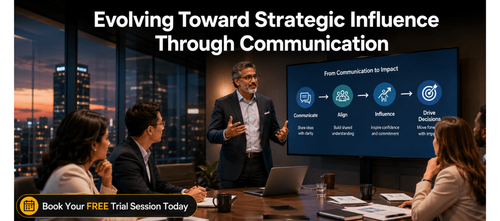

Functional Communication to Strategic Influence
In the professional world, communication is more than just conveying information. It is the tool that drives alignment, decisions, and impact. While functional communication is about sharing facts and updates, strategic communication is about influencing decisions, guiding actions, and shaping outcomes. At a certain point in your career, the ability to communicate clearly is no longer enough; you need to shift from being a functional communicator to a strategic influencer.
This blog provides a practical roadmap to help you make that transition, offering a step-by-step framework to move beyond information-sharing and start driving decisions, alignment, and impact.
Download these resources and apply them alongside your daily work for improved clarity, productivity, and professional growth. You can also book a free trial to gain expert guidance and enhance your communication, problem-solving, and decision-making skills. The materials are designed in a clear, structured format to help professionals learn efficiently and implement insights with confidence.
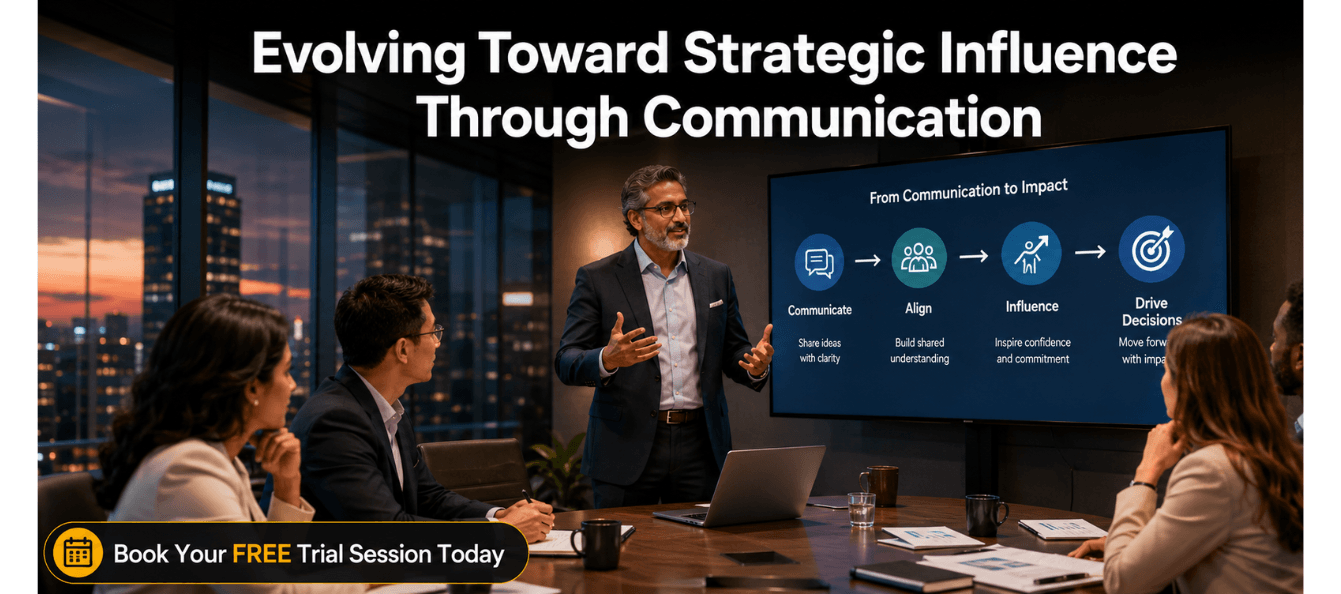
Who Is This Blog For?
- Professionals with 0–15 years of experience who communicate well but want to communicate strategically
- Managers, consultants, and career switchers looking to shift from functional communication to strategic influence
- Professionals ready to move beyond simple reporting and start shaping outcomes
Why This Topic Matters Today?
In a world that increasingly values proactive and strategic communication, professionals who only report facts and updates will struggle to stand out. Stakeholders want more than just information—they seek direction, recommendations, and a clear path forward. As your responsibilities grow, so does the need for your communication to evolve. This blog equips you with the tools to communicate in a way that drives alignment, fosters collaboration, and influences key decisions.
Core Concept or Framework Explained
The transition from functional communication to strategic influence involves five key stages:
Understand where you currently stand and how your communication style needs to evolve.
Shift your focus from data to decisions, helping you communicate in a way that drives action.
Recognize that different audiences require different approaches, and learn how to tailor your message accordingly.
Structure your communication to guide your audience from attention to action, ensuring your messages are impactful and actionable.
Build credibility over time by consistently showing up with clarity, purpose, and outcomes-focused communication.
This roadmap is structured to help you transition from a functional communicator to a strategic influencer in stages, each building on the last.
How This Blog and Guidebook Help You?
This blog and its accompanying guide provide a framework for mapping your current communication style and evolving it into one that influences outcomes. By following this step-by-step roadmap, you’ll learn:
- How to assess your current communication patterns and identify gaps
- How to reframe your messages to shift from functional reporting to strategic influence
- How to develop audience intelligence and tailor your messages for maximum impact
- How to structure your communication for clarity, purpose, and action
- How to build sustained influence over time by consistently communicating with clarity and strategic intent
Step-by-Step Breakdown
Step 1: Awareness – Understand Where You Are Starting From
Before you can shift your communication style, you need an honest picture of where you currently sit on the spectrum from functional to strategic. The first step is to evaluate your communication habits by asking:
- Do you lead with data or decisions?
- Do you structure updates chronologically or by priority?
- Do you proactively offer recommendations, or do you wait to be asked?
Functional Communicator — Leads with data and concludes with insights. Focuses on what happened rather than what it means.
Strategic Influencer — Leads with recommendations and decisions. Frames information in terms of outcomes and actions.
Reflecting on your last three communications (emails, meetings, presentations) will give you a clearer understanding of your starting point. This audit will serve as your baseline for growth.
Step 2: Reframing – Shift from Data to Decisions
The most powerful shift you can make in your communication is leading with decisions, not data. Strategic communicators understand that their audience—whether a manager, a client, or a leadership team—is not primarily interested in what you found. They care about what it means and what should happen next. This is the essence of reframing.
Functional Frame Example:
"Here is the data from Q3. Sales were down 12%. The main drivers were X, Y, and Z. We also saw a drop in retention."
Strategic Frame Example:
"We need to address a retention risk before Q4. Sales dropped 12%, driven primarily by churn in our mid-market segment—here’s what I recommend."
By structuring your communication with the recommendation first, the evidence second, and the action clearly outlined, you respect the audience’s time and show that you’ve already done the thinking for them.
Step 3: Audience Intelligence – Read the Room Strategically
Strategic influence is never one-size-fits-all. Different audiences have different priorities, levels of context, and definitions of a good outcome. Strategic communicators are able to map these differences before communicating.
Here’s how to tailor your messages to different audiences:
Before your next meeting, use an Audience Mapping Worksheet to answer:
1. What does this person care most about right now?
2. What do they already know?
3. What decision or action do I need from them?
4. What objection might they have, and how will I address it?
Step 4: Influence Architecture – Structure Messages to Move People to Act
Once you understand your audience and have reframed your message, the next step is to structure your communication so it leads the audience from attention to action. This is where the **STAR-D Model** comes in:
- Situation: Brief context
- Tension: The problem or opportunity
- Analysis: Your key insight
- Recommendation: What you propose
- Decision: The specific ask
By structuring your communication in this way, you can make your messages clearer, more impactful, and action-oriented. Be sure to spend the most time and energy on the recommendation and decision—this is where value is created. Always end with a specific, actionable request.
Step 5: Sustained Influence – Build Credibility Over Time
Strategic influence is not about one-off performances; it’s about consistent behavior that builds your reputation. To maintain sustained influence, you need to:
1. Show up consistently prepared, clear, and focused on outcomes.
2. Seek and use feedback: After key communications, ask colleagues for feedback on clarity and confidence.
3. Connect across levels: Build relationships with senior leaders, peers, and junior colleagues. The broader your network of trust, the more effectively your ideas will travel—even when you're not in the room.
Building sustained influence requires managing your visibility and ensuring the quality of your thinking is visible to those who need to see it.
Real-World Application – A Case Example: Priya’s Transition
Priya, a Senior Marketing Analyst, was highly competent but felt overlooked in meetings. She shared data-driven insights but didn’t drive decisions. After applying the strategic communication framework, Priya shifted from presenting data to presenting decisions and recommendations. The result? Priya led a discussion in her next meeting, secured approval for her proposal, and elevated her credibility in the process.
Key Takeaways
- Functional communication focuses on data, while strategic communication focuses on decisions.
- Reframe your communication to lead with recommendations and solutions.
- Tailor your messages to the priorities of your audience.
- Use structured models like STAR-D and SCR to guide your communication.
- Build influence over time through consistency, credibility, and strategic visibility.
Your Next Step: Accelerate Your Career with PlanetSpark
Creating an impact-driven resume is not just about landing your next job—it’s about owning your professional story and presenting it with clarity, confidence, and credibility. When your resume clearly communicates value, results, and impact, opportunities follow naturally.
At PlanetSpark, we are committed to empowering working professionals with practical, outcome-focused resources that drive real career growth. From resume building and workplace communication to leadership presence and professional writing, our programs are designed to help you succeed in today’s fast-evolving job market.
Visit https://www.planetspark.in/resources to explore:
- Career and resume-building guides
- Workplace communication and professional writing resources
- Skill-development tools curated for working professionals
Want a deeper, hands-on experience?
You can also book a free trial session to learn more about PlanetSpark’s Working Professional Courses, designed to accelerate your career through personalized coaching, real-world practice, and expert guidance.
Your career deserves more than generic advice.
It deserves clarity, confidence, and measurable impact.
Personalized Communication Roadmaps
Record a video to get a AI generated personalized communication reports