
How to Format a Cover Letter for Maximum Impact: A Guide for Professionals
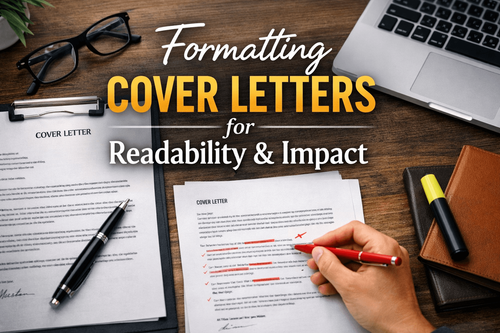

Cover Letters Formatting for Readability and Impact for First Impression
In today’s competitive job market, your
cover letter can make or break a first impression. Recruiters often spend just seconds scanning each application, and a poorly formatted letter can obscure even the strongest qualifications. A cover letter that is cluttered, inconsistent, or hard to read can prevent your skills and achievements from shining through.
This is where formatting for readability and impact becomes essential. This guide demonstrates how working professionals can structure and present their cover letters so that every sentence, section, and visual cue communicates clarity, professionalism, and value.
Who Is This Blog For?
This guide is designed for professionals aiming to elevate their cover letters, including:
- Early-career job seekers looking to make a strong impression
- Mid-career professionals applying for leadership or specialized roles
- Career changers who need to highlight transferable skills
- Consultants, freelancers, and specialists crafting personal branding documents
- Professionals struggling with low interview callbacks despite strong qualifications
Why This Topic Matters Today?
Recruiters today face hundreds of applications per role, often screened digitally.According to industry insights, nearly 70% of applications are skimmed or rejected due to poor readability.
A cover letter that blends text-heavy paragraphs, inconsistent formatting, or vague language fails to stand out. A well-formatted, impact-driven cover letter immediately communicates professionalism, attention to detail, and alignment with the role—qualities that digital screening and human reviewers value equally.
Core Concept or Framework Explained
The foundation of an effective cover letter lies in combining strong content with clear formatting. The guidebook introduces a structured approach to readability and impact:
- Visual hierarchy: Headings, spacing, and alignment guide the reader’s eye
- Concise paragraphs: Short blocks of text highlight key messages
- Bullet points: Emphasize measurable achievements or relevant skills
- Tailored messaging: Each section speaks directly to the role and company
- Consistency: Fonts, sizes, margins, and styles are uniform throughout
By integrating content and presentation, your cover letter not only communicates your experience but does so in a way that is easily digestible and persuasive.
How this blog and Guidebook Help You?
This guide equips you to:
- Transform dense text into a visually engaging and readable format
- Highlight key achievements and relevant skills at a glance
- Use formatting tools strategically to emphasise your value
- Ensure your cover letter aligns with both ATS requirements and human expectations
- Tailor every submission efficiently without compromising clarity
The result is a cover letter that captures attention, communicates impact, and improves the chances of securing an interview.
Step-by-Step Breakdown
Step 1: Choose a Professional Layout
A clear, structured layout is the backbone of readability. Key considerations include:
- Standard margins (1 inch) and alignment for clean presentation
- Legible fonts such as Arial, Calibri, or Times New Roman
- Font sizes between 10 –12 points for body text
- Section spacing that separates paragraphs and bullet points for ease of scanning
Step 2: Craft a Compelling Opening
The opening paragraph should immediately convey purpose and value. Focus on:
- Mentioning the role and company name to show personalization
- Highlighting one or two relevant achievements or experiences
- Using concise, impactful sentences that invite the reader to continue
Step 3: Highlight Key Achievements and Skills
Use formatting techniques to emphasize your strengths:
- Bullet points for quantifiable results or significant projects
- Bold or italics sparingly to draw attention to critical metrics or tools
- Short paragraphs of 2–3 lines to maintain skimmability
This ensures that even a quick scan communicates your capabilities effectively.
Step 4: Align Content with the Role
Tailor each cover letter section to the position:
- Show clear understanding of the company’s needs
- Link your experience and achievements to specific responsibilities
- Maintain consistent tone and professional language throughout
Step 5: Write a Strong Closing Paragraph
The closing paragraph should:
- Reiterate enthusiasm for the role
- Summarize your key value propositions
- Include a call to action, such as requesting an interview or further discussion
Formatting clarity reinforces the professionalism of your message.
Step 6: Apply the Final Formatting Checklist
Before submission, verify that your cover letter meets all readability and presentation standards:
- Consistent font and size throughout
- Proper spacing and paragraph separation
- Correct margins and alignment
- Accurate spelling, grammar, and punctuation
- Overall visual balance and professional tone
This final review ensures your letter is polished, readable, and impactful.
Common Mistakes or Pitfalls to Avoid
The guidebook highlights several pitfalls that reduce cover letter effectiveness:
- Dense blocks of text that are difficult to scan
- Inconsistent fonts, sizes, or spacing
- Overuse of personal pronouns or casual language
- Generic letters not tailored to the role or company
- Ignoring measurable achievements or relevant skills
Avoiding these mistakes ensures your cover letter stands out and communicates your professional value effectively.
How Should You Use This Guidebook Effectively?
To get the most from this guide:
- Read the guide once to understand the formatting principles
- Apply the worksheets and examples directly to your cover letter
- Allocate 1–2 focused hours to implement formatting improvements
- Revisit the guide for subsequent applications or LinkedIn updates
- Use the checklist before every submission to maintain consistency
Following this workflow transform guidance into tangible, professional results.
Key Takeaways
- Prioritize readability and visual hierarchy in your cover letter
- Use short paragraphs, bullet points, and spacing to improve skimmability
- Highlight measurable achievements and role-relevant skills
- Tailor content to each company and position
- Maintain consistent formatting for a polished, professional look
- Review carefully to eliminate errors and enhance impact
Your Next Step: Accelerate Your Career with PlanetSpark
Creating an impact-driven resume is not just about landing your next job—it’s about owning your professional story and presenting it with clarity, confidence, and credibility. When your resume clearly communicates value, results, and impact, opportunities follow naturally.
At PlanetSpark, we are committed to empowering working professionals with practical, outcome-focused resources that drive real career growth. From resume building and workplace communication to leadership presence and professional writing, our programs are designed to help you succeed in today’s fast-evolving job market.
Want a deeper, hands-on experience?
You can also book a free trial session to learn more about PlanetSpark’s Working Professional Courses, designed to accelerate your career through personalised coaching, real-world practice, and expert guidance.
Your career deserves more than generic advice.
It deserves clarity, confidence, and measurable impact.
Personalized Communication Roadmaps
Record a video to get a AI generated personalized communication reports