
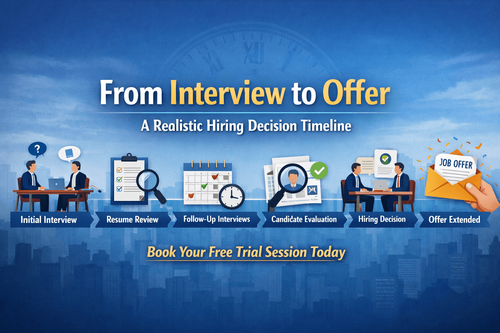
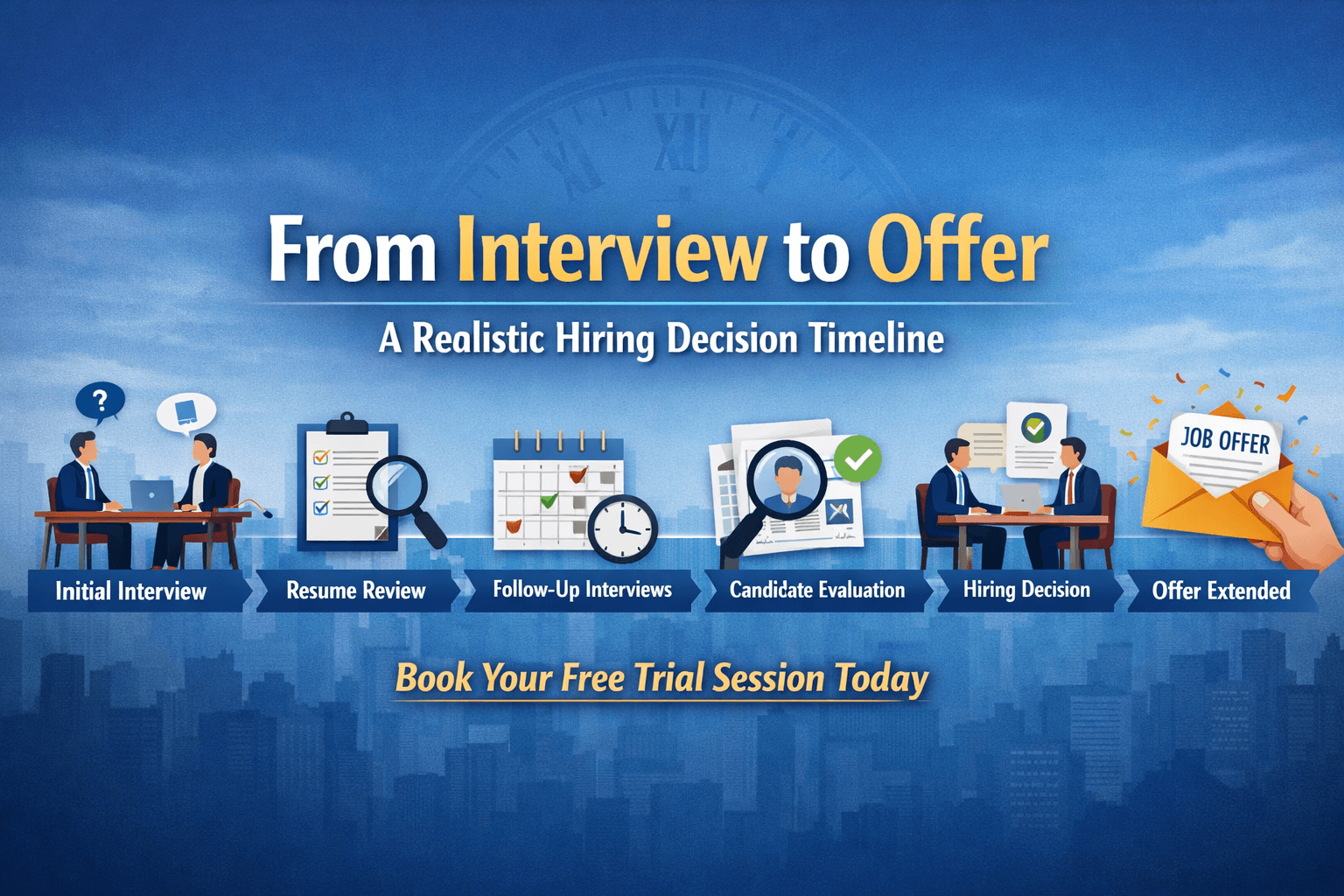
From Interview to Offer A Realistic Hiring Decision Timeline

Stay Organized in Your Job Search: A Strategic Guide to Navigating Every Stage of the Job Search
You aced the interview. You sent a thoughtful thank-you note. And then—silence.
Three days become a week. A week becomes two. You start refreshing your inbox more often than usual, wondering whether the company lost interest or simply forgot to respond. For many professionals, this waiting period becomes emotionally exhausting and strategically confusing.
The reality is that hiring rarely moves as quickly or as clearly as candidates expect. Behind every job offer lies a complex internal process involving approvals, evaluations, budgeting discussions, and candidate comparisons. Without understanding how this system works, job seekers often misinterpret silence, follow up at the wrong time, or unintentionally weaken their candidacy.
This uncertainty often leads to second-guessing. Candidates replay interview answers in their minds, analyze small details from conversations, and attempt to decode every delay as a sign of success or rejection. In most cases, however, the delay has little to do with the candidate’s performance. It is simply the result of how organizations make hiring decisions.
Inside most companies, multiple stakeholders are involved before a final offer is made. Hiring managers must gather feedback from interview panels, recruiters must coordinate communication across teams, and leadership may need to approve compensation or headcount. These steps take time, and they often happen entirely out of sight of the candidate.
This is why understanding the hiring decision timeline becomes a powerful advantage. Instead of guessing what employers are thinking, professionals who understand the phases of hiring can interpret delays more accurately, respond strategically, and maintain confidence throughout the process.
Rather than reacting emotionally to silence, informed candidates approach the waiting period with clarity. They know when it is appropriate to follow up, when patience is necessary, and how to stay professionally engaged without appearing anxious or pushy. This awareness allows them to maintain momentum in their job search while protecting their credibility with recruiters and hiring managers.
This guide explains the complete hiring decision timeline, helping you understand what happens behind the scenes at every stage and how you can position yourself as a confident, strategic candidate throughout the process.
Book your free trial session today with planetspark!
Download for more details or PDF file!
Who Is This Blog For?
This blog and its accompanying guidebook
are designed for professionals who want to approach job searching strategically rather than emotionally.
- Early and mid-career professionals navigating competitive hiring markets
- Job seekers frustrated by long hiring timelines or unexplained silence
- Professionals preparing for interviews and multiple hiring rounds
- Candidates seeking better offers through smarter job search strategies
- Anyone who wants to understand how hiring decisions are actually made inside organisations
Why This Topic Matters Today?
Modern hiring processes are far more complex than most candidates realise.
For a single mid-level role, companies often receive hundreds of applications within the first few days of posting. Recruiters rely heavily on filtering systems, structured interview processes, and internal decision-making frameworks to identify the best candidate.
At the same time, organisational dynamics—such as budget approvals, leadership alignment, and competing business priorities—can significantly slow hiring timelines.
Because candidates rarely see these internal processes, they often make incorrect assumptions:
- Silence is interpreted as rejection
- Follow-ups are sent too early or too often
- Job searches stop after one promising interview
- Negotiation opportunities are missed
Understanding the hiring timeline transforms the experience entirely. Instead of reacting emotionally to delays, professionals who understand the system can manage their pipeline strategically and make smarter decisions throughout the process.
Core Concept or Framework Explained
The hiring decision process generally follows five major phases. These phases exist in almost every organisation, regardless of company size, industry, or job level.
Understanding these phases allows candidates to interpret signals correctly and adjust their actions accordingly.
The five phases include:
- Intake and role definition
- Application review and screening
- Interview rounds
- Internal deliberation
- Offer and negotiation
Each phase has its own purpose, timeline, and expectations from both the employer and the candidate.
By mapping your job applications against these stages, you can understand exactly where you stand in the hiring process and what actions you should take next.
How This Blog and Guidebook Help You?
This blog and guidebook provide a structured framework for managing your job search effectively.
They help you:
- Understand what employers are doing during each stage of hiring
- Avoid common mistakes that weaken otherwise strong candidates
- Follow up with recruiters at the right moments
- Maintain multiple opportunities simultaneously
- Negotiate offers with greater confidence
Instead of feeling uncertain during the hiring process, you gain clarity about timelines, expectations, and strategic next steps.
Step-by-Step Breakdown
Step 1: Intake and Role Definition — Before You Even Apply
Most professionals assume the hiring process begins when they submit an application. In reality, the process often starts weeks or even months earlier inside the organisation.
During this internal planning phase, hiring managers and HR teams define the role, determine the business need, and secure approval to open the position.
Typical employer activities during this stage include:
- Writing and approving the job description
- Securing budget or headcount approval
- Aligning on the ideal candidate profile
- Briefing internal or external recruiters
For candidates, this phase is an opportunity to prepare strategically.
Actions you should take during this stage:
- Set up job alerts on platforms such as LinkedIn and Naukri
- Strengthen your professional network within target companies
- Tailor your resume and LinkedIn profile for your target role
- Research company strategy, hiring patterns, and recent developments
This phase typically lasts between one and eight weeks depending on company size and approval processes.
Step 2: Application Review and Screening — The First Filter
Once the role is posted, the application flood begins. Many mid-level roles receive hundreds of applications within the first few days.
To manage this volume, companies rely heavily on Applicant Tracking Systems.
These systems automatically scan resumes for:
- Keyword alignment with the job description
- Relevant qualifications
- Formatting compatibility
- Basic eligibility criteria
After this automated screening, recruiters perform a rapid visual scan of shortlisted resumes before selecting candidates for an initial phone screen.
The recruiter screening conversation typically lasts between 15 and 30 minutes and focuses on logistics rather than deep skill evaluation.
Topics usually covered include:
- Professional background summary
- Compensation expectations
- Notice period
- Initial interest in the role
To maximise your chances of passing this stage:
- Use keywords directly from the job description
- Avoid complex resume formatting like tables or graphics
- Prepare a concise 90-second professional summary
- Follow up with a short thank-you email after the conversation
This stage usually takes one to three weeks.
Step 3: Interview Rounds — Where Candidates Are Evaluated
The interview stage is the most visible part of the hiring process, but many candidates misunderstand its purpose.
Interviews are not only about answering questions correctly. They also evaluate how well you communicate, collaborate, and align with the company's goals and culture.
Most professional roles involve two to four interview rounds.
Each round serves a different purpose:
Hiring Manager Interview
This conversation evaluates cultural fit, motivation, and alignment with the team's objectives.
Technical or Functional Interview
This round focuses on domain expertise, problem-solving ability, and practical knowledge related to the role.
Panel or Cross-Team Interview
Panel interviews assess your ability to collaborate, communicate clearly, and work effectively with multiple stakeholders.
Leadership Interview
Senior leaders often conduct a final interview to confirm strategic alignment and overall confidence in the candidate.
The interview stage typically lasts between two and four weeks for mid-level roles and longer for senior positions.
After each interview round, sending a thoughtful follow-up message that references a specific discussion point helps reinforce your candidacy and professionalism.
Step 4: Internal Deliberation — The Invisible Decision Phase
After interviews are completed, the hiring process moves behind the scenes.
This phase is often the most stressful for candidates because there is little visible activity. However, it involves several important internal steps.
Employers may be:
- Consolidating feedback from interviewers
- Comparing candidates and ranking finalists
- Confirming compensation ranges
- Obtaining approval from finance or leadership
- Reviewing legal or compliance requirements
Any one of these steps can delay the final decision.
Internal deliberation typically lasts:
- One to three weeks for mid-level roles
- Three to six weeks for senior positions
During this period, the most important action for candidates is to maintain momentum in their job search.
Continue applying for new roles and building your pipeline rather than waiting passively for a single outcome.
Step 5: Offer and Negotiation — Closing the Opportunity
Receiving a verbal offer is exciting, but it is not the final step.
The offer stage includes several important actions that can significantly affect your compensation and career trajectory.
When you receive a verbal offer:
- Express enthusiasm and appreciation
- Request the offer in writing
- Ask for 24–48 hours to review the details
Use this time to evaluate the offer carefully.
Consider factors such as:
- Base salary
- Bonuses and incentives
- Equity or ESOPs
- Benefits and flexibility
- Career growth potential
Negotiation is an expected part of this stage. Recruiters often build negotiation room into the initial offer.
The most important rule is simple but critical.
Never resign from your current job until you have a signed written offer confirming your compensation, title, reporting structure, and start date.
Common Mistakes or Pitfalls to Avoid
Even highly qualified candidates sometimes lose opportunities due to avoidable mistakes.
Common errors include:
- Stopping job applications after reaching a final interview
- Following up too early or sending multiple messages
- Accepting the first offer without negotiating
- Misinterpreting short periods of silence as rejection
- Applying to outdated job postings
- Sending generic thank-you notes after interviews
- Resigning from a current role before receiving a written offer
Avoiding these mistakes immediately strengthens your professional credibility and strategic positioning.
How Should You Use This Guidebook Effectively?
To get the most value from this guidebook, treat it as an active job search tool rather than a one-time read.
A practical workflow includes:
- Skim the guide once to understand the full hiring timeline
- Create a tracker in a spreadsheet or productivity tool
- Record each job application, interview date, and follow-up timeline
- Review your pipeline weekly to maintain multiple opportunities
- Use the framework to guide follow-ups and negotiations
A simple tracking system can reveal patterns in your job search and help you make smarter decisions about where to invest your time and energy.
Key Takeaways
- Every hiring process follows five major phases from role definition to offer negotiation
- Applying early to fresh job postings increases your chances of being seen
- Applicant Tracking Systems filter most resumes before recruiters review them
- Each interview round evaluates different aspects of your candidacy
- Internal deliberation phases often take longer than candidates expect
- Maintaining multiple active applications improves your negotiating power
- A written offer letter is the only true confirmation of employment
Your Next Step: Accelerate Your Career with PlanetSpark
Creating an impact-driven resume is not just about landing your next job—it’s about owning your professional story and presenting it with clarity, confidence, and credibility. When your resume clearly communicates value, results, and impact, opportunities follow naturally.
At PlanetSpark, we are committed to empowering working professionals with practical, outcome-focused resources that drive real career growth. From resume building and workplace communication to leadership presence and professional writing, our programs are designed to help you succeed in today’s fast-evolving job market.
Visit https://www.planetspark.in/resources to explore:
- Career and resume-building guides
- Workplace communication and professional writing resources
- Skill-development tools curated for working professionals
Want a deeper, hands-on experience?
You can also book a free trial session to learn more about PlanetSpark’s Working Professional Courses, designed to accelerate your career through personalised coaching, real-world practice, and expert guidance.
Your career deserves more than generic advice.
It deserves clarity, confidence, and measurable impact.
Start building that advantage today—with PlanetSpark.
Personalized Communication Roadmaps
Record a video to get a AI generated personalized communication reports