
Gaining Experience Before a Career Switch: Pro Guide 2026
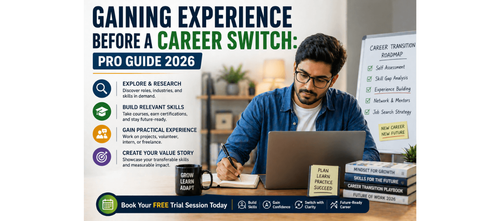

Developing Relevant Experience Ahead of a Full Career Shift: A Step-by-Step Guide for Career Changers
Most career transitions fail not because people lack ambition or intelligence, but because they try to leap before they've built a bridge. The gap between where you are and where you want to be can feel enormous, especially when job postings demand years of experience in a field you're just entering. But the good news is that you don't have to quit your job to start building credibility in a new direction. Thousands of professionals have successfully transitioned into new careers by strategically layering new experience on top of their existing roles.
Download these resources and apply them alongside your daily work for improved clarity, productivity, and professional growth. You can also book a free trial to gain expert guidance and enhance your communication, problem-solving, and decision-making skills. The materials are designed in a clear, structured format to help professionals learn efficiently and implement insights with confidence.
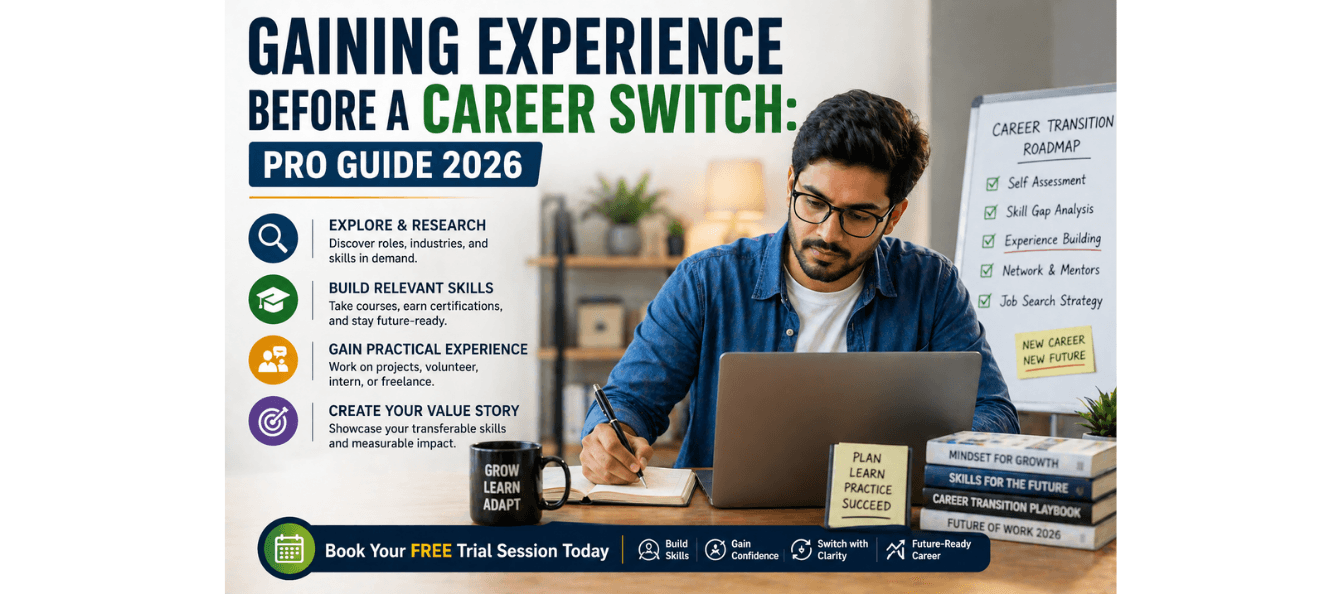
Who Is This Blog For?
This blog is designed for working professionals who are ready to make a career change but need a structured path to do so. If you are:
- A manager looking to pivot into consulting or strategy
- A teacher aiming for a role in instructional design or L&D
- A marketer exploring data roles or product management
- A professional with 0-15 years of experience serious about making a transition
This guide provides a clear, actionable framework for layering new experience on top of your current role, without needing to quit your job or go back to school full-time.
Why This Topic Matters Today?
In today's fast-paced job market, career transitions are more common than ever. However, many professionals face the "Experience Catch-22" — employers want candidates with experience, but how can you gain experience in a new field without already having the job? With the demand for professionals in fields like product management, UX design, data analytics, and consulting on the rise, knowing how to navigate this gap is crucial. Many professionals are stuck because they don't know how to start building their credibility in a new role while still employed.
Core Concept
The key to a successful career transition is building relevant experience without having to make a leap into a new job right away. The core concept in this guide is simple: accumulate evidence of your capabilities before transitioning. This can be done through internal projects, strategic side projects, networking, and learning directly tied to your target role. Each action you take, whether it's leading an internal initiative or taking on a side project, serves as a piece of evidence to demonstrate that you are ready for the new role.
The guide walks you through six strategic moves:
1. Audit your existing transferable assets
2. Define your target role with precision
3. Activate your current role as a training ground
4. Build experience through strategic side projects
5. Learn strategically (skills, not certificates)
6. Build your transition network intentionally
These steps, when followed consistently, allow you to start building credibility while maintaining your current job.
How This Blog and Guidebook Help You?
By following the steps outlined in this blog, you can build a bridge between your current role and your desired career path. This guide offers actionable steps, tools, and worksheets to help you accumulate the necessary experience to successfully transition. You'll build a portfolio, network with the right professionals, and gain confidence in speaking about your new role, all while still employed in your current job.
Step-by-Step Breakdown
1. Audit Your Transferable Assets
Before you begin adding new experience, start by auditing the skills and experiences you already have. This is crucial because most professionals underestimate how much of their current experience is transferable to their target role. Create an inventory of your hard skills, soft skills, and domain knowledge, and identify where each overlaps with the requirements of your target role.
- Hard skills: Tools, methods, and technical capabilities.
- Soft skills: Communication, leadership, and problem-solving.
- Domain knowledge: Industry context, processes, and relationships.
Use a table to document and evaluate these areas, identifying transferable value to your target role.
2. Define Your Target Role with Precision
Vague goals lead to vague results. To build the right experience, you need to know exactly what your target role looks like. This involves dissecting job descriptions to identify key skills, required tools, and expected outcomes. Create a "Gap Map" that compares your current skills and experience with the specific requirements of your target role.
3. Activate Your Current Role as a Training Ground
You don’t need to leave your job to start gaining experience. You can reshape your current role to give you practice in the skills needed for your target position. Volunteer for stretch projects, lead internal workshops, or take ownership of a data initiative. By aligning your current responsibilities with your transition goals, you can gain relevant experience without leaving your employer.
4. Build Experience Through Strategic Side Projects
Side projects are a powerful tool for building tangible experience. Select projects that align with the gaps identified in your Gap Map. These projects should be goal-oriented, producing portfolio-worthy work that demonstrates your ability to perform the tasks required in your target role.
Consistency is key — aim for two to three active side projects at any time. Document your work, measure outcomes, and share results publicly. This will make your experience visible to hiring managers and clients.
5. Learn Strategically — Skills, Not Certificates
Many professionals make the mistake of completing certifications without applying the knowledge. Learning should be connected directly to real projects. The process is divided into three tiers:
- Tier 1: Foundation knowledge (free resources, podcasts, YouTube).
- Tier 2: Applied skills (paid courses, bootcamps).
- Tier 3: Validation (certifications that are recognized in job postings).
The most important principle is learning by doing. Apply what you learn immediately in real or simulated projects.
6. Build Your Transition Network Intentionally
Networking is crucial during a career transition. Focus on building relationships with professionals already in your target field. Reach out with value-first outreach: offer insights, ask thoughtful questions, and engage with their work. Build a network of connectors, practitioners, and advocates.
7. Create a Visible Portfolio Before You Need One
A portfolio is essential for demonstrating your capabilities. It should be role-specific, outcome-focused, and easy to navigate. Use platforms like Notion, LinkedIn, or Google Sites to showcase your work. Each portfolio entry should include the context, your role and approach, the outcome, and what it demonstrates about your abilities.
Common Mistakes
Many professionals make common mistakes when transitioning careers. Here are some to watch out for:
- Consuming without creating: Don't just take courses; apply the knowledge to active projects.
- Hiding the transition: Be transparent about your career change and own the narrative.
- Targeting too broadly: Focus on one role and go deep into that area before branching out.
- Waiting for permission: Start doing the work now, even if you're not officially in the role.
- Networking only when desperate: Build relationships early on and offer value before asking for help.
How Should You Use This Guidebook Effectively?
Use this guide as a living document. Revisit it regularly and take action on the tasks outlined in each section. Begin with small, achievable steps, and build momentum over time. The goal is to build a strong foundation in your target role within 90 days.
Key Takeaways
- Audit your transferable skills and experience before adding new roles.
- Define your target role with precision and create a Gap Map.
- Activate your current job to build relevant experience.
- Use side projects as a powerful tool to demonstrate capability.
- Learn by doing, not just by consuming certificates.
- Network intentionally with the right professionals.
- Create a visible portfolio that demonstrates your experience.
Your Next Step: Accelerate Your Career with PlanetSpark
Creating an impact-driven resume is not just about landing your next job—it’s about owning your professional story and presenting it with clarity, confidence, and credibility. When your resume clearly communicates value, results, and impact, opportunities follow naturally.
At PlanetSpark, we are committed to empowering working professionals with practical, outcome-focused resources that drive real career growth. From resume building and workplace communication to leadership presence and professional writing, our programs are designed to help you succeed in today’s fast-evolving job market.
Visit https://www.planetspark.in/resources to explore:
- Career and resume-building guides
- Workplace communication and professional writing resources
- Skill-development tools curated for working professionals
Want a deeper, hands-on experience?
You can also book a free trial session to learn more about PlanetSpark’s Working Professional Courses, designed to accelerate your career through personalised coaching, real-world practice, and expert guidance.
Your career deserves more than generic advice.
It deserves clarity, confidence, and measurable impact.
Personalized Communication Roadmaps
Record a video to get a AI generated personalized communication reports