
Habit-Building Checklist for Remote Professionals Guide System
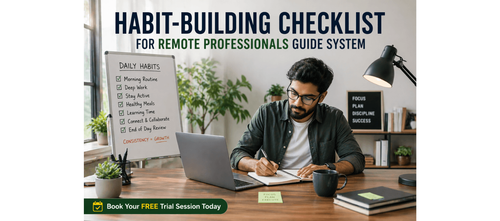

Mastering Remote Work Habits: A Step-by-Step Checklist for Sustainable Success
Remote work brings incredible flexibility, but it also requires a unique set of habits to be productive, focused, and balanced. Without the natural structure of an office — like the commute that signals "work mode" or the office space that separates your professional and personal lives — many remote professionals struggle to maintain boundaries and sustain energy.
This Habit-Building Checklist for Remote Work offers a practical, actionable approach to help you build strong, sustainable habits that ensure long-term success. Whether you’re a career switcher, a manager leading distributed teams, or a consultant juggling multiple clients from home, this guide will help you implement habits that boost focus, energy, and productivity.
Download these resources and apply them alongside your daily work for improved clarity, productivity, and professional growth. You can also book a free trial to gain expert guidance and enhance your communication, problem-solving, and decision-making skills. The materials are designed in a clear, structured format to help professionals learn efficiently and implement insights with confidence.
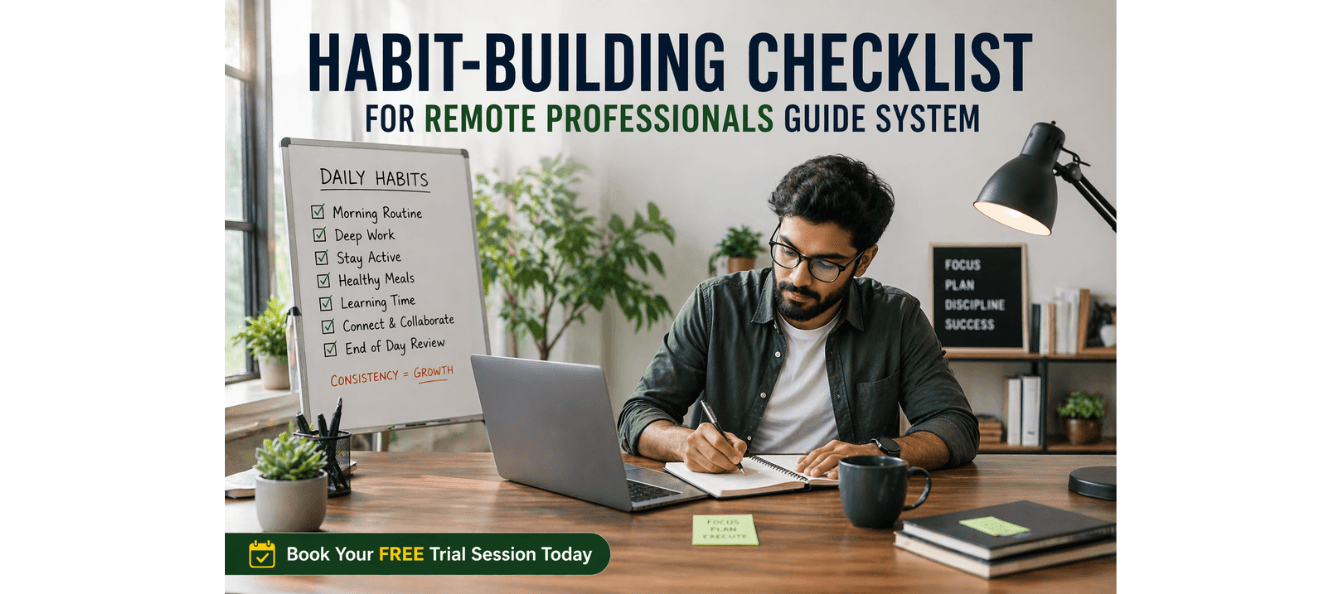
Who Is This Blog For?
- Career switchers adjusting to remote work
- Managers leading remote teams
- Consultants managing multiple client projects remotely
- Remote professionals looking to build and sustain productive habits
Why This Topic Matters Today?
Remote work offers immense flexibility but lacks the structure that comes with office-based jobs. Without clear boundaries and habits, remote workers can quickly find themselves overworking, distracted, and overwhelmed. The goal of this guide is to provide you with a structured approach to create sustainable work habits that protect your energy, ensure you stay focused, and help you avoid burnout.
Research shows that high-performing remote workers do not rely on willpower alone; instead, they depend on intentional, well-designed systems and habits. This checklist will give you the framework to thrive in remote work, not just survive.
Core Concept or Framework Explained
The checklist is broken down into three key phases:
1. Before Work: Establish a strong start to your day.
2. During Work: Implement systems for maintaining focus and productivity.
3. After Work: Ensure proper recovery and boundary-setting to maintain long-term success.
Each phase builds on the last, creating a full-day rhythm that supports both performance and well-being. Small, consistent changes lead to long-lasting habits that improve your work experience.
How This Blog and Guidebook Help You?
This blog and the accompanying guide will help you:
- Create a solid morning routine that sets the tone for your day
- Build focus and productivity through time-blocking and intentional breaks
- Establish effective boundaries to ensure a work-life balance
- End your workday with intention and reflection to protect your recovery
Step-by-Step Breakdown
Phase 1 — Before Work: Set the Stage for Success
The way you start your day sets the tone for everything that follows. Use these simple but powerful steps to set yourself up for a productive remote workday:
1. Set a Consistent Wake-Up Time: Your body clock is a powerful productivity tool. Starting your day at the same time daily helps signal to your brain that it's time to work.
2. Complete a “Commute Ritual”: Even if you’re not leaving the house, engage in a short walk, coffee ritual, or a 10-minute read to signal that the workday has begun.
3. Dress for Success: Dressing intentionally—even partially—shifts your mindset from home mode to professional mode.
4. Review Your Top 3 Priorities: Before diving into email or Slack, take a moment to review the most important tasks for the day.
5. Clear Your Workspace: Remove non-work items from your desk, and only open the tabs you need for your session.
6. Block Time for Deep Work: Schedule uninterrupted work time before others can claim it.
Phase 2 — During Work: Stay Focused and Productive
Effective remote work is about intentionality and structure. Implementing the following strategies will help you stay on task, avoid distractions, and increase your productivity:
1. Use Time-Blocking: Assign specific tasks to specific time slots. Don’t just make a to-do list—time-blocking ensures you stay focused on one task at a time.
2. Follow the 90-Minute Focus Rule: Work in deep sprints with intentional breaks. After 90 minutes of focus, take a break to refresh.
3. Set Your Status on Communication Tools: Reflect your availability accurately on Slack, Teams, or any communication tool to let others know when you are available and when you are focused.
4. Batch Check Emails and Messages: Check your email and messages at designated intervals (e.g., 9am, 12pm, 4pm) to avoid constant interruptions.
5. Take a Proper Lunch Break: Move away from your screen, get some fresh air, and reset your focus.
6. Do a Mid-Day Check-In: Reflect on your progress and see if you’re on track with your top 3 priorities.
Phase 3 — After Work: Protect Your Recovery Time
The way you end your workday is just as important as how you start it. A clear transition to “off-time” ensures proper recovery and prepares you for the next day:
1. Complete a “Shutdown Ritual”: Write tomorrow's top 3 priorities and close all work tabs.
2. Say It Out Loud or Write It Down: “Work is done for today” — this cues your brain to disengage.
3. Move Your Body: A walk, stretch, or workout creates a physical boundary between work and rest.
4. Avoid Checking Work Messages After Your Designated End Time: Protect your recovery.
5. Reflect Briefly: What went well? What would you do differently tomorrow?
Real-World Application & Common Mistakes
Meet Priya, a mid-level marketing consultant who transitioned to fully remote work after eight years in an office. Within three months, she was working 11-hour days, skipping lunch, and feeling perpetually behind — despite technically being "available" all the time. Sound familiar? Priya's problem wasn't effort. It was the absence of intentional structure.
After applying this checklist, Priya introduced a morning walk as her commute ritual, blocked 9–11am daily for strategic client work, and implemented a hard 6pm shutdown with a written handover note to herself. Within four weeks, her output quality improved, her response times became more predictable, and — critically — she stopped working weekends.
Mistake: Starting the day reactively
Opening email or Slack before setting your own priorities means someone else's agenda runs your morning. Fix: Spend the first 10 minutes planning before you open any communication tool.
Mistake: Working in the same clothes you slept in
Your brain associates physical cues with mental states. Staying in pyjamas keeps you in rest mode. Fix: Change clothes as part of your start-of-day ritual, even if you never leave the house.
Mistake: No defined end to the workday
Without a commute or office closing time, work expands to fill all available hours. Fix: Set a calendar event titled "End of Work" and treat it like a meeting you cannot miss.
Mistake: Skipping breaks to "catch up"
Skipping breaks feels productive but accelerates cognitive fatigue, reducing output quality by the afternoon. Fix: Schedule breaks as non-negotiable appointments — 5 minutes every 90 minutes minimum.
The most common remote work failure isn't laziness — it's the inability to stop. Protect your off-time as fiercely as your focus time.
Key Takeaways
Building strong remote work habits is not a one-time event — it's an ongoing practice of design, reflection, and adjustment. The professionals who thrive remotely are not those with the most willpower; they are those who have built the most intentional systems. Use this checklist as a living document: revisit it weekly, adjust what isn't working, and celebrate what is.
- Habits replace willpower
- Structure creates freedom
- Rituals signal transitions
- Boundaries are professional, not personal
Your Next Step with PlanetSpark
Share this planner with your team this week. Start with the Communication Audit Checklist together — 30 minutes is all it takes to begin building a remote communication culture your whole team will thank you for.
Visit https://www.planetspark.in/resources to explore:
- Career and resume-building guides
- Workplace communication and professional writing resources
- Skill-development tools curated for working professionals
Want a deeper hands-on experience?
You can also book a free trial session to learn more about PlanetSpark’s Working Professional Courses, designed to accelerate your career through personalised coaching, real-world practice, and expert guidance.
Your career deserves more than generic advice.
It deserves clarity, confidence, and measurable impact.
Personalized Communication Roadmaps
Record a video to get a AI generated personalized communication reports