
High-Impact Operations Resume Guide for Career Growth 2026
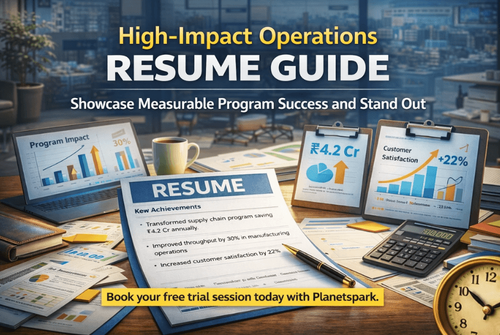

High-Impact Operations Resume Guide: Showcase Measurable Program Success and Stand Out
Most operations professionals work on complex, high-impact programs—yet their resumes fail to reflect that impact. Instead of showcasing measurable outcomes, they often list generic responsibilities, making it difficult for hiring managers to understand the true value they bring. In a competitive job market, this gap can cost you career-defining opportunities.
This guide, built from a premium resume template pack, helps you reposition your experience by focusing on operational programs, measurable results, and real business impact—exactly what recruiters are looking for today.
Book your free trial session today with Planetspark.
Download for more details or PDF file.
Who Is This Blog For?
- Operations professionals looking to showcase program-level impact
- Program managers handling cross-functional or large-scale initiatives
- Job seekers transitioning into operations or program management roles
- Consultants building a strong operations-focused portfolio resume
- Mid-level professionals aiming for promotions or leadership roles
- Professionals with 0–15 years of experience in operations, delivery, or transformation
Why This Topic Matters Today?
Operations roles have evolved significantly. Companies are no longer looking for professionals who simply “manage processes”—they want leaders who can drive transformation, optimise systems, and deliver measurable results.
However, many resumes fail because:
- They list job duties instead of outcomes
- They use vague terms like “managed projects” without scale or results
- They fail to quantify improvements like cost savings or cycle time reduction
- They ignore cross-functional leadership and stakeholder influence
According to the guide, this disconnect is why even highly capable operations professionals struggle to stand out in hiring processes.
In today’s data-driven hiring environment, resumes must demonstrate:
- Scale of impact
- Measurable outcomes
- Program ownership
- Strategic contribution
Core Concept or Framework Explained
The core idea behind this guide is simple but powerful: shift your resume from responsibility-based to impact-driven storytelling.
Instead of focusing on what you did, the framework focuses on:
- What program you led
- What problem it solved
- What scale it operated at
- What measurable outcomes it delivered
Each template in the guide is scenario-driven, meaning it is designed for a specific real-world operational context rather than a generic job description.
The framework emphasises three key pillars:
Program-Centric Positioning
Your resume should highlight major operational programs, not just roles.
Quantification of Impact
Every achievement should include measurable metrics like:
- Cost savings
- Efficiency gains
- Throughput improvement
- Customer satisfaction
Context and Scale
Hiring managers want to understand:
- Budget handled
- Team size
- Stakeholders involved
- Geographic or operational scale
How This Blog and Guidebook Help You?
This blog and the underlying resource help you transform your resume into a strategic career asset.
You will be able to:
- Present your experience as high-impact operational programs
- Communicate measurable business outcomes clearly
- Align your resume with hiring manager expectations
- Improve ATS compatibility using structured templates
- Position yourself for promotions, transitions, or consulting roles
Ultimately, it helps you move from being seen as a “task executor” to a “program leader.”
Step-by-Step Breakdown
Choose the Right Resume Scenario
The guide provides 10 specialised templates, each aligned with a specific operational role or context.
Examples include:
- Process transformation leader
- Supply chain program architect
- Cross-functional program manager
- Cost optimisation specialist
- Technology-enabled operations leader
Choosing the right scenario ensures your resume aligns with your career story—not just your job title.
Replace Placeholders with Real Impact
Each template uses structured placeholders like:
- Program name
- Scope
- Metrics
- Outcomes
You must replace these with real data:
- “Reduced cycle time by 30%”
- “Saved ₹4.2 Cr annually”
- “Led 15-member cross-functional team”
This transforms your resume into a results-driven document.
Highlight Signature Programs
Instead of listing multiple generic responsibilities, focus on key programs.
For each program, include:
- Program name and duration
- Scope and scale
- Key actions taken
- Quantified outcomes
This approach creates clarity and credibility.
Use Metrics to Capture Attention
Hiring managers spend only a few seconds scanning resumes.
Numbers make your resume stand out:
- Percentages
- Cost savings
- Time reductions
- Output increases
For example:
- “Improved OEE from 58% to 75%”
- “Reduced downtime by 40%”
Metrics answer the critical question: “What impact did you create?”
Customise Language for Each Job
The guide emphasises aligning your resume language with job descriptions.
If the job description uses terms like:
- “Supply chain optimisation”
- “Operational excellence”
You should mirror those terms instead of using unrelated wording.
This improves both ATS performance and recruiter relevance.
Ensure Clean Structure for ATS
A well-structured resume improves readability and system compatibility.
Best practices include:
- Use simple formatting
- Avoid complex layouts
- Maintain consistent headings
- Export in both PDF and text formats
This ensures your resume passes automated screening systems.
Common Mistakes or Pitfalls to Avoid
Many professionals weaken their resumes by making avoidable mistakes:
- Listing responsibilities instead of results
- Using vague, generic language
- Failing to quantify achievements
- Ignoring leadership and stakeholder influence
- Not mentioning tools, frameworks, or methodologies
For example:
Instead of:
- Managed procurement process
Write:
- Renegotiated contracts with 18 vendors, achieving significant annual cost savings
The difference is clarity, impact, and credibility.
How Should You Use This Guidebook Effectively?
To get the best results from this resource, follow a structured approach:
Step 1: Select the Most Relevant Template
Choose based on your actual experience scenario—not your job title.
Step 2: Gather Your Data
List:
- Key programs
- Metrics
- Outcomes
- Tools used
Step 3: Fill in the Template
Replace placeholders with real, quantified achievements.
Step 4: Customise for Each Application
Align your resume with each job description before applying.
Step 5: Validate with ATS Tools
Use tools like Jobscan or Resume Worded to ensure keyword alignment.
Time Investment
- Initial draft: 2–3 hours
- Customisation per job: 15–20 minutes
This process significantly improves interview chances.
Key Takeaways
- Operations resumes must focus on programs, not tasks
- Quantified impact is the most important differentiator
- Scenario-based templates improve relevance and clarity
- Metrics, scale, and outcomes define strong resumes
- Customisation for each job application is essential
- Clean structure improves ATS success
- Naming your programs increases memorability
- A strong resume tells a clear, results-driven story
Your Next Step: Accelerate Your Career with PlanetSpark
Creating an impact-driven resume is not just about landing your next job—it’s about owning your professional story and presenting it with clarity, confidence, and credibility. When your resume clearly communicates value, results, and impact, opportunities follow naturally.
At PlanetSpark, we are committed to empowering working professionals with practical, outcome-focused resources that drive real career growth. From resume building and workplace communication to leadership presence and professional writing, our programs are designed to help you succeed in today’s fast-evolving job market.
Visit https://www.planetspark.in/resources to explore:
- Career and resume-building guides
- Workplace communication and professional writing resources
- Skill-development tools curated for working professionals
Want a deeper, hands-on experience?
You can also book a free trial session to learn more about PlanetSpark’s Working Professional Courses, designed to accelerate your career through personalised coaching, real-world practice, and expert guidance.
Your career deserves more than generic advice.
It deserves clarity, confidence, and measurable impact.
Personalized Communication Roadmaps
Record a video to get a AI generated personalized communication reports