
How Professionals Build Trust With Consistent Brand Messaging
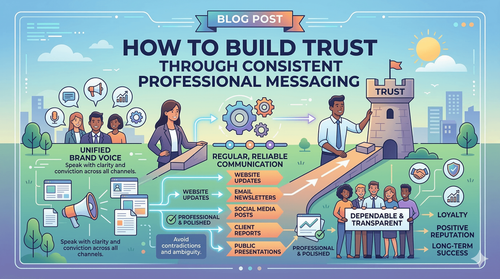

How to Build Trust Through Consistent Professional Messaging That Strengthens Your Career Reputation
Many professionals assume that trust in the workplace is built through big achievements or standout moments. A brilliant presentation, a successful project launch, or a strong LinkedIn profile may create a positive impression. But long-term professional trust rarely depends on a single interaction.
Trust is built through consistency.
Every email you send, every meeting you participate in, every presentation you deliver, and every online profile you maintain contributes to how others perceive you. Over time, these repeated interactions form a pattern. When that pattern is clear and consistent, people begin to rely on you. When it is inconsistent, even talented professionals can struggle to build credibility.
According to the PlanetSpark guidebook on professional messaging, trust develops gradually through repeated, aligned experiences across different professional touchpoints. When the way you communicate in meetings, emails, and online profiles reflects the same professional voice and values, people begin to view you as dependable and credible. :contentReference[oaicite:0]{index=0}
This blog explores how professionals can build trust through consistent messaging using a practical framework. By aligning how you communicate across platforms and situations, you can create a professional identity that others remember, respect, and rely on.
Who Is This Blog For?
This guide is designed for professionals who want to strengthen their credibility and build a trusted professional presence.
- Early and mid-career professionals building a strong workplace reputation
- Managers and team leaders who want their communication to inspire confidence
- Professionals preparing for promotions or leadership roles
- Consultants and client-facing professionals who rely on trust for business growth
- Job seekers strengthening their LinkedIn and professional profiles
- Anyone who wants their professional presence to feel consistent and reliable
Why This Topic Matters Today?
Modern professional environments require constant communication across multiple channels.
Professionals today communicate through:
- Emails and internal messaging platforms
- Video meetings and presentations
- LinkedIn profiles and professional websites
- Team discussions and stakeholder updates
- Reports, proposals, and documentation
Each of these channels contributes to how others perceive your professional identity.
When your communication style shifts dramatically between contexts, it creates confusion. Colleagues may struggle to understand your strengths, your priorities, or your professional approach.
Research summarized in the guidebook highlights several important insights:
- 89 percent of hiring decisions are influenced by how consistently a candidate communicates their value across touchpoints.
- Professionals with a clearly defined personal brand are three times more likely to be recommended for new opportunities.
- Consistent communicators build trust with new stakeholders up to 60 percent faster than those with unclear messaging. :contentReference[oaicite:1]{index=1}
These numbers reveal an important truth. Career advancement often depends not only on technical skill but also on how clearly and consistently that skill is communicated.
Core Concept or Framework Explained
The guidebook introduces a five-step framework for building trust through consistent professional messaging.
The framework helps professionals align how they communicate across all professional touchpoints, from emails to LinkedIn profiles to in-person meetings.
The five key steps include:
- Audit your current messaging landscape
- Define your professional voice pillars
- Build your messaging architecture
- Apply consistent messaging across every channel
- Maintain and protect your messaging over time
This framework emphasizes that professional messaging is not just about writing well-crafted emails or creating a polished LinkedIn profile. Instead, it is about ensuring that every interaction reinforces the same professional identity.
Professional messaging includes:
- How you introduce yourself in meetings
- The tone and clarity of your emails
- The language used in presentations
- How you respond to questions or disagreements
- How your LinkedIn profile describes your expertise
- How you follow up with colleagues or clients
When these signals align, people develop a clear mental model of who you are professionally. That clarity strengthens credibility and trust. :contentReference[oaicite:2]{index=2}
How This Blog and Guidebook Help You?
This guide helps professionals transform their communication style into a reliable trust-building asset.
By applying the framework, you will learn how to:
- Evaluate how your current communication appears across different platforms
- Define the core qualities that shape your professional voice
- Use repeatable messaging structures to improve clarity
- Align your email tone, LinkedIn profile, and verbal communication
- Build trust through consistent behavior and follow-through
- Maintain a professional messaging strategy that evolves with your career
Instead of relying on occasional strong performances, you develop a consistent communication style that strengthens your professional reputation every day.
Step-by-Step Breakdown
Step 1: Audit Your Current Messaging Landscape
The first step in building consistent messaging is understanding your starting point.
Most professionals communicate across multiple platforms without realizing how different they sound in each one. A structured messaging audit helps identify these inconsistencies.
Begin by reviewing key professional touchpoints such as:
- Your LinkedIn headline and summary
- Your email communication style
- How you introduce yourself in meetings
- Your resume summary or professional bio
- Language used in presentations and reports
- Your tone in chat platforms such as Slack or Teams
The goal is to compare how you appear across these channels.
Ask yourself questions such as:
- Does my tone remain consistent across platforms?
- Do people see the same strengths reflected everywhere?
- Does my messaging clearly communicate the value I bring?
This audit reveals gaps that need alignment before consistent messaging can emerge.
Step 2: Define Your Professional Voice Pillars
Your professional voice pillars represent the qualities that shape how you communicate at work.
They are not personality traits but intentional communication principles that guide how you express ideas.
The guidebook suggests selecting three to four core pillars that reflect both authenticity and professional effectiveness.
Examples of voice pillars include:
Clarity
You communicate ideas in a simple and structured way so that others understand your message quickly.
Warmth
Your communication acknowledges the human element of professional interactions and builds positive relationships.
Authority
You speak confidently and support your statements with evidence or experience.
Reliability
Your communication reinforces the fact that you follow through on commitments.
These pillars become the foundation of your messaging style. They influence how you write emails, present ideas, and interact with colleagues.
Step 3: Build Your Messaging Architecture
Consistency becomes difficult when professionals rely only on inspiration in the moment. Structured frameworks make communication more reliable.
The guidebook recommends building a messaging architecture consisting of repeatable communication templates.
Important messaging tools include:
The Anchor Statement
A short professional positioning statement that explains who you are, what you do, and the value you bring.
The Message Frame
A simple structure for communication using three components:
- Context explaining why the message matters
- Point highlighting the main idea or recommendation
- Action specifying the next step and timeline
The Follow-Up Formula
A consistent closing pattern that reinforces reliability and keeps projects moving forward.
The Pushback Protocol
A structured way to disagree professionally while maintaining respect and trust.
These frameworks simplify communication while reinforcing your voice pillars.
Step 4: Apply Consistent Messaging Across Every Channel
Many professionals communicate intentionally only during high-stakes moments such as presentations or client meetings.
However, trust is built through everyday interactions.
Small moments matter:
- A quick email reply
- A Slack message to a colleague
- A meeting update
- A LinkedIn comment
Each interaction becomes a signal that shapes how others perceive you.
Consistency does not mean identical communication in every context. Instead, it means maintaining the same underlying values across channels.
For example, if clarity is one of your voice pillars:
- Your emails should present clear recommendations
- Your presentations should use structured explanations
- Your LinkedIn profile should describe your work simply and directly
The format may change depending on the situation, but the underlying communication principles remain consistent.
Step 5: Maintain and Protect Your Messaging Over Time
Professional messaging is not a one-time project. As your career evolves, your messaging must evolve with it.
Roles change, industries shift, and professional goals develop over time. Without intentional updates, messaging can become outdated or inconsistent.
The guidebook recommends conducting a quarterly messaging review.
During this review, ask yourself four key questions:
Still accurate?
Does your messaging still reflect the work you are currently doing?
Still consistent?
Do your LinkedIn profile, email style, and verbal introductions still align?
Still resonating?
Are colleagues and stakeholders responding positively to your communication?
Still evolving?
Does your messaging reflect where your career is heading next?
Regular reflection ensures that your professional messaging continues to support your long-term career growth.
Common Mistakes or Pitfalls to Avoid
Even experienced professionals unintentionally weaken trust through messaging mistakes.
The Hedging Habit
Starting statements with phrases such as “I might be wrong, but” can reduce perceived confidence.
The Chameleon Syndrome
Dramatically changing communication style depending on the audience creates an inconsistent professional identity.
The Stale Profile Problem
Outdated LinkedIn profiles or bios send signals of carelessness or lack of attention.
Unclear Next Steps
Messages that fail to specify action items create confusion and delay progress.
The Say–Do Gap
Promising actions but failing to follow through is the fastest way to erode trust.
Avoiding these patterns ensures your messaging reinforces credibility instead of undermining it.
How Should You Use This Guidebook Effectively?
To gain the most value from this guide, treat it as a practical implementation tool rather than simply reading it once.
Begin with the messaging audit to understand your current communication patterns.
Next, define your professional voice pillars so that your communication has a clear guiding structure.
Then build your messaging architecture by creating templates for introductions, emails, and follow-up messages.
Once these tools are in place, begin applying them across everyday professional interactions.
Finally, schedule quarterly messaging reviews to ensure your professional narrative continues to reflect your evolving career goals.
Key Takeaways
- Professional trust is built through consistent communication across multiple interactions
- Messaging includes verbal, written, visual, and behavioral signals
- Defining voice pillars helps create a recognizable professional identity
- Messaging frameworks improve clarity and consistency
- Everyday interactions such as emails and meeting updates influence reputation
- Structured messaging strengthens credibility and reliability
- Regular messaging reviews ensure alignment with career growth
Your Next Step: Accelerate Your Career with PlanetSpark
Creating an impact-driven resume is not just about landing your next job—it’s about owning your professional story and presenting it with clarity, confidence, and credibility. When your resume clearly communicates value, results, and impact, opportunities follow naturally.
At PlanetSpark, we are committed to empowering working professionals with practical, outcome-focused resources that drive real career growth. From resume building and workplace communication to leadership presence and professional writing, our programs are designed to help you succeed in today’s fast-evolving job market.
Visit https://www.planetspark.in/resources to explore:
- Career and resume-building guides
- Workplace communication and professional writing resources
- Skill-development tools curated for working professionals
Want a deeper, hands-on experience?
You can also book a free trial session to learn more about PlanetSpark’s Working Professional Courses, designed to accelerate your career through personalised coaching, real-world practice, and expert guidance.
Your career deserves more than generic advice.
It deserves clarity, confidence, and measurable impact.
Personalized Communication Roadmaps
Record a video to get a AI generated personalized communication reports