
How Professionals Can Build Thought Leadership on LinkedIn Profiles

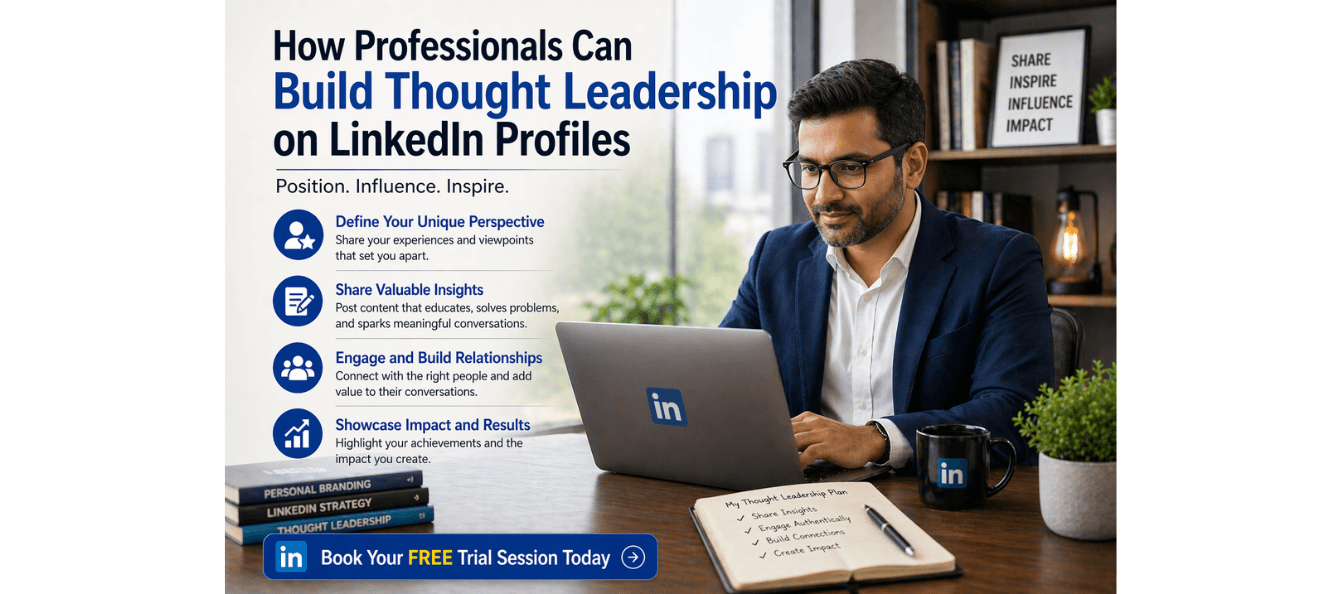
Develop a Powerful Thought Leadership Profile on LinkedIn: 10 Templates That Attract Recruiters and Clients
Your LinkedIn profile is no longer just a digital placeholder—it is your most powerful professional asset. Before a recruiter shortlists you, a client reaches out, or a collaborator responds, they scan your profile to answer one simple question: is this person worth engaging with?
The challenge is not lack of experience—it is lack of clarity. Many professionals struggle with what to write, how to position themselves, and how to stand out in a crowded space. Generic profiles, incomplete sections, and vague summaries quietly reduce your visibility and cost you opportunities you are fully capable of securing.
This is exactly why structured LinkedIn profile templates matter. Instead of guessing what works, you get proven, recruiter-aligned formats tailored to different career stages and goals. The LinkedIn Profile Template for Professionals Building Thought Leadership resource is designed to help you build a compelling personal brand, communicate your value clearly, and attract the right opportunities faster.
Download these resources and apply them alongside your daily work for improved clarity, productivity, and professional growth. You can also book a free trial to gain expert guidance and enhance your communication, problem-solving, and decision-making skills. The materials are designed in a clear, structured format to help professionals learn efficiently and implement insights with confidence.
Who Is This Blog For?
- Job seekers who want to improve visibility and attract recruiters
- Career switchers repositioning themselves for a new industry or role
- Consultants and freelancers aiming to attract clients and projects
- Mid-career professionals refining their personal brand for growth
- Senior leaders building authority and thought leadership
- Fresh graduates creating a strong first impression
- Professionals targeting remote or global opportunities
- Individuals building influence through content, speaking, or networking
Why This Topic Matters Today?
In today’s digital-first hiring landscape, LinkedIn is often the first point of evaluation. Recruiters and decision-makers spend only a few seconds scanning profiles. If your profile lacks structure, clarity, or measurable impact, it gets ignored—regardless of your actual capability.
At the same time, careers are evolving rapidly. Professionals are switching roles, building side projects, consulting independently, and creating personal brands. A static, outdated profile no longer works.
This resource addresses a critical need: helping professionals communicate their value in a structured, strategic way that aligns with modern hiring and networking behaviour. It ensures your profile does not just exist—it actively works for you.
Core Concept or Framework Explained
The core framework behind this guide is simple: your LinkedIn profile should be built based on your career context and goals, not using a one-size-fits-all format.
The resource provides 10 distinct templates, each designed for a specific professional scenario. These templates act as structured blueprints that guide you on:
- What to write in your headline
- How to structure your About section
- How to present your experience with impact
- How to showcase skills, projects, and achievements
- How to position yourself for future opportunities
Each template follows a consistent structure:
- A clear headline formula for instant positioning
- A structured About section with hook, credibility, and call-to-action
- Experience sections focused on outcomes, not responsibilities
- Supporting sections like skills, certifications, and featured work
This structured approach removes guesswork and helps you create a high-impact, recruiter-ready profile.
How This Blog and Guidebook Help You?
This blog simplifies the application of these templates so you can take action immediately. Along with the guidebook, it helps you:
- Build a complete LinkedIn profile without confusion
- Communicate your professional value clearly and confidently
- Increase recruiter and client engagement
- Position yourself for the roles or opportunities you actually want
- Save time with ready-to-use frameworks
It transforms your LinkedIn profile into a strategic career growth tool rather than a passive document.
Step-by-Step Breakdown
Understanding the 10 LinkedIn Profile Templates
The Modern Professional
Best for mid-career professionals actively job searching.
- Use a clean, recruiter-friendly headline format
- Structure your summary with a hook, experience, achievements, and call-to-action
- Highlight measurable outcomes in experience
- Maintain a balanced, professional tone
The Career Switcher
Designed for professionals transitioning into a new role or industry.
- Lead with your future direction, not past roles
- Highlight transferable skills clearly
- Reframe past experience for relevance
- Showcase certifications and projects supporting your transition
The Thought Leader
For senior professionals building influence and authority.
- Focus on perspective, not just experience
- Highlight speaking, writing, and advisory work
- Showcase content, research, and public contributions
- Emphasise what you stand for in your industry
The Freelancer and Consultant
Ideal for independent professionals attracting clients.
- Clearly state services, target clients, and outcomes
- Focus on client problems and your solutions
- Include a services menu and social proof
- Add a strong call-to-action for engagement
The Entry-Level Graduate
For fresh graduates with limited experience.
- Lead with energy and ambition
- Highlight academic projects, internships, and skills
- Focus on potential and learning ability
- Clearly state career goals
The Remote-First Professional
For professionals targeting remote roles.
- Highlight remote work experience and tools
- Showcase async communication and collaboration skills
- Mention time zone flexibility
- Emphasise self-direction and accountability
The Skills-Led Profile
For professionals in skill-driven roles like tech or design.
- Focus on skills, tools, and certifications
- Highlight projects demonstrating applied expertise
- Use keyword-rich content for discoverability
- Showcase measurable outcomes
The Project Portfolio
For professionals whose work output defines their value.
- Lead with projects instead of job titles
- Highlight challenges, roles, and outcomes
- Showcase portfolio links in featured section
- Emphasise impact and execution
The Networking and Partnerships Profile
For professionals focused on relationships and collaboration.
- Use a conversational and approachable tone
- Highlight your network and its value
- Clearly state what you offer and seek
- Encourage meaningful connections
The Executive Brand
For senior leaders and C-suite professionals.
- Focus on vision, scale, and leadership impact
- Highlight major organisational achievements
- Emphasise strategic decision-making
- Position yourself for board-level or advisory roles
Common Mistakes or Pitfalls to Avoid
- Leaving sections incomplete or filled with placeholders
- Writing generic summaries that lack clarity
- Listing responsibilities instead of measurable outcomes
- Ignoring the importance of a strong headline
- Copying templates without personalisation
- Failing to include a clear call-to-action
- Not updating the profile regularly
How Should You Use This Guidebook Effectively?
To get the best results:
- Identify your current career stage and goal
- Select the template that best matches your situation
- Replace placeholders with your own experiences and achievements
- Focus on clarity, specificity, and measurable impact
- Adapt the language to match your personal voice
- Copy the final version into LinkedIn sections
- Review and update your profile every 6 to 12 months
You can create a strong profile in a few hours, but continuous updates will keep it relevant and effective.
Key Takeaways
- Your LinkedIn profile is your most important digital career asset
- Structured templates eliminate guesswork and improve clarity
- Different career stages require different profile strategies
- Measurable achievements significantly increase credibility
- Personalisation is essential—templates are starting points, not final outputs
- Regular updates ensure long-term visibility and relevance
- A well-structured profile puts you ahead of most professionals on LinkedIn
Your Next Step: Accelerate Your Career with PlanetSpark
Creating an impact-driven resume is not just about landing your next job—it’s about owning your professional story and presenting it with clarity, confidence, and credibility. When your resume clearly communicates value, results, and impact, opportunities follow naturally.
At PlanetSpark, we are committed to empowering working professionals with practical, outcome-focused resources that drive real career growth. From resume building and workplace communication to leadership presence and professional writing, our programs are designed to help you succeed in today’s fast-evolving job market.
Visit https://www.planetspark.in/resources to explore:
- Career and resume-building guides
- Workplace communication and professional writing resources
- Skill-development tools curated for working professionals
Want a deeper, hands-on experience?
You can also book a free trial session to learn more about PlanetSpark’s Working Professional Courses, designed to accelerate your career through personalised coaching, real-world practice, and expert guidance.
Your career deserves more than generic advice.
It deserves clarity, confidence, and measurable impact.
Start building that advantage today—with PlanetSpark.
Personalized Communication Roadmaps
Record a video to get a AI generated personalized communication reports