
"How to Align Professional Skills for Career Growth in 2026 "
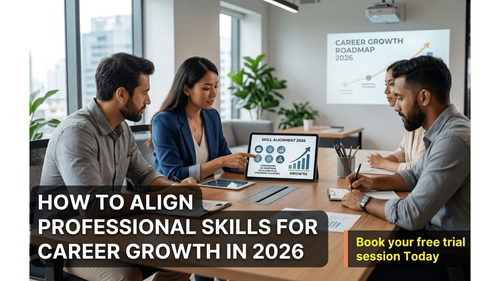

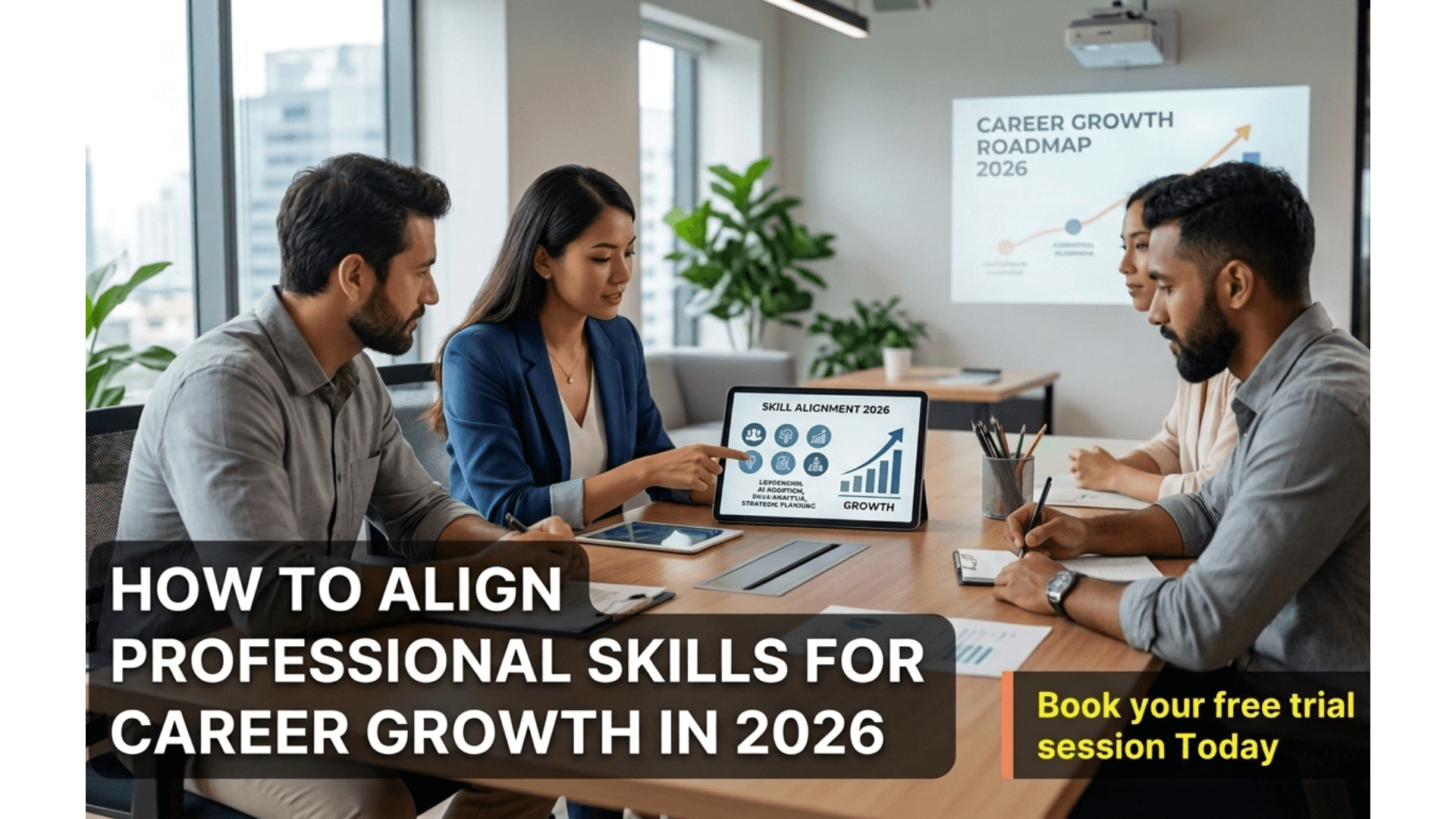
Mastering Capability Alignment: How to Close the Gap Between Your Current Skills and Your Next Big Role
You have likely experienced this before. You hit a wall in your career not because you lack talent, but because you cannot clearly map what you actually bring to the table against where you want to go. The result is a cycle of missed opportunities, underwhelming interviews, and the nagging feeling of being almost there without knowing how to finally bridge the distance.
This frustration stems from a deceptively simple problem: misalignment between your current capability profile and the high-stakes demands of your next role. Whether you are pivoting industries, angling for a major promotion, or repositioning yourself as a high-value consultant, success depends less on your raw years of experience and more on how clearly you can articulate and demonstrate your capabilities in context. This blog provides the practical, actionable system needed to align your professional landscape with your most ambitious goals.
Book your free trial session today with Planetspark.
Download for more details or PDF file.
Who Is This Blog For?
This guide is a dedicated resource for ambitious professionals looking for a clear path forward, specifically:
- Career changers ready to translate existing skills into a new industry
- Early to mid-career professionals with 0 to 15 years of experience
- Consultants who need to position themselves powerfully for new client work
- Managers aiming to step up into more senior leadership responsibilities
Why This Topic Matters Today?
Professionals do not fail because they lack skills; they fail because they cannot connect those skills to what an employer, client, or stakeholder actually needs. In today’s competitive market, a generic resume or a vague elevator pitch is no longer enough to stand out.
The capability alignment framework addresses these critical modern career challenges:
- Overcoming the wall that stops talented professionals from reaching the next level
- Eliminating underwhelming interview performances by providing evidence-backed narratives
- Solving the misalignment between individual profiles and role demands
- Creating a repeatable professional habit that allows you to adapt to shifting markets and new goals
Core Concept or Framework Explained?
The central model of this guide is the 5-Step Alignment Journey, a sequential process that builds a comprehensive picture of your professional capability landscape. This framework moves you from a raw list of skills to a strategic, time-bound action plan.
The five steps of the journey are:
- Step 1: Capability Inventory – A complete catalog of what you have.
- Step 2: Role Demand Mapping – A deep dive into what your target role actually requires.
- Step 3: Gap Analysis – An honest comparison identifying highest-leverage gaps.
- Step 4: Positioning Statement – A crisp, compelling story that signals value.
- Step 5: Action Planning – A concrete 30/60/90-day development plan.
How This Blog and Guidebook Help You?
By engaging with this structured framework, you move beyond "hoping" for a career breakthrough and start engineering one. This process delivers four high-impact outcomes:
- A complete capability inventory that ensures you never undercount your value again.
- A precise gap analysis tied to real-world professional goals.
- A personal positioning statement that anchors your identity in your strongest capabilities.
- A 30/60/90-day action plan that maintains urgency and accountability.
Step-by-Step Breakdown
Step 1: Build Your Capability Inventory?
Most professionals dramatically undercount their capabilities by defaulting to job titles rather than underlying skills. You must categorize your capabilities into three areas: Technical (domain-specific expertise like Python or project management), Transferable (skills like communication or problem structuring that travel with you), and Leadership & Behavioral (how you operate under pressure). Aim for a minimum of 15 total capabilities, each backed by a concrete, one-sentence example of impact.
Step 2: Map the Demands of Your Target Role?
Alignment requires a clear target. You must decode the underlying requirements of your desired role by collecting 5 to 10 job postings and identifying recurring themes. Beyond the text, interview insiders to uncover the "invisible" requirements that separate top performers from the average. Finally, categorize these demands into Must-Have, Strongly Preferred, and Nice-to-Have tiers.
Step 3: Run Your Gap Analysis?
Compare your inventory to your demand profile to find your highest-leverage gaps. Use a "Zone" system to prioritize: Green Zone (capability meets demand), Amber Zone (bridgeable in under 90 days), and Red Zone (absent capability that forms a critical blocker). Focus your development on Red Zone Must-Haves, as these are the primary barriers to your readiness.
Step 4: Craft Your Capability Positioning Statement (PCPS)?
Data without narrative does not move people. Your PCPS is a 3 to 5 sentence argument for why your profile is a compelling match for a specific opportunity. It should anchor your identity in a domain of mastery, establish transferable value with specific impact, signal your intentional trajectory, and close with a clear value fit for the specific company or challenge.
Step 5: Build Your 30/60/90-Day Action Plan?
Convert your insights into a time-bound plan. Days 1-30 focus on foundation and quick wins, like addressing 1-2 Red Zone gaps. Days 31-60 focus on evidence creation through projects or learning milestones. Days 61-90 focus on visibility and application, expanding your network and applying to target roles with your tailored positioning.
Common Mistakes or Pitfalls to Avoid?
- Listing responsibilities instead of capabilities: Managed a team is a task; led a team through a high-ambiguity launch is a capability.
- Over-indexing on gaps: Do not let gap anxiety crowd out your strengths. The ratio should be 70% strength amplification and 30% gap closing.
- Generic positioning for every application: A generic PCPS signals low situational awareness; customize it for every specific context.
- Skipping the evidence layer: In professional settings, an unsubstantiated claim is barely better than no claim at all. Always have a ready-to-deploy example.
How Should You Use This Guidebook Effectively?
Capability alignment is a professional habit, not a one-time exercise. You can work through this system in a focused two-hour session or use it modularly over a week. Plan to revisit and update your worksheet every six months, or whenever you complete a significant project, prepare for a performance review, or shift your target industry.
Key Takeaways
- Specificity is your greatest differentiator; every capability must come with a story.
- Gaps are data, not deficits; knowing them precisely is a strategic advantage.
- Evidence beats assertion every time; demonstrated capability with proof will always outperform claimed capability.
- Action in 30 days beats preparation for 6 months; the professionals who move fastest are the most action-oriented.
- Clarity about what you bring and what the table needs is the single most powerful career accelerator.
Your Next Step: Accelerate Your Career with PlanetSpark
Creating an impact-driven resume is not just about landing your next job—it’s about owning your professional story and presenting it with clarity, confidence, and credibility. When your resume clearly communicates value, results, and impact, opportunities follow naturally.
At PlanetSpark, we are committed to empowering working professionals with practical, outcome-focused resources that drive real career growth. From resume building and workplace communication to leadership presence and professional writing, our programs are designed to help you succeed in today’s fast-evolving job market.
Visit https://www.planetspark.in to explore:
-
Career and resume-building guides
- Workplace communication and professional writing resources
- Skill-development tools curated for working professionals
Want a deeper, hands-on experience?
You can also book a free trial session to learn more about PlanetSpark’s Working Professional Courses, designed to accelerate your career through personalised coaching, real-world practice, and expert guidance.
Your career deserves more than generic advice.
It deserves clarity, confidence, and measurable impact.
Start building that advantage today—with PlanetSpark.
Personalized Communication Roadmaps
Record a video to get a AI generated personalized communication reports