
How to Ask Mentors for Career Guidance: Step-by-Step Guide
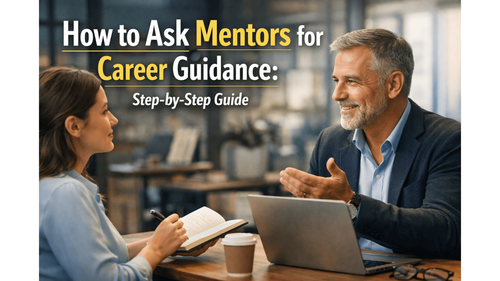

Scripts for Asking Mentors for Career Guidance: A Practical Playbook to Build Powerful Professional Relationships
Many talented professionals never reach out
to mentors—not because they lack ambition, but because they don’t know what to say. The fear of sounding awkward, transactional, or unprepared often leads to missed opportunities that could significantly accelerate career growth.
In today’s competitive professional landscape, mentorship is no longer optional—it is a strategic advantage. Yet, most professionals struggle with initiating meaningful conversations, asking the right questions, and maintaining long-term relationships.
This blog transforms a powerful mentorship playbook into a practical, step-by-step guide to help you confidently reach out, build relationships, and leverage mentorship for real career progress.
Who Is This Blog For?
- Working professionals looking to accelerate career growth through mentorship
- Early-career individuals unsure how to approach senior professionals
- Mid-career professionals navigating transitions or leadership roles
- Job seekers seeking clarity, direction, and strategic guidance
- Professionals who hesitate to reach out due to fear of rejection or awkwardness
Why This Topic Matters Today?
Modern careers are no longer linear. Professionals frequently switch roles, industries, and career paths, making guidance more valuable than ever. Research consistently shows that professionals with mentors advance faster, make better decisions, and experience higher career satisfaction.
However, the gap lies in execution. Most advice around mentorship is vague—phrases like “network more” or “just ask” do not translate into action.
Without clear communication strategies:
- Professionals hesitate to initiate conversations
- Outreach messages go unanswered
- Opportunities for guidance and growth are lost
A structured, script-based approach removes uncertainty and transforms mentorship from a vague idea into a practical, repeatable system.
Core Concept or Framework Explained
The foundation of effective mentorship outreach lies in clarity, structure, and intentional communication. Instead of improvising, this playbook introduces a structured approach built around preparation, scripting, and relationship management.
The process follows three key phases:
- Preparation before outreach
- Structured communication using proven scripts
- Consistent follow-up to build long-term relationships
Each phase ensures that every interaction is purposeful, respectful, and valuable—for both you and the mentor.
At its core, the framework emphasises one critical principle: make it easy for mentors to say yes by being specific, prepared, and respectful of their time.
How This Blog and Guidebook Help You?
This blog and guidebook provide practical, ready-to-use strategies that help you:
- Overcome fear of reaching out to mentors
- Use proven scripts instead of guessing what to say
- Ask focused, high-quality questions that get meaningful responses
- Conduct impactful mentorship conversations
- Build long-term professional relationships through consistent follow-up
The outcome is not just a single conversation—it is a system for building relationships that support long-term career growth.
Step-by-Step Breakdown
Step 1: Prepare Before You Reach Out
Effective mentorship begins before you send your first message. Preparation determines whether your outreach gets ignored or receives a positive response.
Focus on three critical elements:
- Clarify your goal
Define exactly what you want. For example, instead of saying “I need career advice,” specify a clear outcome like exploring a career transition within a defined timeframe.
- Research your mentor
Study their background, career journey, and recent work. Identify a meaningful connection point such as a shared experience or a topic they have spoken about.
- Craft a precise ask
Request something specific and manageable, such as a 20-minute call or a single question via email. Avoid vague requests that shift planning responsibility onto the mentor.
This preparation ensures your outreach feels intentional and thoughtful.
Step 2: Use Scripts That Get Responses
Your first message acts as a cover letter for a professional relationship. It must quickly establish context, connection, and clarity.
An effective outreach message includes:
- Who you are
- Why you are reaching out
- A genuine connection point
- A clear and specific ask
Example approach:
- Reference a specific achievement or content from the mentor
- Briefly introduce your background
- Ask for a short, focused interaction
The key principle is simple: make your message easy to read, easy to respond to, and easy to accept.
Step 3: Structure Your First Conversation
Getting a “yes” is only the beginning. The quality of your first conversation determines whether the relationship continues.
Follow a structured approach:
- Opening
Start with gratitude and briefly introduce your context and purpose
- Middle
Ask one focused question and actively listen instead of jumping between topics
- Closing
Summarise key insights, mention how you will act on them, and signal a potential follow-up
Respecting the agreed time and staying focused demonstrates professionalism and builds trust.
Step 4: Follow Up to Build the Relationship
Most professionals fail at this stage. A strong follow-up is what transforms a one-time conversation into an ongoing mentorship relationship.
Follow a simple cadence:
- Within 24 hours
Send a thank-you message referencing a specific insight and how it influenced your thinking
- After 4 weeks
Share progress updates based on the mentor’s advice
- Every 6–8 weeks
Stay in touch by sharing relevant resources or updates without asking for anything
This consistent, value-driven communication keeps the relationship active without being overwhelming.
Step 5: Handle Specific Mentorship Scenarios
As your career evolves, you will face situations that require tailored conversations.
Examples include:
- Career pivots
Ask about lessons learned and unexpected challenges
- Feedback on your career narrative
Request honest input on how your experience is perceived
- Formalising mentorship
Propose structured, periodic conversations with clear expectations
- Asking for referrals
Approach respectfully, giving the mentor full freedom to decline
Using the right language in these scenarios ensures clarity while maintaining professionalism.
Step 6: Apply a 30-Day Action Plan
To turn knowledge into action, follow a structured monthly plan:
- Week 1
Research potential mentors and prepare your outreach
- Week 2
Send initial messages and track responses
- Week 3
Conduct conversations and send follow-ups
- Week 4
Reflect, refine your approach, and nurture relationships
This systematic approach ensures consistent progress instead of random effort.
Common Mistakes or Pitfalls to Avoid
Avoid these common errors that weaken mentorship efforts:
- Asking vague questions without a clear objective
- Making the conversation entirely about your needs
- Asking for too much in the first interaction
- Failing to follow up after the conversation
- Ignoring time boundaries during calls
Each of these mistakes reduces your credibility and lowers the likelihood of building a meaningful relationship.
A better approach is to be specific, respectful, and consistent in every interaction.
How Should You Use This Guidebook Effectively?
To get the best results, follow a structured approach:
- Read the guide once to understand the full process
- Identify scripts relevant to your current situation
- Customise templates using your real details
- Allocate focused time to implement outreach
- Revisit the guide as your career evolves
Treat this guide as a practical toolkit rather than a one-time read. The more you use it, the more natural and effective your communication will become.
Key Takeaways
- Mentorship is a high-impact strategy for career growth
- Preparation is the foundation of successful outreach
- Specific, low-effort asks increase response rates
- Structured conversations create stronger impressions
- Consistent follow-up builds long-term relationships
- Value-driven communication strengthens credibility
- Taking action quickly is more important than perfection
Your Next Step: Accelerate Your Career with PlanetSpark
Creating an impact-driven resume is not just about landing your next job—it’s about owning your professional story and presenting it with clarity, confidence, and credibility. When your resume clearly communicates value, results, and impact, opportunities follow naturally.
At PlanetSpark, we are committed to empowering working professionals with practical, outcome-focused resources that drive real career growth. From resume building and workplace communication to leadership presence and professional writing, our programs are designed to help you succeed in today’s fast-evolving job market.
Visit https://www.planetspark.in/resources to explore:
- Career and resume-building guides
- Workplace communication and professional writing resources
- Skill-development tools curated for working professionals
Want a deeper, hands-on experience?
You can also book a free trial session to learn more about PlanetSpark’s Working Professional Courses, designed to accelerate your career through personalised coaching, real-world practice, and expert guidance.
Your career deserves more than generic advice.
It deserves clarity, confidence, and measurable impact.
Start building that advantage today—with PlanetSpark.
Personalized Communication Roadmaps
Record a video to get a AI generated personalized communication reports