
How to Assess Decision Strengths and Weaknesses for Growth
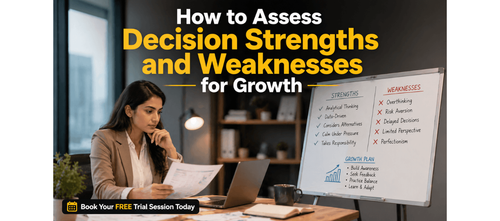

Mapping Decision Strengths and Weaknesses for Growth: A Guide for Professionals
In today’s fast-paced and high-pressure work environments, professionals are expected to make quick and effective decisions. Whether it’s managing teams, negotiating contracts, or leading projects, decision-making plays a crucial role in your career success. However, many professionals struggle with making confident decisions because they haven’t taken the time to understand and refine their decision-making process.
That’s where Mapping Decision Strengths and Weaknesses for Growth comes in. A weekly decision audit gives you a structured way to review your decision-making process, identify patterns, and refine your judgment for the future. This guide will show you how to create such a system, using a proven framework that turns your decisions into long-term career assets.
Download these resources and apply them alongside your daily work for improved clarity, productivity, and professional growth. You can also book a free trial to gain expert guidance and refine your decision-making process. The materials are designed in a clear, structured format to help professionals learn efficiently and implement insights with confidence.
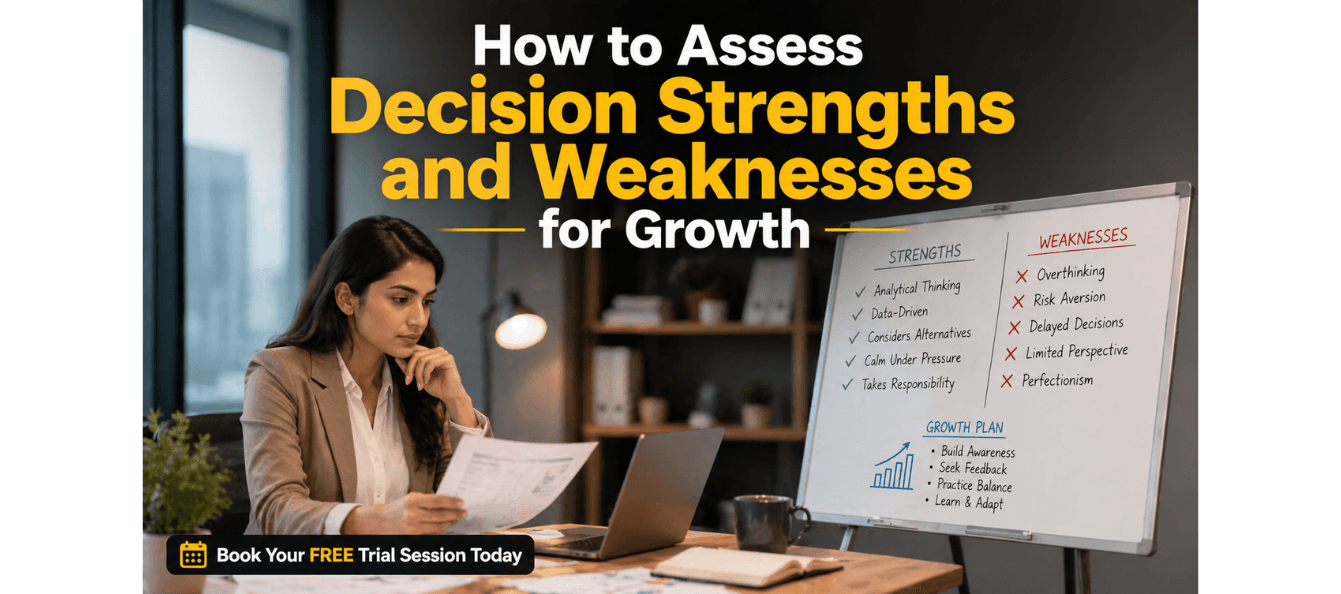
Who Is This Blog For?
This blog is for professionals who want to enhance their decision-making process by identifying their strengths and weaknesses. It’s especially useful for:
- Career changers seeking to make confident decisions in a new field
- Managers and leaders who need to make strategic decisions across complex situations
- Consultants and advisors who need to demonstrate strong decision-making under pressure
- Mid-career professionals looking to improve their decision-making consistency and build a track record of successful decisions
Why This Topic Matters Today?
In the modern workplace, decision-making is an essential skill. Yet many professionals, even those with years of experience, make decisions based on instinct or habits rather than a structured, deliberate approach. Research consistently shows that professionals who reflect on their decision-making process and continuously improve their skills outperform their peers in outcomes, career longevity, and leadership opportunities.
The key to improving your decision-making is awareness. Professionals who regularly assess their strengths and weaknesses in decision-making are more likely to make decisions that lead to successful outcomes. They learn from their mistakes, course-correct when necessary, and become more confident in their judgment.
Core Concept or Framework Explained
The Decision Strengths and Weaknesses Scorecard offers a practical framework to audit and assess your decision-making abilities across six core dimensions. These dimensions represent the critical areas of decision-making that can be developed over time with practice and reflection.
The Six Core Decision-Making Dimensions:
1. Clarity of Intent: Do you know exactly what you are trying to achieve before you make a decision? Strong decision-makers define success criteria upfront.
2. Information Gathering: Do you seek enough data without falling into analysis paralysis? The best decisions balance speed with sufficient evidence.
3. Bias Awareness: Can you identify when emotions, past experiences, or social pressures distort your judgment? Self-awareness in decision-making is a key advantage.
4. Stakeholder Consideration: Do your decisions account for the perspectives and needs of the people they impact? Inclusive decision-making builds credibility.
5. Risk Calibration: Are you consistently too cautious, too bold, or well-calibrated? Understanding your default risk tolerance is essential for growth decisions.
6. Post-Decision Learning: Do you review your decisions after the fact—whether they worked or not? Reflection is what converts experience into wisdom.
This framework helps you assess your decision-making process holistically and provides a structure for improving each aspect of it.
How This Blog and Guidebook Help You?
This guide helps you understand where your decision-making strengths lie and where you can improve. The benefits of using this framework include:
- Increased Self-Awareness: Identify the areas of decision-making where you excel and where you may need to focus your development efforts.
- More Deliberate Decision-Making: By applying a structured framework, you’ll reduce the risk of making decisions based on emotions or unexamined biases.
- Increased Confidence: Understanding your decision-making strengths allows you to make decisions with more confidence, knowing you’ve considered all relevant factors.
- Faster Growth: By focusing on specific weaknesses, you can improve your decision-making abilities quickly and systematically.
The Decision Strengths and Weaknesses Scorecard gives you a clear roadmap for refining your judgment and decision-making over time.
Step-by-Step Breakdown
Step 1: The Decision Strengths Scorecard
Start by honestly rating yourself on each of the six core dimensions. This exercise helps you pinpoint your strengths and weaknesses and gives you a clear starting point for improvement.
Scoring Rubric:
- 1 = Rarely / Almost Never
- 2 = Sometimes
- 3 = Often
- 4 = Very Often
- 5 = Consistently / Almost Always
Dimensions to Rate:
1. Clarity of Intent: Before making a significant decision, I clearly define what success looks like and what I am optimizing for.
2. Information Gathering: I actively seek relevant data and perspectives before deciding, without getting stuck in over-analysis.
3. Bias Awareness: I can identify when emotions, social pressure, or past experiences are influencing my judgment, and I adjust accordingly.
4. Stakeholder Consideration: My decisions account for the perspectives and needs of the people they most directly affect.
5. Risk Calibration: I take calculated risks—neither consistently avoiding decisions nor rushing in without adequate thought.
6. Post-Decision Learning: After major decisions—successful or not—I deliberately reflect on what I can learn and apply next time.
Once you’ve scored yourself, total the scores for all six dimensions. This score will help you understand where you stand and provide clarity on which areas to focus on.
Step 2: Deep-Dive Reflection — Naming Your Patterns
The next step is to reflect on your scores and identify the specific patterns behind them. The reflection phase is key to understanding why you scored as you did and to create a clear path for growth.
Reflect on Your Strengths:
- Which two dimensions scored highest for you? Write them down and reflect on when these strengths showed up most clearly in the past 6 months.
- What conditions or habits enable these strengths to emerge?
- How have others benefited from these strengths in your work?
Reflect on Your Weaknesses:
- Which two dimensions scored lowest for you? Be specific in identifying a situation where these weaknesses cost you time, opportunities, or trust.
- What triggered the weakness? Was it pressure, uncertainty, or a desire to please others?
- What would a "score-5 version" of you have done differently in that situation?
This reflection will give you the specific insight needed to make focused improvements.
Step 3: The GROW-D Framework — Your Decision Improvement Blueprint
The GROW-D Framework is designed to help you apply the insights from your decision audit to real-world decisions. By using the GROW-D framework, you can transform your decision-making habits and systematically improve your judgment.
- G – Ground Your Intent: What decision are you facing? What does success look like? Are you optimizing for speed, quality, relationships, or learning?
- R – Research Your Reality: What do you know? What do you not know? Who else has relevant information? What biases might be at play based on your history?
- O – Open Your Options: List at least three distinct options—one of which you may be instinctively avoiding. Evaluate each option against your success criteria.
- W – Weigh the Risks: For your top two options, assess the upside, downside, and cost of inaction. Is your risk threshold calibrated to the stakes involved?
- D – Decide and Debrief: Make your decision, then set a reminder to review the outcome in 2–4 weeks. What worked? What would you change? What does this teach you for next time?
By applying this framework to an upcoming decision, you’ll be able to make more deliberate, thoughtful choices.
Common Pitfalls and How to Avoid Them
Even experienced professionals fall into common decision traps. Recognizing these traps and applying the specific fixes will help you avoid these mistakes:
- Trap 1: Deciding Under Deadline Pressure: Always ask if the deadline is real or assumed. Even buying 24 extra hours can dramatically improve decision quality.
- Trap 2: Defaulting to Group Consensus: Before any group decision, write your own position privately. Then compare it with what you expressed aloud.
- Trap 3: Anchoring on the First Option: Deliberately generate Option C before evaluating Options A and B. The third option often reveals what you actually value.
- Trap 4: Avoiding Post-Decision Review: Schedule a 15-minute "decision debrief" 2–4 weeks after every significant decision to review what worked and what didn’t.
- Trap 5: Confusing Comfort with Correctness: Ask yourself, “Am I choosing this because it is right, or because it is familiar?” Honest answers to this question are transformative.
How Should You Use This Guidebook Effectively?
To make the most of this guide:
- Complete the Decision Strengths Scorecard: Use it to evaluate your current decision-making strengths and weaknesses.
- Reflect on Your Patterns: Use the reflection prompts to dive deeper into why you scored as you did and what actions you need to take to improve.
- Apply the GROW-D Framework: Use this framework to turn your insights into actionable steps for future decisions.
Key Takeaways
- Self-reflection on decision-making strengths and weaknesses is crucial for career growth and success.
- Use the Decision Strengths Scorecard to measure your decision-making abilities across six core dimensions.
- Apply the GROW-D Framework to turn insights into real-world decision improvements.
- Regularly reflect on your decisions to build a habit of deliberate, high-quality decision-making.
Your Next Step: Accelerate Your Career with PlanetSpark
Creating an impact-driven resume is not just about landing your next job—it’s about owning your professional story and presenting it with clarity, confidence, and credibility. When your resume clearly communicates value, results, and impact, opportunities follow naturally.
At PlanetSpark, we are committed to empowering working professionals with practical, outcome-focused resources that drive real career growth. From resume building and workplace communication to leadership presence and professional writing, our programs are designed to help you succeed in today’s fast-evolving job market.
Visit https://www.planetspark.in/resources to explore:
- Career and resume-building guides
- Workplace communication and professional writing resources
- Skill-development tools curated for working professionals
Want a deeper, hands-on experience?
You can also book a free trial session to learn more about PlanetSpark’s Working Professional Courses, designed to accelerate your career through personalised coaching, real-world practice, and expert guidance.
Your career deserves more than generic advice.
It deserves clarity, confidence, and measurable impact.
Start building that advantage today—with PlanetSpark.
Personalized Communication Roadmaps
Record a video to get a AI generated personalized communication reports