
How to Avoid Overcommitment Through Better Decision-Making
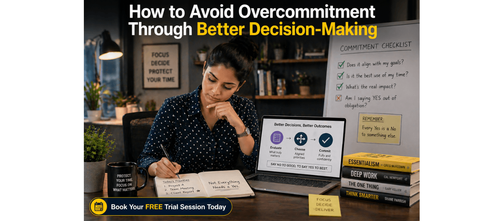

How to Prevent Overcommitment From Poor Decision-Making: A Guide for Professionals
As a professional, it’s easy to fall into the trap of overcommitting. The pressure to say "yes" to every opportunity, task, or request can lead to exhaustion, burnout, and subpar results. While ambition and a strong work ethic are essential for career growth, overcommitment can often stem from poor decision-making, emotional triggers, or the fear of missing out. Unfortunately, this cycle is not only unsustainable but can harm both your personal well-being and professional reputation.
The key to breaking this cycle is learning how to prevent overcommitment by making better decisions, setting clear boundaries, and knowing when to say "no." This guide offers a structured approach to help you recognize the signs of overcommitment and implement strategies to manage your time and energy more effectively.
Download these resources and apply them alongside your daily work for improved clarity, productivity, and professional growth. You can also book a free trial to gain expert guidance and refine your decision-making process. The materials are designed in a clear, structured format to help professionals learn efficiently and implement insights with confidence.
Who Is This Blog For?
This blog is for professionals who find themselves constantly stretched thin due to poor decision-making or overcommitting to tasks. It is especially useful for:
- Managers and team leaders struggling to juggle multiple responsibilities
- Consultants handling multiple client projects with competing demands
- Mid-career professionals overwhelmed by work and personal obligations
- Anyone who feels they are saying "yes" too often and not managing their time effectively
Why This Topic Matters Today?
Overcommitment is a widespread issue in today’s fast-paced work environment. Professionals face mounting pressure to deliver more, faster, and with fewer resources. While the instinct to say "yes" is often fueled by ambition, the truth is that overcommitting leads to diminished effectiveness, strained relationships, and career stagnation.
The consequences of poor decision-making in the form of overcommitment can be severe, resulting in:
- Burnout and exhaustion
- Reduced quality of work
- Decreased job satisfaction
- A damaged professional reputation
Preventing overcommitment is about improving the way you make decisions and ensuring that you commit to the right things, at the right time, for the right reasons.
Core Concept or Framework Explained
The Overcommitment Prevention Framework is designed to help you recognize poor decision-making patterns that lead to overcommitment and take proactive steps to prevent them. The framework is built on three key principles:
1. Awareness: Recognize when you are making decisions based on emotions, external pressure, or fear of missing out (FOMO).
2. Boundaries: Set clear, non-negotiable boundaries that align with your personal and professional priorities.
3. Prioritization: Use effective prioritization techniques to ensure you’re committing to the most impactful tasks.
By following this framework, you’ll gain more control over your decision-making process, set better boundaries, and protect your time and energy for the things that matter most.
How This Blog and Guidebook Help You?
This guide provides actionable strategies for preventing overcommitment and improving decision-making. The benefits of using the Overcommitment Prevention Framework include:
- Improved Decision-Making: Learn to evaluate opportunities and requests objectively, without succumbing to external pressures or emotional triggers.
- Better Time Management: Set clear priorities and boundaries to protect your time and ensure that you’re working on what matters most.
- Reduced Stress and Burnout: By preventing overcommitment, you’ll reduce the likelihood of feeling overwhelmed and stressed.
- Increased Professional Confidence: With stronger decision-making and better boundaries, you’ll communicate more confidently with stakeholders and colleagues.
By implementing this framework, you’ll be able to make more deliberate decisions and avoid the trap of overcommitting yourself, ensuring sustainable success in both your personal and professional life.
Step-by-Step Breakdown
Step 1: Awareness — Recognize the Triggers That Lead to Overcommitment
The first step in preventing overcommitment is becoming aware of the triggers that lead to poor decision-making. Common triggers include:
- Fear of Missing Out (FOMO): You feel the need to say "yes" to every opportunity because you fear you’ll regret missing out.
- People-Pleasing: You say "yes" because you don’t want to disappoint others or seem uncooperative.
- Perfectionism: You believe that taking on more responsibilities will lead to better outcomes, even though it strains your capacity.
- Overconfidence: You overestimate your ability to juggle multiple tasks or think you can handle everything at once.
To become more aware of these triggers, pay attention to moments when you feel rushed, pressured, or overly eager to say "yes." Ask yourself, “Am I saying yes because I truly want to, or because I’m trying to avoid discomfort or disappointment?”
Step 2: Boundaries — Set Clear, Non-Negotiable Limits
Once you recognize the triggers of overcommitment, the next step is to establish boundaries that protect your time and energy. This involves setting clear limits on what you’re willing to commit to and ensuring these limits align with your goals and values. Here’s how to do this:
- Define Your Priorities: Clarify what tasks and responsibilities are most important to you. Ask yourself, “What tasks will help me achieve my long-term goals?”
- Set Limits: Be honest about what you can realistically handle. Use time-blocking to create structure around your workday and ensure you’re not overloaded.
- Learn to Say No: Saying no doesn’t mean you’re being uncooperative—it means you’re protecting your energy and focus for the most impactful tasks. Practice polite ways to say no, like, “I appreciate the opportunity, but I’m currently focused on other priorities.”
Boundaries help you preserve your time for what matters most and reduce the risk of overcommitting to tasks that don’t align with your priorities.
Step 3: Prioritization — Focus on What Truly Matters
With your boundaries in place, it’s time to prioritize. Prioritization ensures that you’re committing to the most important tasks, not just the most urgent or most visible. Here’s how to prioritize effectively:
- Use the Eisenhower Matrix: Divide tasks into four quadrants based on urgency and importance. Focus on high-importance, non-urgent tasks (Quadrant II) to prevent last-minute decision-making.
- Apply the 80/20 Rule (Pareto Principle): Identify the 20% of tasks that will generate 80% of the value. Commit to those first.
- Delegate and Outsource: Recognize when tasks can be delegated to others. If it’s not within your expertise or bandwidth, pass it on.
Prioritization helps you focus on the tasks that will move the needle most, ensuring you’re not overwhelmed by low-impact work.
Step 4: Reflection — Evaluate Your Commitments Regularly
To ensure you’re not falling back into overcommitment patterns, take time each week to reflect on your decisions. Ask yourself:
- Did I say "yes" to tasks that align with my goals?
- Did I overestimate my ability to handle everything?
- Did I respect my boundaries, or did I let external pressure influence my decisions?
By evaluating your decisions weekly, you can catch overcommitment early and adjust your strategy to stay on track.
Common Mistakes or Pitfalls to Avoid
- Saying Yes Without Clarity: Don’t commit to something until you’re clear on its scope, impact, and your capacity to handle it.
- Ignoring Your Energy Levels: Pay attention to how you’re feeling physically and mentally. If you’re running low on energy, it’s time to pull back.
- Neglecting Your Goals: Ensure that every commitment aligns with your long-term objectives. If it doesn’t, it may be time to reconsider.
How Should You Use This Guidebook Effectively?
To make the most of this guide:
- Set Boundaries Early: Define your priorities and boundaries before you’re faced with decisions.
- Practice Saying No: Politely but firmly practice saying no to tasks that don’t align with your goals.
- Reflect Regularly: Use weekly reflections to track your commitments and adjust your approach as needed.
Key Takeaways
- Overcommitment often stems from poor decision-making patterns and emotional triggers like FOMO or people-pleasing.
- Prevent overcommitment by building awareness of your triggers, setting clear boundaries, and prioritizing what truly matters.
- Regularly reflect on your decisions to ensure you’re not falling into old habits that lead to burnout.
Your Next Step: Accelerate Your Career with PlanetSpark
Creating an impact-driven resume is not just about landing your next job—it’s about owning your professional story and presenting it with clarity, confidence, and credibility. When your resume clearly communicates value, results, and impact, opportunities follow naturally.
At PlanetSpark, we are committed to empowering working professionals with practical, outcome-focused resources that drive real career growth. From resume building and workplace communication to leadership presence and professional writing, our programs are designed to help you succeed in today’s fast-evolving job market.
Visit https://www.planetspark.in/resources to explore:
- Career and resume-building guides
- Workplace communication and professional writing resources
- Skill-development tools curated for working professionals
Want a deeper, hands-on experience?
You can also book a free trial session to learn more about PlanetSpark’s Working Professional Courses, designed to accelerate your career through personalised coaching, real-world practice, and expert guidance.
Your career deserves more than generic advice.
It deserves clarity, confidence, and measurable impact.
Start building that advantage today—with PlanetSpark.
Personalized Communication Roadmaps
Record a video to get a AI generated personalized communication reports