
How to Break Free from Career Labels Holding You Back
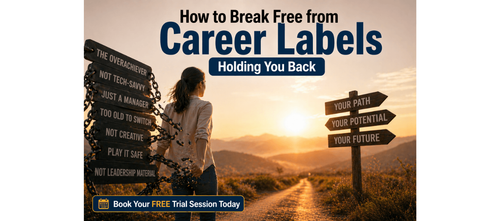

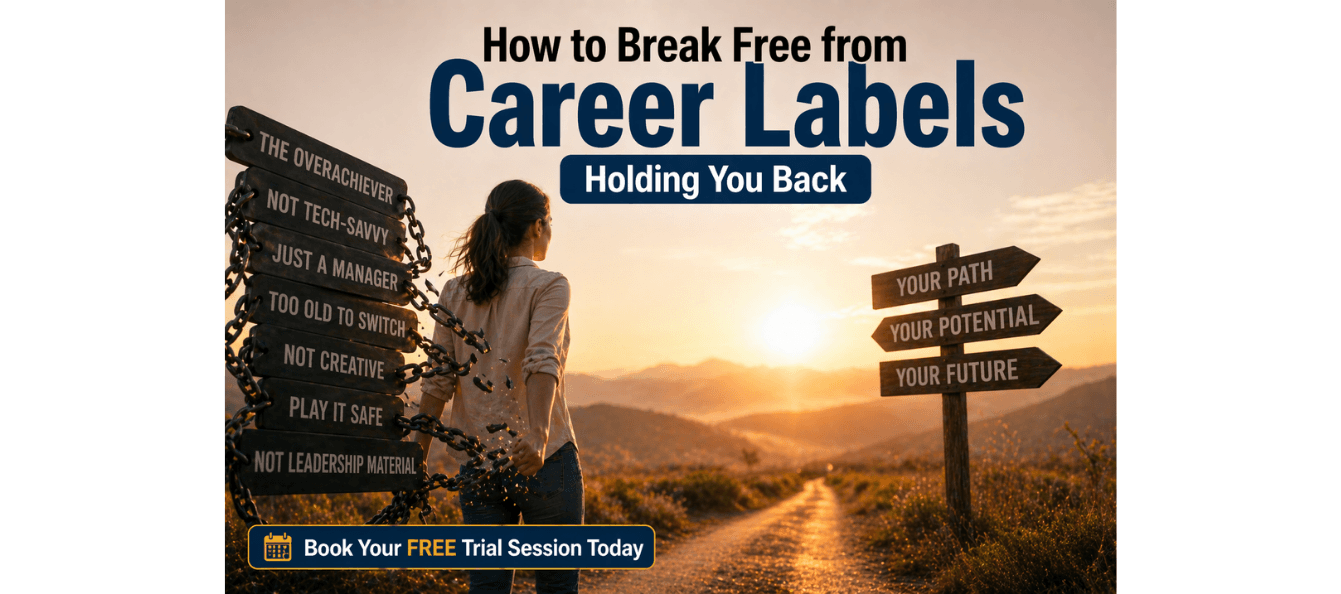
Moving Beyond Outdated Career Labels: How to Redefine Your Professional Identity and Unlock New Opportunities
At some point in your career, you may realise something uncomfortable: the way people describe you no longer reflects the work you actually do.
You might still be known as “the finance person,” “the operations manager,” or “the marketing specialist,” even though your responsibilities have evolved far beyond that label. You’ve grown, taken on new challenges, built new skills—but your professional identity hasn’t caught up.
This disconnect is more than frustrating. It directly impacts the opportunities you see, the roles you’re considered for, how confidently you position yourself, and even how others value your work. Many professionals unknowingly remain stuck not because of a lack of capability, but because of outdated labels that continue to define them.
That’s where the guidebook “Breaking Free from Outdated Career Labels That No Longer Fit” becomes essential. It offers a structured, practical approach to identifying limiting labels, redefining your professional identity, and building credible proof to support that shift.
Download these resources and apply them alongside your daily work for improved clarity, productivity, and professional growth. You can also book a free trial to gain expert guidance and enhance your communication, problem-solving, and decision-making skills. The materials are designed in a clear, structured format to help professionals learn efficiently and implement insights with confidence.
Who Is This Blog For?
- Working professionals with 0–15 years of experience navigating career growth
- Career switchers looking to reposition themselves for new roles
- Consultants and specialists building a stronger professional brand
- Managers and team leads taking on cross-functional responsibilities
- Professionals who feel “boxed in” by outdated job titles
- Individuals seeking clarity on how to communicate their evolving career story
Why This Topic Matters Today?
In today’s fast-changing professional landscape, roles evolve faster than titles. Yet, most organisations—and even individuals—continue to rely on static labels to define dynamic careers.
This creates a critical gap:
- Your skills evolve, but your label stays frozen
- Others perceive you based on outdated roles
- You begin to self-limit your career choices
The guidebook highlights how this “identity freeze” leads to missed opportunities, underconfidence, and reduced visibility. It also introduces the concept of perception lag, where others’ understanding of your capabilities trails behind your actual growth by months or even years.
In a competitive job market, this gap can significantly impact your career trajectory. Addressing it is no longer optional—it’s essential.
Core Concept
At the heart of the guidebook is the idea that your career label is not your career—it is simply a description assigned at a point in time.
The resource introduces a structured framework for “Label Liberation,” built around six core phases:
Audit
Understand
Define
Craft
Prove
Navigate
Each phase represents a deliberate step in shifting your professional identity from outdated perception to accurate positioning.
A key concept introduced is the Identity Intersection Model, which helps you define your new identity based on three factors:
- What you are genuinely excellent at
- What the market needs
- What you want to be known for
The overlap of these three areas forms your true positioning—practical, relevant, and future-focused.
Another critical element is the Transitional Narrative, which connects your past experience with your future direction. Instead of abandoning your old identity, you reframe it as a foundation that strengthens your new positioning.
How This Blog and Guidebook Help You?
This guidebook goes beyond theory and helps you take control of how you are perceived professionally.
By applying it, you will:
- Identify the gap between your current label and actual work
- Build clarity around your evolving professional identity
- Learn how to communicate your career shift effectively
- Develop credible proof through past and present work
- Increase your visibility for relevant roles and opportunities
- Stop self-selecting out of growth opportunities
Most importantly, it helps you move from passive waiting to active career positioning.
Step-by-Step Breakdown
Step 1: Audit Your Current Labels
The first step is awareness.
You begin by identifying where your current labels exist:
- Job titles and official roles
- LinkedIn headline and summary
- Resume or portfolio
- Email signatures and internal profiles
- How others introduce you
The Label Audit Worksheet helps you compare:
- Your official labels
- How others describe you
- The work you actually do
The gap between these elements reveals your opportunity for repositioning.
Step 2: Understand Why Labels Stick
Outdated labels persist due to both external and internal forces.
External factors include:
- Organisational systems that resist change
- Manager perception lag
- Colleague assumptions
Internal factors include:
- Imposter syndrome
- Comfort with familiarity
- Fear of rejection
- Attachment to past identity
Understanding these forces helps you realise that the issue is not capability—it is perception and positioning.
Step 3: Define Your New Professional Identity
Using the Identity Intersection Model, you define your new positioning based on:
- Proven skills from recent experience
- Market demand and language
- Future career direction
You then create a Professional Identity Statement using a structured template:
“I am a [role] who specialises in [value] for [audience], known for [capability], and building towards [future goal].”
This becomes the foundation of your new positioning.
Step 4: Craft Your Transitional Narrative
A strong identity shift requires a coherent story.
The guidebook introduces a narrative structure:
- Destination: Where you are now or heading
- Bridge: How your past connects to it
- Foundation: What your previous experience enabled
Instead of saying “I used to do X,” you position it as:
“My background in X gave me the foundation to now do Y effectively.”
This makes your transition feel logical and credible.
Step 5: Build Evidence for Your New Identity
Claims alone are not enough—proof is essential.
The guidebook emphasises two types of evidence:
- Retrospective evidence: Past work reframed under your new identity
- Prospective evidence: New work aligned with your future positioning
It also introduces a 90-day sprint plan:
- Days 1–30: Build foundation and clarity
- Days 31–60: Create visibility and momentum
- Days 61–90: Consolidate and test your identity
This structured approach ensures consistent progress without overwhelm.
Step 6: Navigate Internal Conversations
Changing your identity within your organisation requires strategic communication.
The guidebook provides frameworks for:
- Conversations with managers
- Informal stakeholder interactions
- Networking introductions
The focus is always on:
- Demonstrating value
- Providing evidence
- Aligning with organisational needs
Consistent behaviour, not announcements, drives perception change.
Common Mistakes
The guidebook highlights several common mistakes professionals make:
- Waiting to feel “ready” before taking action
- Trying to change everything at once
- Using a new label without supporting evidence
- Failing to connect past experience to new positioning
- Seeking universal validation before moving forward
- Continuing to use outdated labels in daily interactions
These mistakes slow down or completely block identity transitions. The solution is consistent, visible action backed by clear positioning.
How Should You Use This Guidebook Effectively?
To get the best results, follow a structured approach:
- Start by skimming the guide to understand the full framework
- Dedicate 2–3 focused hours to complete the audit and worksheets
- Work through each step sequentially instead of jumping ahead
- Apply insights immediately to your LinkedIn, resume, and conversations
- Follow the 90-day sprint plan for sustained progress
- Revisit the guide quarterly as your career evolves
Treat the guide as an active tool, not passive reading material. The value lies in what you implement.
Key Takeaways
- Your career label is a description, not a permanent identity
- The gap between your label and your actual work is your opportunity
- A strong narrative is more powerful than a title change
- Evidence is essential to make your new identity credible
- Perception shifts through consistent behaviour over time
- A focused 90-day effort can significantly accelerate your transition
- Your past experience is a foundation, not a limitation
Your Next Step: Accelerate Your Career with PlanetSpark
Creating an impact-driven resume is not just about landing your next job—it’s about owning your professional story and presenting it with clarity, confidence, and credibility. When your resume clearly communicates value, results, and impact, opportunities follow naturally.
At PlanetSpark, we are committed to empowering working professionals with practical, outcome-focused resources that drive real career growth. From resume building and workplace communication to leadership presence and professional writing, our programs are designed to help you succeed in today’s fast-evolving job market.
Visit https://www.planetspark.in/resources to explore:
- Career and resume-building guides
- Workplace communication and professional writing resources
- Skill-development tools curated for working professionals
Want a deeper, hands-on experience?
You can also book a free trial session to learn more about PlanetSpark’s Working Professional Courses, designed to accelerate your career through personalised coaching, real-world practice, and expert guidance.
Your career deserves more than generic advice.
It deserves clarity, confidence, and measurable impact.
Personalized Communication Roadmaps
Record a video to get a AI generated personalized communication reports