
How to Build a Focused Work Environment That Minimizes Distractions
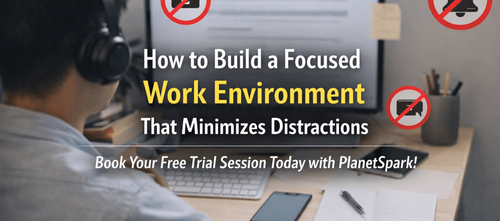

Create a Distraction-Free Work System and Protect Your Deep Work
You sit down to work. Within seven minutes, a Slack notification pulls your attention. You check it—and then check your email "just quickly." Forty-five minutes later, you resurface, unsure where you were. Sound familiar? This is not a willpower problem. It is a systems problem.
The modern workplace is designed to interrupt you. Open-plan offices, always-on messaging platforms, back-to-back meetings, and the cultural pressure to respond instantly have created a default work environment that fragments your focus and kills productivity. The solution? Designing a distraction-free work system that actually sticks.
Download the resource from here to get more details.
Book Your Free Trial Session Today with PlanetSpark!
Who Is This Blog For?
This blog is for professionals who:
- Struggle to maintain focus due to constant distractions.
- Want to protect their deep work time and improve productivity.
- Need a clear, actionable plan to create a sustainable, distraction-free work system.
Whether you're a manager, consultant, or knowledge worker, this guide will help you identify and eliminate the distractions that are sabotaging your workday.
Why This Topic Matters Today?
In today’s work environment, distractions are everywhere. From the ping of an email to the constant stream of Slack messages and notifications, staying focused on important work is increasingly difficult. These interruptions reduce productivity, increase stress, and prevent high-quality output.
A well-designed work system helps you take back control of your day, protect your deep work time, and boost efficiency. The key is creating an environment that minimizes distractions, allowing you to focus on high-value tasks without constantly battling interruptions.
Core Concept or Framework Explained
The Designing a Distraction-Free Work System framework is built around two main pillars:
1. Identifying Distractions: The first step in designing your distraction-free system is to understand what’s distracting you. These distractions can be external (such as digital or physical interruptions) or internal (like mental fatigue or lack of focus). Identifying these triggers is crucial to minimizing their impact.
2. Creating Boundaries: Once you’ve identified the distractions, the next step is setting boundaries. These boundaries are designed to protect your focus and ensure that you have uninterrupted time for deep work.
How This Blog and Guidebook Help You?
By applying the principles in this guide, you will:
- Protect your deep work: Learn how to block off time for high-focus tasks and eliminate distractions during those periods.
- Improve your productivity: Create a work environment that supports focus and efficiency, leading to better output in less time.
- Reduce stress: Minimize the mental burden of constant interruptions and task-switching, allowing you to stay engaged and energized throughout the day.
Step-by-Step Breakdown
Here’s how you can create your own distraction-free work system:
1. Unmask Your Personal Distraction Triggers
The first step in designing a distraction-free system is identifying what distracts you. These distractions often appear as "urgent" tasks or "quick" diversions, but collectively, they erode your productivity. Use the guide to categorize your distractions into external (digital, physical) and internal (mental) triggers.
2. Minimize External Digital Interruptions
One of the most common distractions is digital notifications. Turn off non-essential alerts, set "Do Not Disturb" modes on communication apps, and designate specific times for checking email or social media. This will help you stay focused on tasks that matter.
3. Control External Physical Disruptions
Beyond digital distractions, your physical environment plays a role in maintaining focus. Whether it's a noisy office or an open-door policy that invites constant interruptions, the guide will help you design a workspace that minimizes physical distractions and protects your focus.
4. Create Deep Work Blocks
Protect time for deep work by scheduling dedicated blocks of uninterrupted time. Use techniques like time blocking to ensure that your most important work gets done without being disrupted by meetings, emails, or phone calls. The guidebook provides strategies for setting clear boundaries and communicating your need for focused time with colleagues.
5. Design Your Workday with Energy in Mind
Your workday should align with your energy levels, not just your to-do list. Schedule your most demanding tasks during your peak energy periods, and leave low-energy tasks (like administrative work or routine communication) for your trough periods. The guide helps you identify your energy rhythms and plan your day accordingly.
Common Mistakes or Pitfalls to Avoid
Even with a distraction-free work system in place, there are common mistakes that can hinder your progress:
- Overloading your schedule: Trying to do too much in a single day can defeat the purpose of creating focused work periods. Prioritize tasks and set realistic expectations for each day.
- Failing to protect deep work time: Without clear boundaries, your deep work periods can easily be interrupted. Make sure you communicate your need for focus and block off time in your calendar for high-priority tasks.
- Not adjusting for energy fluctuations: Not all hours are equal, and your energy will fluctuate throughout the day. Make sure your work schedule aligns with these natural rhythms, not just with an arbitrary clock.
How Should You Use This Guidebook Effectively?
To use the guidebook effectively:
1. Identify your distractions: Track your time for a week to identify what consistently interrupts your flow. Categorize these distractions and look for patterns.
2. Set clear boundaries: Use the guidebook's strategies to create digital and physical boundaries that protect your time and energy.
3. Create deep work blocks: Schedule uninterrupted time for your most important tasks, and ensure you are free from distractions during these periods.
4. Adjust for energy levels: Plan your day based on when you are most focused and energized, leaving less demanding tasks for times when your energy dips.
Key Takeaways
- Identify and eliminate distractions to protect your deep work time.
- Create a structured workday that aligns with your natural energy rhythms for maximum productivity.
- Use digital and physical boundaries to ensure focus during important tasks.
- Regularly adjust your work system based on feedback and performance.
Your Next Step: Accelerate Your Career with PlanetSpark
Creating an impact-driven resume is not just about landing your next job—it’s about owning your professional story and presenting it with clarity, confidence, and credibility. When your resume clearly communicates value, results, and impact, opportunities follow naturally.
At PlanetSpark, we are committed to empowering working professionals with practical, outcome-focused resources that drive real career growth. From resume building and workplace communication to leadership presence and professional writing, our programs are designed to help you succeed in today’s fast-evolving job market.
Visit https://www.planetspark.in/resources to explore:
- Career and resume-building guides
- Workplace communication and professional writing resources
- Skill-development tools curated for working professionals
Want a deeper, hands-on experience?
You can also book a free trial session to learn more about PlanetSpark’s Working Professional Courses, designed to accelerate your career through personalised coaching, real-world practice, and expert guidance.
Your career deserves more than generic advice.
It deserves clarity, confidence, and measurable impact.
Start building that advantage today—with PlanetSpark.
Personalized Communication Roadmaps
Record a video to get a AI generated personalized communication reports