
How to Build a Winning CV for Grant-Funded Research Careers
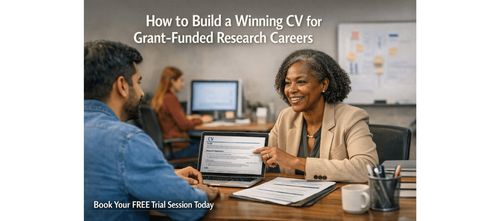

Grant-Funded Research Professionals Build a Powerful Academic and Research Career Document
In today’s highly competitive research and academic landscape, having strong credentials is no longer enough. Researchers, grant professionals, and academics often spend years building expertise, publishing papers, and contributing to meaningful work—yet struggle to present their achievements effectively on paper. The reality is simple: even highly qualified candidates can get rejected early if their CV fails to communicate clarity, structure, and impact.
For grant-funded research professionals, a CV is not just a summary of experience—it is a critical decision-making document. Funding bodies, academic institutions, and industry recruiters use it to assess credibility, capability, and potential. A poorly structured CV can weaken even the strongest profile, while a well-crafted one can open doors to fellowships, grants, leadership roles, and cross-sector opportunities.
This guide is built from a comprehensive CV template pack specifically designed for research professionals. It addresses the unique challenge of balancing academic depth with modern readability, helping you present publications, grants, research impact, and professional achievements in a structured, compelling way.
Download these resources and apply them alongside your daily work for improved clarity, productivity, and professional growth. You can also book a free trial to gain expert guidance and enhance your communication, problem-solving, and decision-making skills. The materials are designed in a clear, structured format to help professionals learn efficiently and implement insights with confidence.
Who Is This Blog For?
- Academic researchers applying for faculty positions, fellowships, or tenure reviews
- Postdoctoral professionals seeking competitive research funding
- Grant writers and research managers handling funding portfolios
- Early career researchers entering the job market
- Professionals transitioning from academia to industry roles
- Clinical researchers, consultants, and policy analysts
- Senior research leaders aiming to showcase strategic and institutional impact
Why This Topic Matters Today?
The expectations from research professionals have evolved significantly. Today’s CVs must do more than list qualifications—they must demonstrate measurable impact, clarity of thought, and alignment with the role or funding objective.
Common challenges professionals face include:
- Overloaded CVs that lack structure and readability
- Difficulty balancing academic depth with concise presentation
- Failure to tailor CVs for different opportunities such as grants, industry roles, or policy work
- Under-communicating achievements like funding secured, research impact, or leadership contributions
In a competitive environment where reviewers often spend only a few minutes on each application, a strategically structured CV becomes a decisive advantage.
Core Concept or Framework Explained
The core idea behind this template pack is simple but powerful: one CV format does not fit all research careers.
Instead, the framework focuses on:
- Context-based CV design: Different roles require different emphasis
- Structured storytelling: Presenting your work as a coherent narrative
- Impact-first communication: Highlighting outcomes, not just activities
- Readability and scannability: Making complex academic profiles easy to evaluate
The templates are divided into 10 distinct categories, each tailored to a specific career scenario—from academic roles and fellowships to industry transitions and policy research.
For example:
- Academic CVs prioritise publications, teaching, and grants
- Industry CVs translate research into business impact
- Policy CVs emphasise real-world influence and stakeholder engagement
- Consultant CVs focus on project outcomes and client impact
This structured approach ensures that your CV aligns with what decision-makers are actually looking for.
How This Blog and Guidebook Help You?
This guide and template pack help you transform your CV from a passive document into a strategic career tool.
Key benefits include:
- Clarity in presenting complex research experience
- Better alignment with specific roles, grants, or industries
- Improved chances of shortlisting and funding success
- Stronger positioning of your professional narrative
- Increased confidence in communicating your value
By following these templates, you not only improve formatting but also learn how to think about your career in terms of impact, outcomes, and strategic positioning.
Step-by-Step Breakdown
Understanding the Role of Your CV
A research CV is fundamentally different from a standard resume. It acts as a credentialing document that demonstrates:
- Academic credibility
- Research capability
- Funding potential
- Institutional and societal impact
Before writing, clearly define the purpose of your CV—whether it is for a fellowship, job application, or grant submission.
Choosing the Right Template
The template pack includes 10 specialised formats, each designed for a unique scenario:
- Academic Research CV for faculty roles and grant submissions
- Postdoctoral Fellowship CV focusing on research outputs and mentorship
- Grant Writer and Manager CV highlighting funding and compliance expertise
- Industry Transition CV translating academic work into commercial value
- Early Career Researcher CV for students and recent graduates
- Interdisciplinary CV for multi-domain researchers
- Clinical Research CV for regulated trial environments
- Research Consultant CV for project-based professionals
- Senior Research Leader CV for leadership and funding impact
- Policy and Applied Research CV for real-world influence
Selecting the right template ensures your strengths are presented in the most relevant way.
Structuring Your Professional Summary
The professional summary is your first impression. It should:
- Clearly state your specialisation
- Highlight years of experience
- Include major achievements such as publications or funding
- Position your overall contribution
For example, a strong summary may include total funding secured, number of publications, or key research impact.
Highlighting Research Interests and Focus Areas
Clearly defining your research interests helps reviewers quickly understand your domain expertise. Include:
- Primary research area
- Secondary or supporting areas
- Emerging interests or future directions
This section is especially important for academic and fellowship applications.
Presenting Academic Appointments and Experience
Your experience section should be structured and chronological. Focus on:
- Roles and institutions
- Duration of work
- Key contributions
For industry or consultant roles, translate responsibilities into outcomes such as efficiency improvements, collaborations, or innovations.
Showcasing Grants, Funding, and Achievements
Funding is a critical credibility marker in research careers. Always include:
- Grant titles
- Funding bodies
- Amount secured
- Year of award
This demonstrates trust, capability, and impact.
Listing Publications and Research Outputs
Publications should be presented in a clean, standard format. Include:
- Authors
- Title
- Journal or publisher
- Year
- DOI or link
For early career researchers, include preprints, conference presentations, and thesis work.
Emphasising Skills and Methods
Clearly list your:
- Research methodologies
- Technical skills
- Software tools
- Analytical capabilities
For industry roles, highlight transferable skills like data analysis, problem-solving, and communication.
Tailoring for Specific Career Paths
Each template emphasises different elements:
- Academic roles focus on publications and teaching
- Industry roles highlight innovation and business outcomes
- Policy roles emphasise impact and stakeholder engagement
- Leadership roles showcase funding, team management, and strategy
Customisation is key to relevance.
Common Mistakes or Pitfalls to Avoid
- Using a generic CV for all applications
- Overloading with information without structure
- Failing to quantify achievements such as funding or impact
- Ignoring readability and formatting
- Not aligning the CV with the target role or audience
Avoiding these mistakes significantly improves your chances of success.
How Should You Use This Guidebook Effectively?
To get the best results from this template pack:
- Start by identifying your current career goal
- Choose the most relevant template
- Replace placeholder content with your actual details
- Adjust section order to highlight your strongest credentials
- Convert the template into an editable format if needed
- Review and refine for clarity and alignment
Recommended workflow:
- Initial drafting: 2–3 hours
- Refinement and tailoring: 1–2 hours per application
- Regular updates: Every 3–6 months
Consistency and iteration are key to maintaining a strong CV.
Key Takeaways
- A research CV is a strategic document, not just a record of experience
- Different career paths require different CV structures
- Clarity, readability, and relevance are critical for success
- Always highlight measurable impact such as funding, publications, or outcomes
- Tailor your CV for each application to maximise effectiveness
- Use structured templates to save time and improve quality
Your Next Step: Accelerate Your Career with PlanetSpark
Creating an impact-driven resume is not just about landing your next job—it’s about owning your professional story and presenting it with clarity, confidence, and credibility. When your resume clearly communicates value, results, and impact, opportunities follow naturally.
At PlanetSpark, we are committed to empowering working professionals with practical, outcome-focused resources that drive real career growth. From resume building and workplace communication to leadership presence and professional writing, our programs are designed to help you succeed in today’s fast-evolving job market.
Visit https://www.planetspark.in/resources to explore:
- Career and resume-building guides
- Workplace communication and professional writing resources
- Skill-development tools curated for working professionals
Want a deeper, hands-on experience?
You can also book a free trial session to learn more about PlanetSpark’s Working Professional Courses, designed to accelerate your career through personalised coaching, real-world practice, and expert guidance.
Your career deserves more than generic advice.
It deserves clarity, confidence, and measurable impact.
Personalized Communication Roadmaps
Record a video to get a AI generated personalized communication reports