
How to Build Consistency in Strategic Thinking for Career Growth
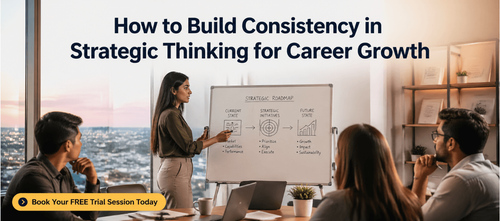

Unlock Career Growth with Strategic Thinking: A Consistent Practice for Lasting Impact
Strategic thinking is a skill that many professionals are urged to develop, yet few manage to turn it into a habit. We’ve all heard the advice: "Think more strategically." It's a popular phrase in performance reviews, leadership workshops, and self-help guides. But despite its widespread usage, many professionals—whether senior or junior—struggle to apply strategic thinking consistently in their day-to-day work. Instead of being an instinctive, regular practice, strategic thinking becomes a sporadic event, triggered by crises or significant presentations.
The main issue isn’t a lack of intelligence or drive. The problem lies in the absence of a structured system that makes strategic thinking a regular part of our routines. Just like fitness or learning a new language, strategic thinking requires consistent practice to remain sharp. Without deliberate, structured effort, it can be overshadowed by the daily demands of meetings, emails, and urgent tasks.
This blog outlines how you can cultivate strategic thinking as a habit, using a systematic approach to ensure you practice it regularly, not just when required. We’ll walk you through how to use a Strategic Thinking Tracker—a tool designed to help professionals build the habit of thinking strategically, every week, not just during major work events.
Download these resources and apply them alongside your daily work for improved clarity, productivity, and professional growth. You can also book a free trial to gain expert guidance and enhance your communication, problem-solving, and decision-making skills. The materials are designed in a clear, structured format to help professionals learn efficiently and implement insights with confidence.
Who Is This Blog For?
This blog is for professionals who want to integrate strategic thinking into their careers and develop the habit of making high-level decisions consistently. If any of the following apply to you, this blog will help you:
- Mid-level professionals looking to move into leadership roles
- Senior professionals aiming to sharpen their strategic mindset
- Managers who want to make decisions that align with organizational goals
- Anyone struggling to apply strategic thinking consistently in their day-to-day work
Why This Topic Matters Today?
In today’s fast-paced work environment, the ability to think strategically is a game-changer. As organizations grow more complex and competitive, the need for employees who can think beyond the immediate task and focus on long-term goals becomes more critical. Strategic thinking helps professionals solve problems at the macro level, anticipate challenges, and find solutions that align with larger business objectives.
Yet, despite its importance, strategic thinking is often sidelined in favor of short-term, tactical work. According to studies, professionals often get bogged down in urgent tasks and fail to step back and assess the broader implications of their work. This blog addresses that gap and provides a structured, actionable system for making strategic thinking a regular practice.
Core Concept or Framework Explained
The Strategic Thinking Consistency Tracker is a practical resource designed to help professionals build and maintain the habit of strategic thinking. It offers a simple system that focuses on key strategic thinking habits, turning them into regular practices. Here's an overview of how it works:
1. Understanding Your Current Strategic Thinking: The tracker starts by helping you assess where you currently stand in your strategic thinking abilities. This self-assessment is crucial because it provides the baseline from which you will improve. You’ll be asked to rate yourself on several dimensions, such as pattern recognition, long-range thinking, and stakeholder mapping.
2. Weekly Strategic Thinking Ritual: The heart of the tracker is the weekly ritual. Each week, you’ll reflect on one significant situation that occurred, analyze what it reveals about your strategic thinking, decide on the strategic priority for the following week, and commit to one action. This focused reflection, which takes just 20-30 minutes, is designed to rewire your brain and make strategic thinking a habit.
3. The Five Habits of Consistently Strategic Thinkers: The tracker emphasizes five key habits that are common among strategic thinkers:
- Zooming out before diving into tasks
- Questioning the default
- Connecting the dots across silos
- Thinking two moves ahead
- Seeing through stakeholder eyes
By consistently practicing these habits, you’ll train your mind to think strategically without being prompted.
4. The 30-60-90 Day Growth Plan: This plan provides a clear progression for your strategic thinking practice. Over the course of three months, you will move from awareness to application, and finally to mastery. The plan includes milestones to track your progress, ensuring you stay on course.
How does this blog and Guidebook Help You?
This blog provides you with a structured approach to integrating strategic thinking into your daily routine. By following the advice and tools in this blog, you can expect several key outcomes:
- Improved Decision-Making: By consistently reflecting on your work and analyzing its broader implications, you will make better, more informed decisions.
- Increased Visibility: As your strategic thinking becomes more visible to colleagues and superiors, you will be recognized as a strategic contributor, not just a task executor.
- Enhanced Problem-Solving: By using the provided frameworks, such as the 3-Why Drill and Stakeholder Impact Map, you will learn to approach problems from a strategic perspective, uncovering the root causes and finding better solutions.
- Professional Growth: As you continue to build the habit of strategic thinking, you will create opportunities for career advancement and gain recognition for your ability to think at a higher level.
Step-by-Step Breakdown
Here’s a breakdown of the key modules in the tracker, and how you can implement them for maximum impact:
1. Baseline Assessment: Start by honestly rating your current strategic thinking abilities. Identify areas where you need improvement and set a baseline score.
2. The Weekly Ritual: Every week, commit 20-30 minutes to reflect, analyze, decide, and commit. This practice will gradually transform your strategic thinking.
3. The Five Strategic Habits: Focus on developing the five strategic habits highlighted in the tracker. Make them a part of your routine.
4. 30-60-90 Day Plan: Follow the three phases—Awareness, Application, and Mastery. Build momentum each month, tracking your progress with monthly self-evaluations.
5. Core Frameworks: Use the 3-Why Drill, Stakeholder Impact Map, and Strategic Choice Filter to analyze your decisions and actions. These frameworks will provide you with practical tools to implement strategic thinking on the job.
Common Mistakes or Pitfalls to Avoid
As you integrate strategic thinking into your work routine, avoid these common mistakes:
- Treating the tracker as a reporting tool: The tracker is a thinking tool, not just a log of what happened. Push yourself to analyze situations deeply.
- Skipping weeks when busy: The busiest weeks are often when the tracker is most needed. Don’t skip it—make it a non-negotiable habit.
- Keeping insights private: Strategic thinking only becomes impactful when shared. Surface your insights in discussions with peers and managers.
- Waiting for a “strategic moment”: Every decision, every task, and every meeting is an opportunity to practice strategic thinking.
How Should You Use This Guidebook Effectively?
To maximize the impact of the tracker, use it consistently:
- Set aside 20-30 minutes each week for your reflection ritual.
- Review the tracker monthly to measure your progress.
- Apply the frameworks to your day-to-day decisions, not just large projects.
- Stay committed to the 30-60-90 Day Growth Plan to ensure continuous improvement.
Key Takeaways
- Strategic thinking is a habit, not a trait. Build it through regular practice.
- The Weekly Strategic Thinking Ritual is the core of this tracker—commit to it every week.
- Use the provided frameworks to analyze decisions and uncover deeper insights.
- Progress takes time—trust the 30-60-90 Day Plan for steady improvement.
Your Next Step: Accelerate Your Career with PlanetSpark
Creating an impact-driven resume is not just about landing your next job—it’s about owning your professional story and presenting it with clarity, confidence, and credibility. When your resume clearly communicates value, results, and impact, opportunities follow naturally.
At PlanetSpark, we are committed to empowering working professionals with practical, outcome-focused resources that drive real career growth. From resume building and workplace communication to leadership presence and professional writing, our programs are designed to help you succeed in today’s fast-evolving job market.
Visit https://www.planetspark.in/resources to explore:
- Career and resume-building guides
- Workplace communication and professional writing resources
- Skill-development tools curated for working professionals
Want a deeper, hands-on experience?
You can also book a free trial session to learn more about PlanetSpark’s Working Professional Courses, designed to accelerate your career through personalised coaching, real-world practice, and expert guidance.
Your career deserves more than generic advice.
It deserves clarity, confidence, and measurable impact.
Personalized Communication Roadmaps
Record a video to get a AI generated personalized communication reports