
How to Build Leadership Habits that Drive Career Success
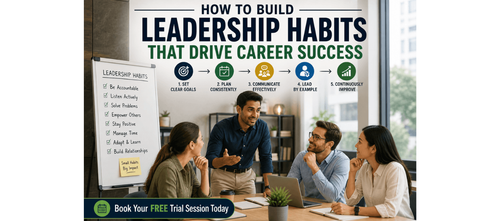

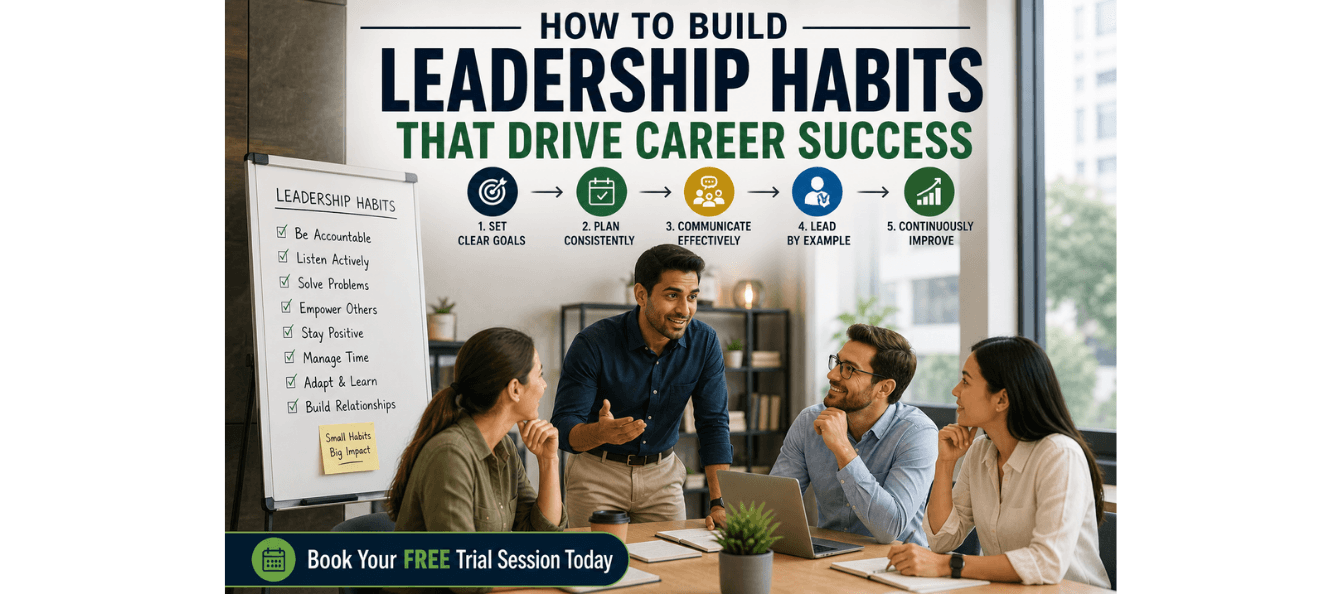
Developing Leadership Habits for Meaningful Career Growth: A Practical Checklist for Professionals
Most professionals don’t struggle because they lack knowledge. They struggle because they lack consistent leadership habits.
You may be delivering strong results, meeting deadlines, and building technical expertise—yet still feel overlooked for leadership roles or larger opportunities. This gap often comes down to behaviour, not capability. Leadership is not something you switch on when you get promoted. It is something you practise daily, long before the title arrives.
In fast-paced work environments, professionals don’t have the luxury of attending long leadership programmes or consuming abstract theories. They need clear, actionable tools that fit into their daily workflow. That is exactly where a structured leadership habits checklist becomes powerful—it transforms leadership from a vague concept into something practical, measurable, and immediately applicable.
Download these resources and apply them alongside your daily work for improved clarity, productivity, and professional growth. You can also book a free trial to gain expert guidance and enhance your communication, problem-solving, and decision-making skills. The materials are designed in a clear, structured format to help professionals learn efficiently and implement insights with confidence.
Who Is This Blog For?
- Early to mid-career professionals aiming to step into leadership roles
- Individual contributors who want to increase influence without authority
- Managers looking to improve team performance and trust
- Consultants and client-facing professionals who rely on communication and decision-making
- Career switchers who need to quickly build leadership credibility
- Professionals who feel busy but want to become more impactful
Why This Topic Matters Today?
The modern workplace is evolving rapidly. Technical skills alone are no longer enough to stand out. Organisations increasingly prioritise professionals who can lead, communicate effectively, and make decisions under pressure.
One of the most important insights highlighted in the checklist is that leadership is built through habits, not titles. Despite this, many professionals delay leadership development until they feel “ready,” which often slows career growth.
Another critical reality is the gap in self-awareness. Research referenced in the resource shows that while most professionals believe they are self-aware, only a small percentage truly are. This gap directly impacts decision-making, communication, and team effectiveness.
Additionally, professionals often fall into the trap of consuming knowledge without applying it. Workshops, books, and courses are valuable—but without behaviour change, they do not translate into results. This makes habit-based leadership development more relevant than ever.
Core Concept
The checklist is built around five progressive leadership zones. These zones are designed to work together, creating a compounding effect over time.
The first zone focuses on self-awareness, which acts as the foundation. Without understanding your behaviour, triggers, and patterns, it is difficult to improve any other leadership skill.
The second zone is communication, which acts as a multiplier. Every leadership outcome—whether it is alignment, trust, or conflict resolution—depends on how effectively you communicate.
The third zone is decision-making, which builds credibility. Leaders are judged not by perfection but by clarity, consistency, and accountability in decision-making.
The fourth zone is team empowerment, which shifts the focus from individual output to collective impact. This is where professionals transition from being strong contributors to effective leaders.
The fifth zone is continuous growth, which ensures long-term development. Leadership is not built through occasional effort but through consistent, deliberate improvement.
Together, these five zones create a practical leadership flywheel. Each habit reinforces the others, leading to sustained growth over time.
How This Blog and Guidebook Help You?
This blog and the underlying checklist provide a structured way to turn leadership intent into action.
Instead of abstract advice, you get:
- Clear habits that can be applied immediately
- A structured approach to self-assessment and improvement
- Practical tools for communication, decision-making, and team management
- A system for continuous growth and reflection
The real impact is visible in everyday work situations. You become clearer in meetings, more confident in decisions, and more effective in influencing others. Over time, this leads to stronger professional credibility and faster career progression.
Step-by-Step Breakdown
Self-Awareness: The Foundation of Leadership
Self-awareness is the starting point of all leadership development. Without it, other skills lack direction.
The checklist encourages professionals to identify their leadership style. Whether you lean towards directive, coaching, democratic, or visionary approaches, understanding your natural tendencies helps you adapt more effectively.
Another key habit is tracking emotional triggers. By maintaining a simple journal over a few weeks, you begin to notice patterns in how you react under pressure. This awareness allows you to respond more thoughtfully rather than react impulsively.
Seeking structured feedback is another powerful practice. Asking colleagues for one strength and one improvement area provides insights that self-reflection alone cannot offer.
Finally, a daily reflection habit—just five minutes at the end of the day—helps consolidate learning and accelerate growth.
Communication: The Habit That Multiplies Impact
Communication is at the core of leadership effectiveness. The checklist emphasises clarity over complexity.
One of the most practical techniques is leading with the headline. Instead of building up to your point, you state it upfront, saving time and improving alignment.
Adapting your message to your audience is another essential skill. Different stakeholders process information differently, and effective leaders adjust their communication accordingly.
The checklist also focuses on improving written communication by eliminating unnecessary filler and being direct about expectations.
Listening plays an equally important role. Active listening, maintaining presence, and eliminating distractions signal respect and build trust.
Giving feedback in real time ensures that learning and improvement happen continuously rather than being delayed until formal reviews.
Decision-Making: Leading with Clarity Under Pressure
Decision-making is one of the most visible leadership behaviours.
The checklist introduces a structured approach starting with defining the real decision. Many professionals waste time solving the wrong problem, and a simple clarification step can prevent this.
Setting a decision deadline ensures momentum and avoids analysis paralysis.
Another important concept is distinguishing between reversible and irreversible decisions. This helps prioritise effort and speed appropriately.
Finally, owning and communicating decisions clearly builds trust. Even when outcomes are not perfect, transparency strengthens credibility.
Team Empowerment: Multiplying Others
Leadership impact is measured through others, not just individual output.
The checklist encourages professionals to delegate outcomes rather than tasks. This gives team members ownership and encourages independent thinking.
Coaching instead of solving is another key shift. By asking questions rather than providing answers, leaders help others develop problem-solving skills.
Giving credit publicly builds trust and motivation within teams. It signals recognition and appreciation.
Creating psychological safety ensures that team members feel comfortable sharing ideas, raising concerns, and learning from mistakes. This environment consistently leads to better performance.
Continuous Growth: Leading Your Own Development
Leadership development is an ongoing process.
The checklist introduces the 70-20-10 learning model, where most learning comes from real work experiences, followed by feedback and mentorship, and then formal training.
Taking on stretch assignments is another critical habit. Growth happens at the edge of comfort, not within it.
Building mentoring relationships provides guidance and perspective, accelerating development.
Reading leadership material is encouraged, but with a strong emphasis on application. Knowledge without action does not lead to growth.
A monthly reflection worksheet helps track progress and identify areas for improvement, ensuring consistent development.
Common Mistakes
- Waiting to feel ready before practising leadership behaviours
- Consuming knowledge without applying it in real work situations
- Trying to develop leadership skills in isolation without feedback or accountability
- Focusing only on comfortable habits while avoiding challenging ones
- Expecting immediate results instead of committing to long-term habit building
- Imitating others instead of developing an authentic leadership style
These mistakes slow down progress and prevent professionals from realising their full potential.
How Should You Use This Guidebook Effectively?
To maximise the value of this checklist, use it as a living document rather than a one-time read.
Start by skimming the entire checklist to understand the full framework. This should take only a few minutes.
Next, conduct a self-assessment by identifying which habits you already practise consistently.
Then, prioritise two to three habits to focus on for the next month. This ensures focus and prevents overwhelm.
Apply these habits in your daily work, whether in meetings, decisions, or team interactions.
Set aside five minutes at the end of each day for reflection. This small habit creates significant long-term impact.
Revisit the checklist weekly and conduct a deeper review every 30 days to track progress.
If possible, share your goals with a mentor or peer to build accountability and improve consistency.
Key Takeaways
- Leadership is built through daily habits, not titles
- Self-awareness is the foundation of effective leadership
- Communication drives alignment, trust, and impact
- Decision-making improves credibility when done consistently and transparently
- Leadership impact is measured through the growth of others
- Continuous development requires deliberate and consistent effort
- Small habits practised daily create long-term transformation
- Starting with one habit is more effective than trying to do everything at once
Your Next Step: Accelerate Your Career with PlanetSpark
Creating an impact-driven resume is not just about landing your next job—it’s about owning your professional story and presenting it with clarity, confidence, and credibility. When your resume clearly communicates value, results, and impact, opportunities follow naturally.
At PlanetSpark, we are committed to empowering working professionals with practical, outcome-focused resources that drive real career growth. From resume building and workplace communication to leadership presence and professional writing, our programs are designed to help you succeed in today’s fast-evolving job market.
Visit https://www.planetspark.in/resources to explore:
- Career and resume-building guides
- Workplace communication and professional writing resources
- Skill-development tools curated for working professionals
Want a deeper, hands-on experience?
You can also book a free trial session to learn more about PlanetSpark’s Working Professional Courses, designed to accelerate your career through personalised coaching, real-world practice, and expert guidance.
Your career deserves more than generic advice.
It deserves clarity, confidence, and measurable impact.
Personalized Communication Roadmaps
Record a video to get a AI generated personalized communication reports