
How to Build Strong Habits: Practical Framework for Professionals
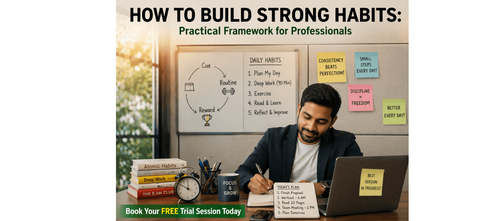

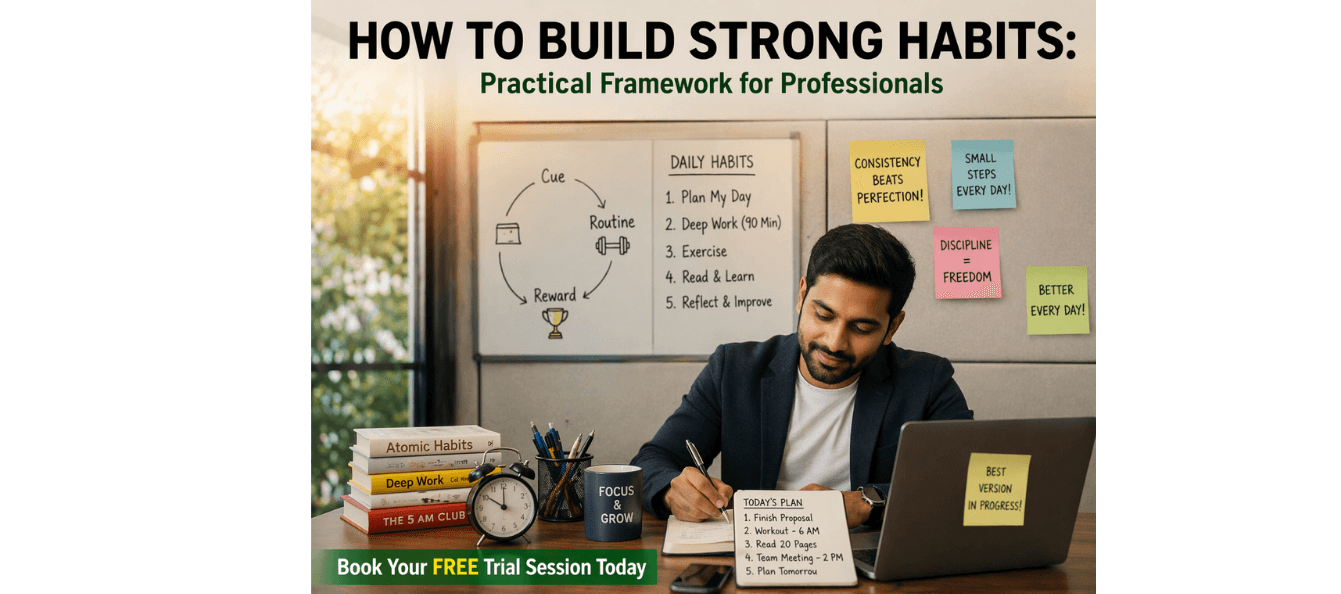
How to Build Strong Habits: Practical Framework for Professionals
In today’s competitive workplace, the difference between success and stagnation often comes down to habits. While skills and intelligence get you in the door, it’s the daily habits that propel you forward. The key to building strong habits lies in understanding what works for professionals and what doesn’t. This blog is designed to give you actionable insights to create habits that stick, tailored specifically for working professionals like you.
Download these resources and apply them alongside your daily work for improved clarity, productivity, and professional growth. You can also book a free trial to gain expert guidance and enhance your communication, problem-solving, and decision-making skills. The materials are designed in a clear, structured format to help professionals learn efficiently and implement insights with confidence.
Who Is This Blog For?
- Job seekers aiming to improve personal productivity
- Career professionals looking to break old patterns and build new ones
- Managers wanting to set an example of strong habit formation for their teams
- Entrepreneurs aiming for consistent growth
- Consultants working to improve communication and efficiency
Why This Topic Matters Today?
With constant pressure and changing demands, professionals often find themselves stuck in old habits that limit their potential. According to research, nearly 85% of career success is linked to communication and interpersonal skills:contentReference[oaicite:0]{index=0}. Yet, these skills often fail to evolve because they are not ingrained into our daily habits. Without creating a structured system for habit formation, growth becomes reactive instead of intentional.
The real challenge is not knowing what to do, but actually integrating it into your daily workflow without overwhelming yourself. In the face of constant distractions, how can we make habits stick and ensure that they drive meaningful progress?
Core Concept or Framework Explained
The process of habit-building for professionals revolves around clear, consistent actions that lead to cumulative improvement. Here’s how you can integrate habit-building into your professional life:
- **Awareness**: Start with understanding where you are. Audit your current habits and identify which ones need to change:contentReference[oaicite:1]{index=1}.
- **Foundation**: Once you’ve identified the core habit to work on, build a foundation through daily micro-practices. Focus on one skill at a time and reinforce it through repetition:contentReference[oaicite:2]{index=2}.
- **Application**: Integrate your chosen habit into real-world scenarios. For example, if communication clarity is your goal, practice concise emails and follow-up messages every day:contentReference[oaicite:3]{index=3}.
- **Mastery**: At the final phase, make the habit automatic. Seek feedback and consistently apply your habit in high-stakes scenarios:contentReference[oaicite:4]{index=4}.
How This Blog and Guidebook Help You?
By following the step-by-step framework outlined in the resources, you will be able to gradually replace inefficient habits with those that align with your professional growth. Through feedback-driven systems and structured habit tracking, you can refine your efforts to create results that matter.
Step-by-Step Breakdown
### Phase 1: Self-Awareness
Understanding where you are starting from is critical. To do this, begin by auditing your communication and productivity habits. Identify which areas need work and document your current habits, such as:
- How often do you send emails without a clear call to action?
- Are you clear and concise in meetings or do you tend to ramble?
### Phase 2: Building Foundation
Once you've established where to improve, select your core habit. If you aim to improve communication, dedicate a few minutes each day to practice structuring emails using the PREP framework:contentReference[oaicite:5]{index=5}. Track your progress with a simple daily log and reflect on what worked and what needs adjustment.
### Phase 3: Applying the Habit
Incorporate your habit into high-pressure scenarios, such as meetings or deadlines. Practice delivering concise updates in every meeting and ensure your emails are structured for clarity. Repetition will start to make these behaviors feel natural.
### Phase 4: Mastery
After 30 days, evaluate how well the habit has stuck. Have you noticed improvements in your communication clarity or efficiency? If not, adjust the practice by seeking feedback from colleagues and tracking your habits more closely.
Common Mistakes or Pitfalls to Avoid
- **Trying to build too many habits at once**: Focus on one core habit at a time. Trying to improve everything at once leads to burnout:contentReference[oaicite:6]{index=6}:contentReference[oaicite:7]{index=7}.
- **Lack of structure in habit formation**: Without a clear action plan and review system, habits are harder to track and refine:contentReference[oaicite:8]{index=8}.
- **Forgetting to seek feedback**: Feedback is essential for growth. Without it, you risk reinforcing ineffective habits:contentReference[oaicite:9]{index=9}.
How Should You Use This Guidebook Effectively?
To make the most of these insights:
- Dedicate 5–10 minutes daily to track your progress.
- Use the worksheets provided to reflect and adjust your actions as needed.
- Revisit your habit system every month to ensure it is evolving with your professional goals:contentReference[oaicite:10]{index=10}.
Key Takeaways
- Habit-building is a step-by-step process that requires consistent micro-practice
- Self-awareness and feedback are key to identifying and overcoming bad habits
- A clear, structured approach to habit formation increases long-term success
- Consistency and reflection are essential for making progress and refining your approach
Your Next Step: Accelerate Your Career with PlanetSpark
Creating an impact-driven resume is not just about landing your next job—it’s about owning your professional story and presenting it with clarity, confidence, and credibility. When your resume clearly communicates value, results, and impact, opportunities follow naturally.
At PlanetSpark, we are committed to empowering working professionals with practical, outcome-focused resources that drive real career growth. From resume building and workplace communication to leadership presence and professional writing, our programs are designed to help you succeed in today’s fast-evolving job market.
Visit https://www.planetspark.in/resources to explore:
- Career and resume-building guides
- Workplace communication and professional writing resources
- Skill-development tools curated for working professionals
Want a deeper, hands-on experience?
You can also book a free trial session to learn more about PlanetSpark’s Working Professional Courses, designed to accelerate your career through personalised coaching, real-world practice, and expert guidance.
Your career deserves more than generic advice.
It deserves clarity, confidence, and measurable impact.
Personalized Communication Roadmaps
Record a video to get a AI generated personalized communication reports