
How to Conduct a Weekly System Review for Continuous Growth
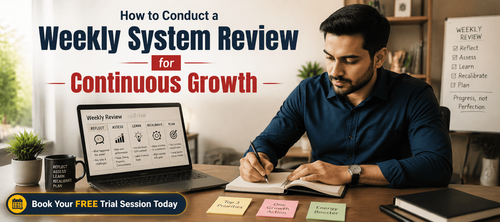

Creating a Weekly System Review for Continuous Professional Growth
In today’s fast-paced professional world, staying ahead requires more than just hard work. It’s about reflecting strategically on your progress, identifying areas of improvement, and consistently adjusting your approach to achieve better outcomes. Most professionals are constantly on the move—chasing deadlines, handling meetings, and managing multiple tasks. However, without structured reflection, it’s like moving forward without checking if you're heading in the right direction. This is where the Weekly System Review comes in—a methodical process for continuous professional improvement.
Download these resources and apply them alongside your daily work for improved clarity, productivity, and professional growth. You can also book a free trial to gain expert guidance and enhance your communication, problem-solving, and decision-making skills. The materials are designed in a clear, structured format to help professionals learn efficiently and implement insights with confidence.
Who Is This Blog For?
Career switchers seeking clear focus and strategy
Managers wanting to boost their team’s performance
Consultants striving for consistency in client deliverables
Early- to mid-career professionals (0-15 years experience) who aim for continuous growth
Anyone looking to systematically track progress, identify roadblocks, and enhance their professional development.
Why This Topic Matters Today?
The importance of structured reflection cannot be overstated in today’s competitive job market. According to research, professionals who take time each week to reflect and recalibrate are more likely to achieve long-term career success. In a world where opportunities are abundant, it’s those who consistently evolve who rise above. Many professionals either neglect reflection entirely or do so inconsistently, resulting in burnout, inefficiency, and missed growth opportunities.
Career success hinges on being able to pivot, learn from experiences, and adapt. The weekly review system is designed to help you capture key insights, make data-driven decisions about your time, and enhance performance steadily over weeks and months.
Core Concept or Framework Explained
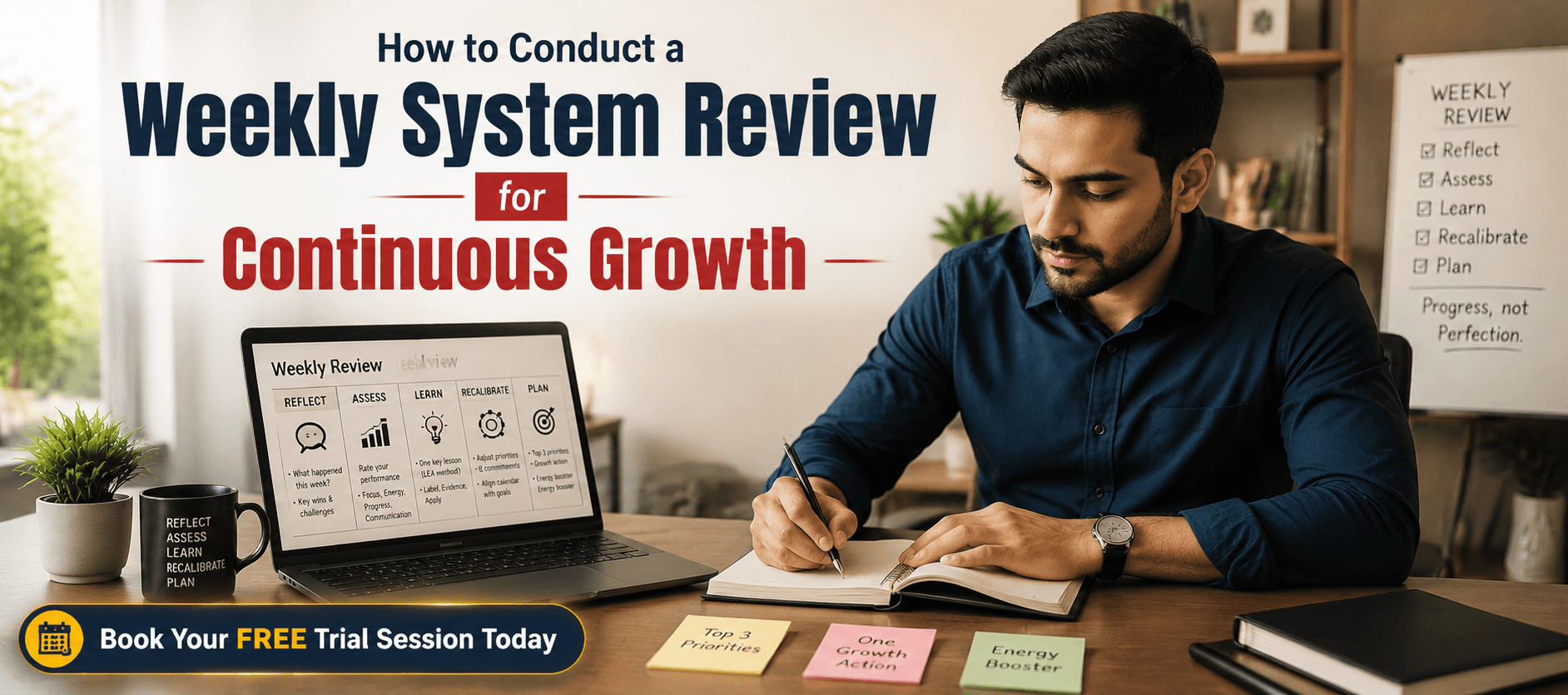
The heart of this weekly review system lies in its 5-Part Framework designed to provide a comprehensive view of your professional week. Each step is built to be outcome-oriented, modular, and profession-agnostic. Here’s a breakdown of the five pillars:
Reflect: Take stock of what happened this week. Review your calendar, tasks, and interactions. Capture key events—both successes and challenges.
Assess: Score your performance on critical dimensions like focus quality, energy management, and progress on priorities.
Learn: Identify one key lesson from the week using the LEA (Label, Evidence, Apply) framework, and document it.
Recalibrate: Make adjustments based on your findings. Evaluate your priorities and commitments and ensure your calendar aligns with your long-term goals.
Plan: Set clear intentions for the upcoming week, identifying your top 3 priorities, one growth action, and an energy-boosting activity.
This framework, when used consistently, empowers professionals to take tangible actions every week, ensuring continuous improvement and a strategic approach to career growth.
How This Blog and Guidebook Help You?
By adopting this structured weekly review system, you’ll:
Gain clarity on what is and isn’t working in your week
Adjust priorities and strategies based on consistent performance reviews
Build a habit of learning from each week’s experience
Track your progress in real-time, using concrete data to make informed career decisions
Each section of this system directly contributes to your growth, ensuring that your professional journey isn’t just busy but purposeful.
Step-by-Step Breakdown:
Step 1: Reflect—What Actually Happened?
Begin by reviewing your past week without judgment. Focus on key moments, both positive and negative, that shaped your professional experience.
Example: You might realize that while you managed tasks well, certain meetings drained your energy. Reflecting on these instances will guide your future decisions.
Step 2: Assess—Score Your Performance
Honest self-assessment is vital. Rate yourself on focus quality, energy management, progress on priorities, and communication effectiveness. This score gives you a clear benchmark to track progress over time.
Step 3: Learn—The One-Insight Rule
Identify your key takeaway from the week. Use the LEA framework to distill this insight into something actionable. The goal is not volume but clarity and applicability.
Step 4: Recalibrate—Adjust the System
Based on your insights, make necessary adjustments. This could mean revisiting your priorities or delegating tasks you’ve been holding onto unnecessarily.
Step 5: Plan—Set Intentions That Stick
Focus on three priorities for the next week and block time on your calendar. This isn’t just about creating a to-do list; it’s about setting clear, actionable goals that align with your long-term career trajectory.
Common Mistakes or Pitfalls to Avoid
Skipping the Recalibrate Step: The recalibration process is crucial. Without it, your weekly review becomes just a reflection, not a strategy for improvement.
Too Many Priorities: Focusing on five or more priorities is counterproductive. Instead, concentrate on the top three that will truly drive your career forward.
Not Recording Insights: A mental review is ineffective. Write down your reflections, insights, and action points to track your progress.
Inconsistency: The system compounds. A 20-minute review every week beats an occasional 90-minute reflection session.
How Should You Use This Guidebook Effectively?
For optimal results, follow a simple workflow:
Time Investment: 30-45 minutes weekly.
Weekly Process:
Reflect and assess your week every Friday afternoon or Sunday evening.
Log insights and recalibrate your priorities.
Set your intentions and block time for your top three priorities.
This system works best when used consistently—don’t wait until everything is perfect. Start with small, deliberate changes and build on them over time.
Key Takeaways:
Consistency is the key to growth.
Reflect weekly, assess performance, and recalibrate your goals.
Personalised insights lead to meaningful, actionable changes.
Use your calendar as a tool to align your daily tasks with your long-term ambitions.
Your Next Step: Accelerate Your Career with PlanetSpark
Creating an impact-driven resume is not just about landing your next job—it’s about owning your professional story and presenting it with clarity, confidence, and credibility. When your resume clearly communicates value, results, and impact, opportunities follow naturally.
At PlanetSpark, we are committed to empowering working professionals with practical, outcome-focused resources that drive real career growth. From resume building and workplace communication to leadership presence and professional writing, our programs are designed to help you succeed in today’s fast-evolving job market.
Visit PlanetSpark Resources
to explore:
Career and resume-building guides
Workplace communication and professional writing resources
Skill-development tools curated for working professionals.
Want a deeper, hands-on experience?
You can also book a free trial session to learn more about PlanetSpark’s Working Professional Courses, designed to accelerate your career through personalised coaching, real-world practice, and expert guidance.
Your career deserves more than generic advice.
It deserves clarity, confidence, and measurable impact.
Start building that advantage today—with PlanetSpark.
Personalized Communication Roadmaps
Record a video to get a AI generated personalized communication reports