
How to Create a Feedback Loop System to Strengthen Your Leadership
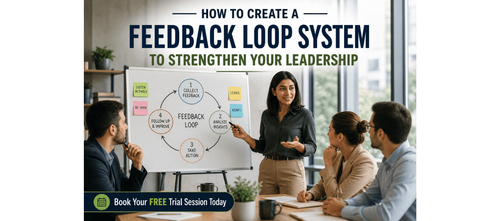

Effectiveness Leadership Feedback Cycle: A Practical Guide to Giving, Receiving, and Acting on Feedback for Continuous Growth
Feedback is one of the most misunderstood skills in the modern workplace. Most professionals either avoid it, delay it, or deliver it in ways that create discomfort rather than improvement. Annual reviews feel disconnected, day-to-day conversations lack clarity, and important issues often go unaddressed until they become serious problems.
This is not a talent issue—it is a system issue.
Without a structured approach, feedback becomes inconsistent, reactive, and ineffective. Teams lose clarity, individuals miss growth opportunities, and leaders struggle to build trust. What professionals need is not more feedback—but a better way to manage it.
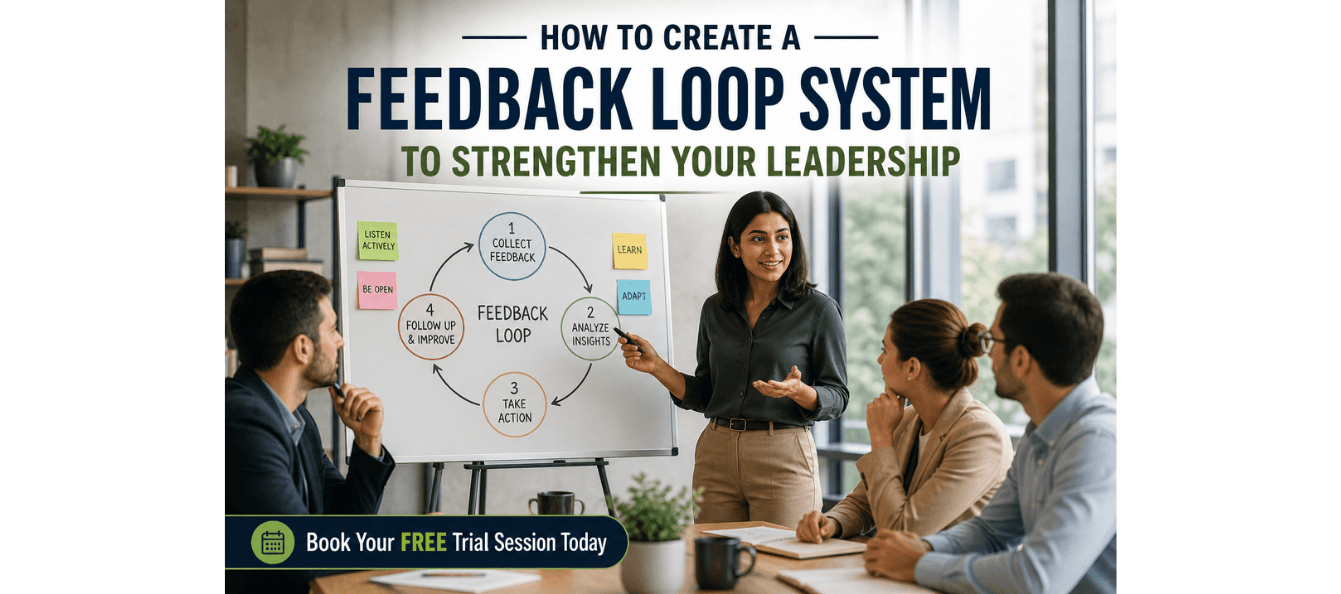
The Leadership Feedback Loop System solves this problem by transforming feedback from a one-time event into a continuous, structured cycle of observation, conversation, action, and reflection. Instead of relying on memory or intuition, it provides a repeatable framework that helps you give, receive, and act on feedback in a way that actually drives performance and builds stronger professional relationships.
Download these resources and apply them alongside your daily work for improved clarity, productivity, and professional growth. You can also book a free trial to gain expert guidance and enhance your communication, problem-solving, and decision-making skills. The materials are designed in a clear, structured format to help professionals learn efficiently and implement insights with confidence.
Who Is This Blog For?
- First-time managers learning how to lead teams effectively
- Mid-career professionals stepping into leadership roles
- Consultants and client-facing professionals building trust and credibility
- Team leads aiming to improve performance and communication
- Professionals who struggle with giving or receiving honest feedback
- Individuals looking to build a culture of accountability and growth
Why This Topic Matters Today?
In today’s fast-paced work environment, feedback is no longer optional—it is essential for survival and growth. Yet, most organisations still rely on outdated methods such as annual performance reviews or reactive conversations.
This creates several challenges:
- Feedback is delayed and disconnected from actual work
- Conversations feel evaluative rather than developmental
- There is little to no follow-through after discussions
- Feedback flows only from managers to employees, not both ways
- Professionals focus on past mistakes instead of future improvement
As a result, teams stagnate, trust erodes, and opportunities for improvement are lost. The Leadership Feedback Loop System addresses these gaps by embedding feedback into everyday work, making it timely, actionable, and continuous.
Core Concept
At the heart of this system is a simple but powerful idea: feedback should not be a one-time event—it should be an ongoing loop.
The Leadership Feedback Loop consists of five interconnected phases:
- Observe and Listen
- Prepare Intentionally
- Deliver Clear Feedback
- Receive Feedback Actively
- Integrate and Reflect
Unlike traditional linear models, this system is cyclical. Once you complete one round, you return to observation with better insights and stronger relationships.
For example, instead of waiting for a quarterly review to address communication issues, a leader observes behaviour during a meeting, prepares a structured conversation, delivers specific feedback using a framework like Situation-Behaviour-Impact, receives input from the team member, and then tracks progress over time.
This continuous loop creates three major shifts:
- Speed increases because conversations become more natural
- Resistance decreases because feedback feels less personal
- Impact deepens as small improvements compound over time
How This Blog and Guidebook Help You?
This blog and the underlying guidebook provide a structured approach to one of the most critical professional skills.
You will learn how to:
- Replace vague feedback with specific, actionable insights
- Build trust by creating psychological safety in conversations
- Improve team performance through consistent feedback loops
- Develop self-awareness by actively seeking feedback
- Ensure accountability through follow-through and tracking
The result is not just better communication—it is measurable improvement in performance, relationships, and leadership effectiveness.
Step-by-Step Breakdown
Observe: Build a Strong Feedback Foundation
Effective feedback starts with observation. Most professionals rely on impressions, which leads to vague statements like “you need to improve communication.”
Instead, this phase focuses on three elements:
- Behaviour: What exactly happened
- Impact: What effect it had on others or outcomes
- Pattern: Whether it is recurring or a one-time event
A simple weekly habit can transform this process. Spend 10 minutes documenting one positive and one developmental observation per team member. This builds a reliable data foundation for future conversations.
Prepare: Design the Conversation Before It Happens
Preparation determines the success of any feedback conversation.
The guide introduces the PREP framework:
- Purpose: Define the outcome of the conversation
- Reality-check: Ensure your feedback is based on facts
- Environment: Choose the right timing and setting
- Plan B: Anticipate reactions and prepare responses
For example, giving feedback within 24–48 hours ensures relevance, while choosing a private setting maintains trust.
Deliver: Give Feedback That Creates Clarity
Delivery is where most professionals struggle. The goal is not to sound polite—it is to create clarity and forward movement.
The SBI framework is used here:
- Situation: Set the context
- Behaviour: Describe what happened
- Impact: Explain the effect
For instance, instead of saying “your presentation was unclear,” you might say:
“In last Tuesday’s presentation, you skipped addressing the client’s key concern, which led to multiple follow-up questions and extended the meeting.”
This level of specificity reduces defensiveness and increases understanding.
Receive: Build the Skill of Accepting Feedback
Feedback is not complete unless it flows both ways.
This phase focuses on:
- Asking specific questions instead of vague ones
- Listening without defending
- Thanking the person for their honesty
- Reflecting before reacting
A simple monthly check-in can help. Ask:
- What is one thing I am doing well?
- What is one thing I could improve?
This builds trust and encourages open communication.
Integrate: Turn Feedback Into Real Change
The most critical phase is integration. Without it, feedback conversations become meaningless.
This phase involves:
- Commitment: Agree on specific actions
- Tracking: Monitor progress consistently
- Acknowledgement: Reinforce improvements
- Iteration: Revisit and refine
For example, if someone commits to improving listening skills, track their progress in meetings and acknowledge visible improvements immediately.
Common Mistakes
Even experienced professionals make predictable errors:
- Using the “feedback sandwich,” which dilutes the message
- Waiting too long to give feedback
- Generalising with phrases like “you always” or “you never”
- Failing to follow up after conversations
- Avoiding difficult but necessary feedback
- Treating feedback as a one-way process
- Delivering feedback publicly instead of privately
Each of these mistakes reduces trust and limits growth. The solution lies in structured, timely, and respectful communication.
How Should You Use This Guidebook Effectively?
To get maximum value, treat this guidebook as a practical system rather than a one-time read.
Suggested approach:
- Spend 1–2 hours understanding the full framework
- Start with the observation habit in Week 1
- Practise one structured feedback conversation in Week 2
- Introduce feedback-seeking habits in Week 3
- Implement tracking and follow-up in Week 4
The guide also provides a 30-day plan that helps you build one habit at a time, making the system manageable and sustainable.
Consistency is more important than perfection. Even small, regular actions can create significant long-term impact.
Key Takeaways
- Feedback is a continuous system, not a one-time event
- Specific observations build credibility and trust
- Preparation is critical for effective conversations
- Structured frameworks like SBI improve clarity
- Receiving feedback is as important as giving it
- Follow-through determines whether change happens
- Small, consistent improvements lead to long-term growth
Your Next Step: Accelerate Your Career with PlanetSpark
Creating an impact-driven resume is not just about landing your next job—it’s about owning your professional story and presenting it with clarity, confidence, and credibility. When your resume clearly communicates value, results, and impact, opportunities follow naturally.
At PlanetSpark, we are committed to empowering working professionals with practical, outcome-focused resources that drive real career growth. From resume building and workplace communication to leadership presence and professional writing, our programs are designed to help you succeed in today’s fast-evolving job market.
Visit https://www.planetspark.in/resources to explore:
- Career and resume-building guides
- Workplace communication and professional writing resources
- Skill-development tools curated for working professionals
Want a deeper, hands-on experience?
You can also book a free trial session to learn more about PlanetSpark’s Working Professional Courses, designed to accelerate your career through personalised coaching, real-world practice, and expert guidance.
Your career deserves more than generic advice.
It deserves clarity, confidence, and measurable impact.
Personalized Communication Roadmaps
Record a video to get a AI generated personalized communication reports