
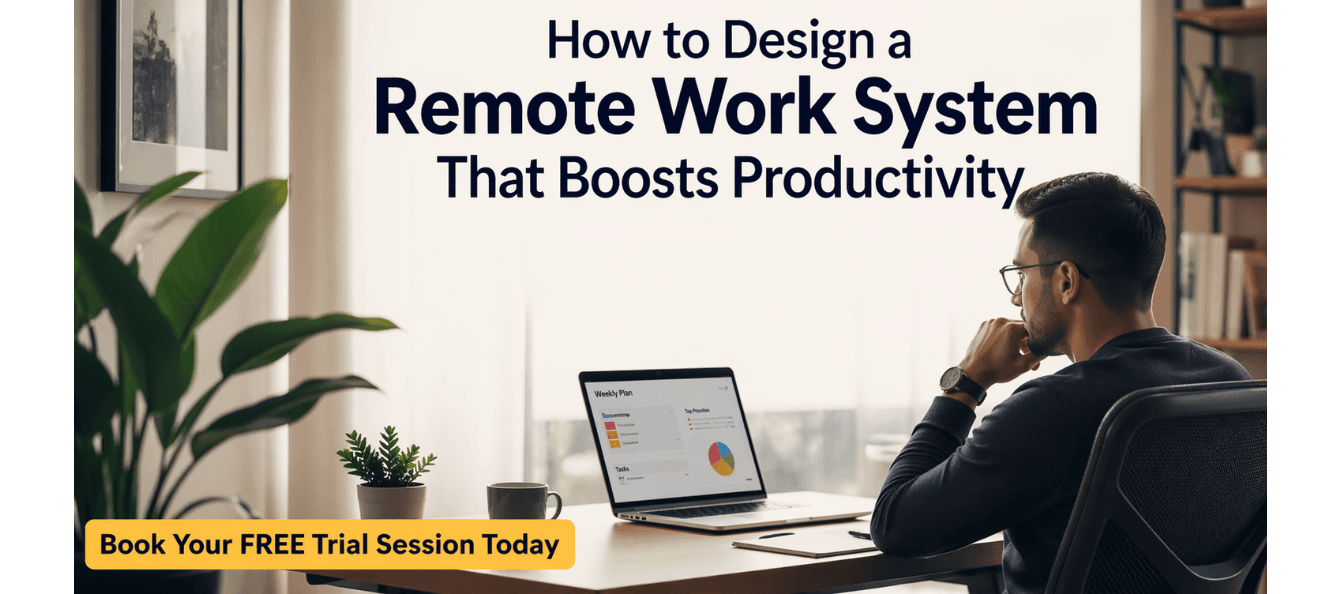
How to Design a Remote Work System That Boosts Productivity
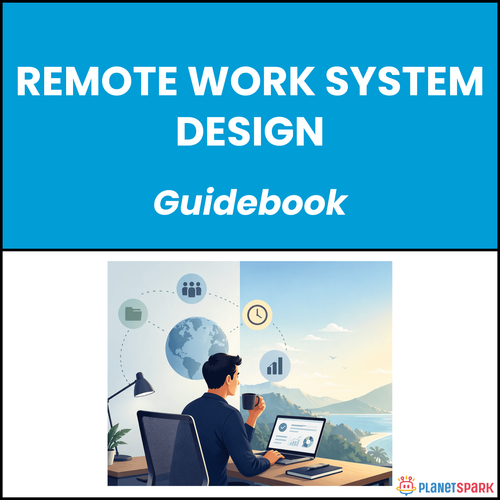

Master Remote Work Execution: A Practical System to Boost Productivity, Focus, and Visibility in Distributed Teams
Remote work promised flexibility, autonomy, and freedom. Yet for many professionals, it quietly introduced a new set of challenges—blurred boundaries between work and life, constant digital distractions, and the uncomfortable feeling of being busy without making meaningful progress. You attend meetings, respond to messages, and stay online longer than ever, but your output does not always reflect your effort.
This disconnect is not a sign of laziness or poor discipline. It is often the result of an inefficient system. When your environment, schedule, communication habits, and focus strategies are not intentionally designed, even highly motivated professionals can struggle with productivity, burnout, and visibility in remote settings.
That is why structured remote work systems have become essential for career success. Instead of relying on willpower alone, professionals who thrive in distributed teams build repeatable frameworks that support focus, clarity, and measurable results. The Remote Work System Design approach provides exactly that—a practical, modular system that helps you work smarter, protect your energy, and demonstrate value consistently.
Download these resources and apply them alongside your daily work for improved clarity, productivity, and professional growth. You can also book a free trial to gain expert guidance and enhance your communication, problem-solving, and decision-making skills. The materials are designed in a clear, structured format to help professionals learn efficiently and implement insights with confidence.
Who Is This Blog For?
- Remote professionals working from home or hybrid environments
- Managers leading distributed or cross-functional teams
- Freelancers and consultants managing independent workloads
- Employees transitioning from office-based roles to remote work
- Professionals experiencing burnout, productivity challenges, or visibility concerns
Why This Topic Matters Today?
Remote work is no longer a temporary trend. It has become a permanent feature of modern workplaces across industries. While flexibility has increased, so have the expectations for performance, communication, and accountability.
Many professionals assume that working harder will solve productivity issues. In reality, effort alone cannot compensate for a poorly designed work system. Without structure, remote workers often experience:
- Chronic context-switching between tasks and messages
- Decision fatigue from unstructured schedules
- Reduced focus due to constant digital interruptions
- Anxiety about performance visibility and career progression
- Difficulty maintaining healthy work-life boundaries
Modern career growth depends on more than technical skills. It requires operational clarity—knowing how to manage time, protect focus, communicate effectively, and demonstrate outcomes consistently.
A well-designed remote work system transforms scattered effort into sustainable performance.
Core Concept or Framework Explained
The Remote Work System Design framework is built around five interconnected pillars. These pillars function like operating systems that support your daily performance. Weakness in one area creates friction across the entire workflow.
Environment Design
Your workspace directly influences your productivity. A cluttered or shared environment increases distractions and reduces concentration. A dedicated, well-designed workspace signals focus and professionalism.
Key components include:
- A defined work zone separate from relaxation spaces
- Ergonomic furniture and proper lighting
- Reliable equipment and internet connectivity
- Organized digital files and notification controls
Time Architecture
Effective remote professionals do not simply manage tasks—they design their schedules intentionally.
Time architecture focuses on:
- Aligning work with peak energy periods
- Creating structured time blocks for deep work
- Building buffer zones to handle unexpected tasks
- Establishing daily rituals that create consistency
Communication Protocols
Remote success depends heavily on communication clarity. Teams that rely only on real-time conversations often experience interruptions and reduced productivity.
An async-first communication approach encourages:
- Clear written messages
- Defined response-time expectations
- Appropriate communication channels
- Reduced urgency for non-critical tasks
Focus and Energy Management
Attention is one of the most valuable professional resources. Without protection systems, constant interruptions prevent deep, high-quality work.
Effective focus management includes:
- Dedicated deep work sessions
- Scheduled breaks and recovery periods
- Reduced digital distractions
- Consistent sleep and movement routines
Output and Accountability
In remote work environments, visibility does not happen automatically. Professionals must intentionally communicate progress and results.
Structured transparency involves:
- Weekly progress updates
- Clear priority alignment with managers
- Documented outcomes and achievements
Together, these five pillars create a complete performance system that supports productivity, wellbeing, and career growth.
How This Blog and Guidebook Help You?
This blog and the underlying guidebook provide a practical blueprint for building a high-performance remote work system.
You gain:
- A structured framework for organizing remote work routines
- Clear strategies to improve productivity and focus
- Tools to manage communication effectively
- Methods to demonstrate value and maintain visibility
- Practical solutions to reduce stress and burnout
The result is improved efficiency, stronger professional credibility, and greater career momentum.
Step-by-Step Breakdown
Step 1: Design Your Workspace Environment
Your environment is the foundation of remote productivity. Even small adjustments can significantly improve focus and comfort.
Key actions:
- Create a dedicated workspace area
- Ensure proper lighting and posture support
- Reduce noise and distractions
- Maintain a clean and organized desk
A well-designed environment reduces fatigue and improves concentration.
Step 2: Build a Structured Daily Schedule
Without structure, remote work quickly becomes chaotic. A predictable schedule creates stability and improves decision-making.
Best practices:
- Identify your peak productivity hours
- Schedule deep work during high-energy periods
- Group similar tasks together
- Add buffer time between meetings
Structure reduces stress and increases efficiency.
Step 3: Establish Clear Communication Rules
Unclear communication is one of the biggest productivity barriers in remote teams.
Effective communication systems include:
- Defined channels for different types of messages
- Clear response-time expectations
- Written documentation for important decisions
- Reduced reliance on constant real-time communication
Clarity prevents confusion and improves collaboration.
Step 4: Protect Your Focus Time
Deep work requires uninterrupted attention. Without boundaries, distractions quickly consume your workday.
Focus protection strategies:
- Turn off non-essential notifications
- Use "Do Not Disturb" status during deep work
- Limit multitasking
- Work in focused time blocks
These practices help you produce higher-quality work in less time.
Step 5: Track and Manage Your Energy
Productivity is closely linked to energy levels. Managing energy effectively improves both performance and wellbeing.
Key practices:
- Take short breaks between work sessions
- Schedule movement or stretching
- Maintain consistent sleep patterns
- Avoid prolonged screen exposure
Energy management supports sustained productivity.
Step 6: Communicate Your Work Progress
Visibility is essential for career growth in remote environments.
Weekly updates help managers understand:
- What tasks you completed
- What work is in progress
- What challenges you are facing
- What priorities you plan next
Regular updates build trust and confidence.
Step 7: Align Priorities with Stakeholders
Misaligned priorities create wasted effort. Clear alignment ensures your work supports organizational goals.
Effective alignment includes:
- Weekly priority discussions
- Written confirmation of goals
- Clarification of deadlines and expectations
Alignment improves performance outcomes.
Step 8: Document Your Achievements
Tracking accomplishments helps you demonstrate value and prepare for performance reviews.
Documentation practices:
- Record completed projects
- Note measurable results
- Save feedback and milestones
Evidence strengthens your professional credibility.
Step 9: Establish Clear Work Boundaries
Remote work can easily extend into personal time. Boundaries protect both productivity and wellbeing.
Boundary-setting strategies:
- Define working hours clearly
- Communicate availability to colleagues
- Create a daily shutdown routine
- Step away from workspaces after hours
Boundaries prevent burnout and improve long-term performance.
Step 10: Implement a Continuous Improvement Routine
Remote work systems require regular updates. Periodic evaluation ensures your workflow remains effective.
Improvement actions:
- Review productivity weekly
- Identify friction points
- Adjust schedules or tools
- Test new strategies
Continuous improvement keeps your system efficient.
Common Mistakes or Pitfalls to Avoid
Many professionals struggle with remote work because they repeat common mistakes that undermine performance.
Frequent errors include:
- Trying to replicate traditional office schedules exactly
- Treating every message as urgent
- Measuring productivity based on hours worked instead of results
- Skipping end-of-day shutdown routines
- Working without clear boundaries between personal and professional time
Better alternatives include:
- Designing schedules around energy and priorities
- Setting realistic response expectations
- Tracking outcomes rather than activity levels
- Creating structured daily routines
- Protecting recovery and rest time
Avoiding these mistakes improves both productivity and wellbeing.
How Should You Use This Guidebook Effectively?
To maximize the value of this system, follow a structured implementation process.
Recommended workflow:
- Read the full guide to understand the framework
- Identify the weakest area in your current workflow
- Focus on improving one pillar at a time
- Apply changes gradually over several weeks
- Review and refine your system regularly
Suggested time investment:
- 30 to 60 minutes to assess your current workflow
- 10 to 15 minutes daily to maintain routines
- Weekly review sessions to track progress
Consistency is more important than perfection. Small improvements compound into significant results over time.
Key Takeaways
- Remote productivity depends on system design, not effort alone
- A dedicated workspace improves focus and performance
- Structured schedules reduce stress and decision fatigue
- Clear communication protocols prevent misunderstandings
- Protecting focus time increases work quality
- Regular progress updates improve professional visibility
- Healthy boundaries support long-term career sustainability
Your Next Step: Accelerate Your Career with PlanetSpark
Creating an impact-driven resume is not just about landing your next job—it’s about owning your professional story and presenting it with clarity, confidence, and credibility. When your resume clearly communicates value, results, and impact, opportunities follow naturally.
At PlanetSpark, we are committed to empowering working professionals with practical, outcome-focused resources that drive real career growth. From resume building and workplace communication to leadership presence and professional writing, our programs are designed to help you succeed in today’s fast-evolving job market.
Visit https://www.planetspark.in/resources to explore:
- Career and resume-building guides
- Workplace communication and professional writing resources
- Skill-development tools curated for working professionals
Want a deeper, hands-on experience?
You can also book a free trial session to learn more about PlanetSpark’s Working Professional Courses, designed to accelerate your career through personalised coaching, real-world practice, and expert guidance.
Your career deserves more than generic advice.
It deserves clarity, confidence, and measurable impact.
Start building that advantage today—with PlanetSpark.
Personalized Communication Roadmaps
Record a video to get a AI generated personalized communication reports