
How to Develop a Sustainable Strategy for Multiple Career Transitions

Developing a Sustainable Strategy Transitions to Build Long-Term Career Growth and Adaptability for Multiple Career
Careers today are no longer defined by a single role, industry, or long-term employer. Most working professionals will navigate multiple career transitions—shifting roles, industries, and skill sets several times throughout their professional journey. While this creates opportunities for growth, it also introduces complexity, uncertainty, and the risk of burnout.
Many professionals approach each transition as a one-time event. They react to immediate needs—better pay, dissatisfaction, or market trends—without building a long-term strategy. This reactive approach leads to inconsistent progress, repeated mistakes, and difficulty maintaining direction over time.
The real challenge is not just making a successful transition once—it’s building a sustainable system that allows you to navigate multiple transitions effectively over the course of your career. Without this, each transition feels like starting over, draining both time and energy.
This is where a sustainable career transition strategy becomes essential. Instead of treating transitions as isolated decisions, you create a repeatable framework that helps you evaluate opportunities, leverage your experience, and adapt to change with confidence.
This guide provides a structured approach to building a long-term strategy for multiple career transitions, ensuring continuous growth, resilience, and career stability.
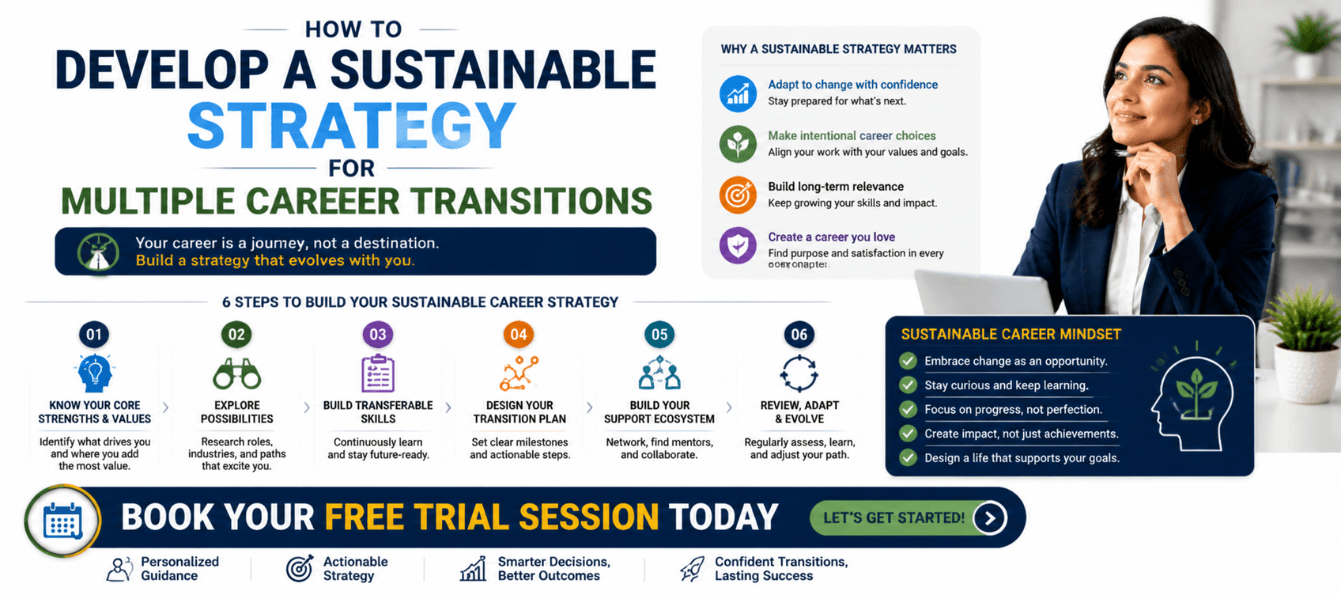
Download these resources and apply them alongside your daily work for improved clarity, productivity, and professional growth. You can also book a free trial to gain expert guidance and enhance your communication, problem-solving, and decision-making skills. The materials are designed in a clear, structured format to help professionals learn efficiently and implement insights with confidence.
Who Is This Blog For?
- Working professionals planning long-term career growth across multiple roles or industries
- Individuals who anticipate frequent career transitions due to industry changes
- Mid-career professionals seeking stability while continuing to grow
- Job seekers who want to avoid starting from scratch with each transition
- Professionals aiming to build adaptable, future-proof careers
Why This Topic Matters Today?
The modern job market is evolving rapidly due to technological advancements, changing business models, and shifting workforce expectations. As a result, professionals are expected to adapt continuously.
Common challenges include:
- Navigating multiple transitions without losing direction
- Rebuilding credibility in new roles or industries
- Managing skill gaps across different career paths
- Balancing stability with growth opportunities
- Avoiding burnout from constant change
Professionals who lack a sustainable strategy often experience fragmented career paths and slower growth. Those who build structured systems, however, can transition more efficiently and maintain long-term momentum.
Core Concept or Framework Explained
A sustainable strategy for multiple career transitions is a long-term system that enables you to move across roles and industries without losing progress, clarity, or confidence.
Instead of reacting to each transition individually, you build a framework that supports continuous adaptation.
The framework includes:
- Core skill foundation: Developing transferable skills that remain relevant across roles
- Career narrative consistency: Maintaining a coherent story that connects your transitions
- Continuous learning system: Regularly updating skills based on market demands
- Decision-making framework: Evaluating opportunities using structured criteria
- Feedback and iteration loops: Continuously refining your approach based on outcomes
For example, a professional with strong analytical, communication, and problem-solving skills can transition across roles such as operations, consulting, and product management while maintaining a consistent value proposition.
How This Blog and Guidebook Help You?
This blog transforms the concept of sustainable career transitions into actionable strategies you can apply throughout your career. By following this approach, you will:
- Build a long-term strategy instead of reacting to short-term changes
- Reduce the effort required for each transition
- Maintain consistency in your professional identity
- Improve adaptability to changing market conditions
- Achieve continuous career growth without burnout
Instead of restarting with every change, you will build on your existing progress.
Step-by-Step Breakdown
Build a Strong Core Skill Foundation
Focus on developing skills that are valuable across multiple roles and industries.
Examples include:
- Communication and stakeholder management
- Problem-solving and critical thinking
- Leadership and collaboration
- Analytical and data-driven decision-making
- Adaptability and learning agility
These skills create a stable base for future transitions.
Define Your Long-Term Career Themes
Identify recurring themes in your career interests and strengths.
Ask:
- What type of problems do I enjoy solving?
- What environments do I thrive in?
- What skills do I want to keep building?
Example:
A professional may define their theme as “solving business problems through data and strategy,” which can apply across multiple roles.
Create a Repeatable Transition Framework
Develop a standard process you can use for every transition.
This includes:
- Researching new roles or industries
- Mapping transferable skills
- Identifying gaps
- Building relevant experience
- Positioning yourself effectively
Having a repeatable system reduces uncertainty and improves efficiency.
Maintain a Consistent Career Narrative
Ensure that each transition connects logically to your overall story.
Your narrative should:
- Explain why you are making each transition
- Highlight how your past experience adds value
- Demonstrate growth and progression
Consistency builds credibility with employers and stakeholders.
Invest in Continuous Learning
Make learning a regular part of your routine.
Focus on:
- Industry trends and emerging skills
- Certifications and structured courses
- Practical projects and real-world applications
Continuous learning ensures you remain competitive.
Use Feedback to Refine Your Strategy
Collect and analyse feedback from:
- Job applications
- Interviews
- Networking conversations
- Performance in current roles
Use this feedback to adjust your approach and improve future transitions.
Balance Stability and Growth
Not every transition needs to be high-risk.
Consider:
- When to prioritise stability
- When to pursue aggressive growth opportunities
This balance helps you sustain long-term progress without burnout.
Document and Track Your Progress
Maintain a record of:
- Skills acquired
- Projects completed
- Achievements and outcomes
- Lessons learned from each transition
This documentation helps you build a strong professional narrative and prepare for future opportunities.
Common Mistakes or Pitfalls to Avoid
- Treating each transition as an isolated event
- Ignoring the importance of transferable skills
- Failing to maintain a consistent career narrative
- Neglecting continuous learning
- Making reactive decisions without a framework
These mistakes lead to fragmented career growth and inefficiency.
How Should You Use This Guidebook Effectively?
To maximise the value of this guidebook, follow a structured approach:
- Set long-term career goals and revisit them regularly
- Apply the transition framework consistently for each move
- Allocate time weekly for skill development and reflection
- Track your progress and update your career narrative
- Seek feedback and refine your strategy continuously
Consistency and structure are key to building a sustainable career strategy.
Key Takeaways
- Career transitions are ongoing, not one-time events
- Build a strong foundation of transferable skills
- Develop a repeatable framework for transitions
- Maintain a consistent and compelling career narrative
- Invest in continuous learning and adaptability
- Use feedback to refine your approach
- Balance stability with growth for long-term success
Your Next Step: Accelerate Your Career with PlanetSpark
Creating an impact-driven resume is not just about landing your next job—it’s about owning your professional story and presenting it with clarity, confidence, and credibility. When your resume clearly communicates value, results, and impact, opportunities follow naturally.
At PlanetSpark, we are committed to empowering working professionals with practical, outcome-focused resources that drive real career growth. From resume building and workplace communication to leadership presence and professional writing, our programs are designed to help you succeed in today’s fast-evolving job market.
Visit https://www.planetspark.in/resources to explore:
- Career and resume-building guides
- Workplace communication and professional writing resources
- Skill-development tools curated for working professionals
Want a deeper, hands-on experience?
You can also book a free trial session to learn more about PlanetSpark’s Working Professional Courses, designed to accelerate your career through personalised coaching, real-world practice, and expert guidance.
Your career deserves more than generic advice.
It deserves clarity, confidence, and measurable impact.
Start building that advantage today—with PlanetSpark.
Personalized Communication Roadmaps
Record a video to get a AI generated personalized communication reports