
How to Evolve From Tactical Choices to Strategic Thinking at Work


From Tactical to Strategic: A Career Elevation Roadmap
As you progress in your career, you may find yourself hitting a ceiling that you can't quite explain. You're great at executing tasks, meeting targets, and making things happen. But somehow, the bigger opportunities—promotions, leadership roles, the coveted "seat at the table"—seem to elude you. This is a common issue that many professionals face between years 3 and 8 of their career. The reason for this is often simple: you’re being evaluated on how well you execute tactics, but the roles above you require strategic judgment.
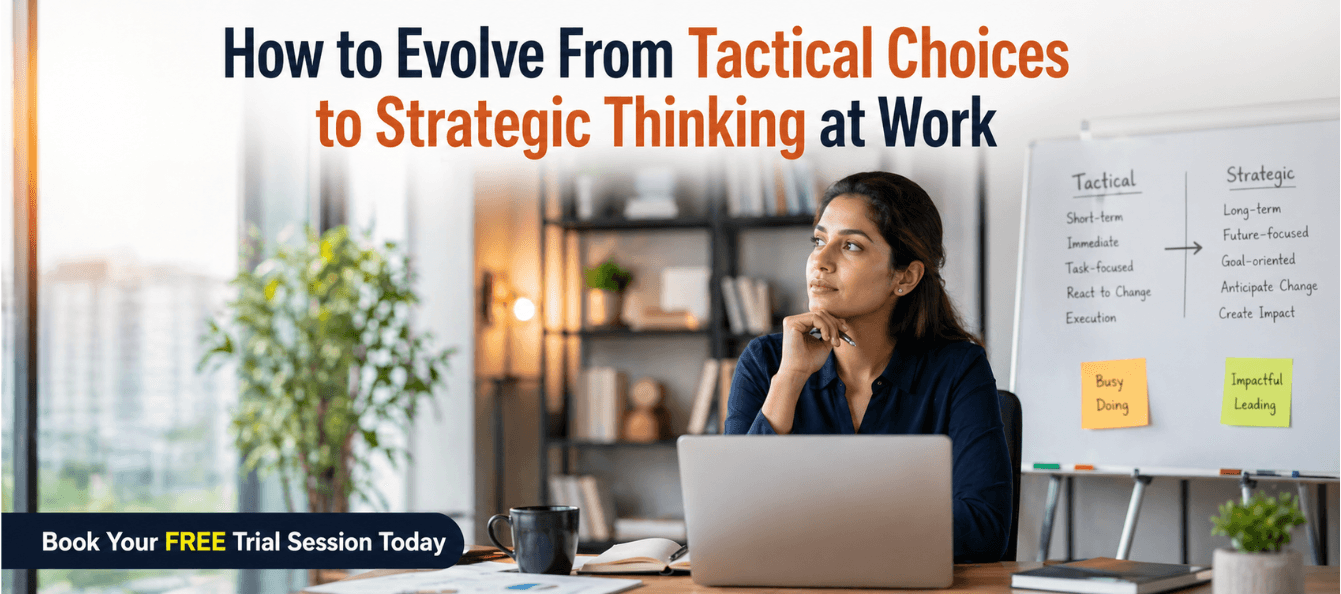
Tactical thinking focuses on getting tasks done right. Strategic thinking, on the other hand, involves choosing the right tasks, understanding their broader impact, and anticipating the long-term consequences. Transitioning from tactical to strategic thinking is a career-defining move. This roadmap will show you how to shift your mindset, develop your strategic judgment, and elevate your career to new heights.
Download these resources and apply them alongside your daily work for improved clarity, productivity, and professional growth. You can also book a free trial to gain expert guidance and refine your decision-making process. The materials are designed in a clear, structured format to help professionals learn efficiently and implement insights with confidence.
Who Is This Blog For?
This blog is for professionals looking to make the shift from reactive decision-making to proactive, strategic judgment. It’s especially valuable for:
- Career changers who need to transition from tactical roles to strategic ones
- Managers and consultants who want to strengthen their decision-making capabilities
- Mid-career professionals who are aiming for leadership roles and more responsibility
- Professionals who want to move beyond simply executing tasks and start shaping business outcomes
Why This Topic Matters Today?
Many professionals plateau because they focus on tactical execution rather than strategic thinking. As your role evolves, especially into management or leadership, your success depends less on how well you complete tasks and more on how effectively you shape decisions that align with long-term goals.
Strategic judgment isn’t about being smarter or working harder. It’s about changing the lens through which you view your work—shifting from an "execute tasks" mindset to a "shape outcomes" mindset. Developing strategic judgment can make you a valuable asset to your organization, propelling your career forward and opening doors to higher-level opportunities.
Core Concept or Framework Explained
The GROW-D Framework is the foundation for developing strategic judgment. It helps you focus on not just the decisions you make, but how you make them. This structured approach will help you assess, improve, and demonstrate your strategic thinking ability, moving you from tactical execution to strategic leadership.
The GROW-D Framework:
1. G – Ground Your Intent: Start by defining your goals clearly. Understand what success looks like, and how the decision aligns with your overall objectives.
2. R – Research Your Reality: Gather the necessary information and assess the facts versus assumptions. Be aware of your biases.
3. O – Open Your Options: Generate at least three options, ensuring you’re not limiting yourself to just one path. Look for alternatives.
4. W – Weigh the Risks: Analyze potential risks, consequences, and the second-order effects of your decision.
5. D – Decide and Debrief: Make your decision and document your reasoning. Review your decision periodically to learn and improve.
By applying this framework to your daily decisions, you’ll start developing a more strategic mindset that supports long-term goals and drives business outcomes.
How This Blog and Guidebook Help You?
This guide provides you with a step-by-step approach to develop and demonstrate strategic thinking in your professional life. The benefits include:
- Better Decision-Making: Learn how to structure your decision-making process to consider broader implications, not just immediate results.
- Expanded Perspective: Understand the bigger picture, think long-term, and assess the second-order consequences of your decisions.
- Increased Influence: Demonstrating strategic thinking elevates your professional standing, making you a more visible and valuable asset.
- Structured Framework for Growth: The GROW-D framework provides a repeatable system for improving your strategic judgment.
By following this framework, you will systematically shift your mindset from tactical to strategic, allowing you to tackle more complex decisions with confidence.
Step-by-Step Breakdown
Step 1: Ground Your Intent
Strategic thinking begins with clarity of intent. Before making any decision, define the goal clearly. What does success look like? What are you optimizing for—growth, efficiency, market share, relationships, or something else?
Practical Exercise: Write down your goal for the next 6 months. How does this goal align with the broader objectives of your organization? By understanding the long-term implications of your decisions, you’ll begin thinking more strategically.
Step 2: Research Your Reality
Strategic thinkers gather as much relevant information as possible before making a decision. This step is about questioning your assumptions, seeking out facts, and understanding the broader context.
Practical Exercise: Before any major decision, spend time identifying what you know for certain and what you don’t. Make sure you’re aware of any biases you may be bringing to the table. Seek out diverse perspectives from stakeholders, mentors, and data sources.
Step 3: Open Your Options
Strategic thinkers don’t settle for the first option that comes to mind. They explore multiple possibilities, ensuring they choose the most effective course of action.
Practical Exercise: For each decision, list at least three options. Evaluate the pros and cons of each before narrowing your focus to the most promising one. This ensures you’re not missing out on better alternatives and fosters creative problem-solving.
Step 4: Weigh the Risks
Strategic decisions are rarely risk-free. Weighing the risks involved in each option helps you understand the potential consequences and make an informed choice.
Practical Exercise: For each option, list the potential risks and rewards. What are the second-order consequences (e.g., how will this decision impact other areas of the business, or how will it affect your team’s morale)?
Step 5: Decide and Debrief
Once you’ve made a decision, it’s important to communicate your reasoning clearly and track the outcome over time. This transparency builds trust and helps you learn from both successes and failures.
Practical Exercise: After making a decision, take note of the reasoning behind it. Revisit your decision a few weeks later to evaluate the outcome and adjust your strategy if necessary.
Common Pitfalls and How to Avoid Them
Mistake 1: Confusing Execution with Strategy: Don’t mistake tactical execution for strategic thinking. Ensure that your decisions align with long-term goals and drive meaningful outcomes.
Mistake 2: Over-Reliance on Immediate Feedback: Strategic thinking requires patience. Focus on long-term results and second-order consequences, not just short-term feedback.
Mistake 3: Focusing Too Narrowly: Avoid only focusing on your area of responsibility. Effective strategic thinking requires understanding the larger system and connecting the dots across functions, teams, and markets.
Step-by-Step Process
To make the most of this guide:
- Apply the GROW-D Framework: Use it for every significant decision you face. Make it your go-to method for assessing decisions.
- Practice Regular Reflection: After each decision, take time to evaluate its impact and adjust your approach accordingly.
- Seek Feedback: Regularly ask for feedback on your decision-making from mentors, peers, or team members.
Key Takeaways
Strategic judgment is a learnable skill, not a reward for tenure. Start applying strategic frameworks to small decisions today to build your reputation.
Use the GROW-D Framework to structure your decision-making and improve your ability to make high-quality decisions under pressure.
Strategic thinking visibility is key. Communicate your reasoning, share your strategic perspective, and take visible actions that demonstrate your growing strategic judgment.
Your Next Step: Accelerate Your Career with PlanetSpark
Creating an impact-driven resume is not just about landing your next job—it’s about owning your professional story and presenting it with clarity, confidence, and credibility. When your resume clearly communicates value, results, and impact, opportunities follow naturally.
At PlanetSpark, we are committed to empowering working professionals with practical, outcome-focused resources that drive real career growth. From resume building and workplace communication to leadership presence and professional writing, our programs are designed to help you succeed in today’s fast-evolving job market.
Visit https://www.planetspark.in/resources to explore:
- Career and resume-building guides
- Workplace communication and professional writing resources
- Skill-development tools curated for working professionals
Want a deeper, hands-on experience?
You can also book a free trial session to learn more about PlanetSpark’s Working Professional Courses, designed to accelerate your career through personalised coaching, real-world practice, and expert guidance.
Your career deserves more than generic advice.
It deserves clarity, confidence, and measurable impact.
Start building that advantage today—with PlanetSpark.
Personalized Communication Roadmaps
Record a video to get a AI generated personalized communication reports