
How to Handle Difficult Meetings at Work Effectively
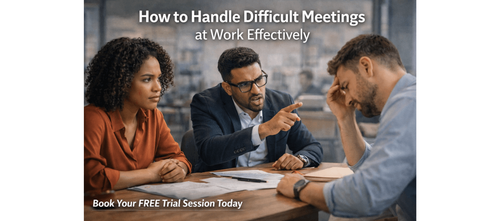

How to Handle Difficult Meetings at Work: A Practical Guide to Managing Conflict, Deadlocks, and High-Stakes Conversations
You’ve prepared your slides. You know your data. You walk into the meeting confident—and then everything goes off track.
A stakeholder interrupts repeatedly. Two team members start disagreeing openly. The room goes silent when you ask for input. Or worse, you’re hit with a tough question you didn’t see coming.
These are not rare situations. They are everyday realities in professional life.
What separates high-performing professionals from the rest is not just what they know—but how they handle these moments in real time. Yet, most professionals are never trained to manage difficult meetings effectively.
That’s where the “Difficult Meeting Situations Guide” becomes invaluable. It equips you with practical frameworks, real-world language, and structured approaches to help you navigate challenging conversations with confidence, clarity, and control.
Download these resources and apply them alongside your daily work for improved clarity, productivity, and professional growth. You can also book a free trial to gain expert guidance and enhance your communication, problem-solving, and decision-making skills. The materials are designed in a clear, structured format to help professionals learn efficiently and implement insights with confidence.

Who Is This Blog For?
- Working professionals with 0–15 years of experience
- Managers and team leads responsible for running meetings
- Consultants and client-facing professionals handling high-stakes conversations
- Career switchers looking to build confidence and executive presence
- Professionals who struggle with conflict, pushback, or unpredictable discussions
- Anyone who wants to improve communication, influence, and decision-making in meetings
Why This Topic Matters Today?
Meetings are where decisions are made, relationships are shaped, and reputations are built.
Yet, most professionals struggle with:
- Meetings that go off-script
- Dominant participants taking over conversations
- Conflict escalating without resolution
- Lack of clarity on decisions and next steps
- Disengaged participants and low energy in the room
The guide highlights a critical insight: difficult meetings are not exceptions—they are the norm. And how you handle them often defines how you are perceived professionally.
In high-stakes environments, your ability to manage tension, guide discussions, and drive outcomes can matter more than your technical expertise.
Core Concept
At the heart of this guidebook is a simple but powerful idea: not all difficult meetings are the same—and each type requires a different response.
The guide categorises difficult meetings into three root causes:
- Structural problems: Poor planning, unclear goals, wrong participants
- Interpersonal problems: Personality clashes, power dynamics, emotional reactions
- Situational problems: High-pressure decisions, bad news, external challenges
It further identifies five common meeting types:
- Hijacked meetings where one person dominates
- Conflict meetings with open disagreement
- Disengaged rooms with low participation
- Bad news meetings requiring emotional sensitivity
- Deadlock meetings where no decision is reached
The key skill is diagnosis. When you correctly identify the type of difficulty, you can apply the right strategy with precision instead of reacting blindly.
How This Blog and Guidebook Help You?
This guide transforms how you approach meetings—from reactive participation to confident facilitation.
It helps you:
- Prepare for difficult situations before they arise
- Read the room and identify early warning signs
- Use structured language instead of improvising under pressure
- Manage conflict without escalating it
- Drive discussions toward clear outcomes
- Build a strong professional reputation for composure and leadership
Instead of feeling caught off guard, you develop a repeatable system to handle complexity with confidence.
Step-by-Step Breakdown
Understanding the Anatomy of a Difficult Meeting
Before solving a problem, you must identify it correctly.
Many professionals misdiagnose meeting challenges. For example, trying to resolve a personality clash by changing the agenda—or addressing a structural issue with emotional language.
The guide emphasises early diagnosis:
- Early stage: Small adjustments can prevent issues
- Mid-meeting: Requires active facilitation
- Late stage: Needs recovery and damage control
The earlier you identify the issue, the easier it is to manage.
Preparing Before the Meeting
Most meeting outcomes are decided before the meeting even begins.
Preparation includes:
- Stakeholder analysis to understand priorities and concerns
- Identifying potential sources of tension
- Pre-briefing key participants
- Defining the primary outcome of the meeting
- Preparing phrases for handling difficult situations
A simple stakeholder scan helps you anticipate behaviour:
- What does each person want?
- What are they concerned about?
- How do they prefer to communicate?
- Where are the potential conflicts?
This preparation dramatically improves your confidence and effectiveness.
Designing a Strong Agenda
A poorly structured agenda creates confusion and conflict.
The guide recommends:
- Clearly defining the purpose of the meeting
- Inviting only essential participants
- Sequencing high-stakes topics early
- Clarifying the decision-making process upfront
A well-designed meeting reduces the chances of disruption.
Navigating the Meeting in Real Time
Once the meeting begins, your focus shifts to observation and intervention.
Key skills include:
- Reading non-verbal cues and energy shifts
- Identifying disengagement or rising tension
- Choosing the right intervention based on context
Early warning signs to watch:
- Circular conversations
- Sudden silence
- Increased interruptions
- Participants withdrawing
Acting early prevents escalation.
Handling Dominant Participants
When one person takes over the conversation, it limits group input.
Effective responses include:
- Redirecting attention to others
- Using structured formats like round-robin sharing
- Assigning roles to balance participation
For example, instead of confronting directly, you can say:
"Let’s hear from a few others before we continue."
This maintains control without creating conflict.
De-escalating Conflict
Conflict requires calm, structured intervention.
The guide introduces the HEAR framework:
- Hear the person fully
- Empathise with their perspective
- Acknowledge their concern
- Reframe toward the shared goal
Additionally:
- Name the situation neutrally
- Focus on the problem, not the person
- Reinforce the common objective
This approach reduces tension and restores direction.
Re-engaging a Disengaged Room
Low participation signals a deeper issue.
To re-engage participants:
- Change the format of the discussion
- Ask thought-provoking questions
- Address the issue directly
- Create time constraints to increase focus
Simple interventions can quickly shift energy.
Breaking Deadlocks
When decisions stall, structured frameworks help move forward.
The guide suggests:
- Fist of Five to measure agreement
- Defining decision criteria first
- Time-boxing discussions
- Identifying minimum viable decisions
- Escalating when necessary
These tools ensure progress even under pressure.
Handling Special Situations
The guide also covers advanced scenarios:
Delivering bad news:
- Set context clearly
- Deliver information directly
- Pause and allow processing
- Acknowledge emotional impact
- Provide next steps
Navigating power dynamics:
- Use respectful, bridging language
- Create space without direct confrontation
Handling ambush questions:
- Pause and restate the question
- Provide partial answers if needed
- Bridge back to your key message
These techniques help you stay composed in high-pressure moments.
Following Through After the Meeting
Most meetings lose value after they end due to poor follow-up.
Effective follow-through includes:
- Sending a recap within 2 hours
- Clarifying decisions and action items
- Repairing relationships if needed
- Reflecting on performance for improvement
Consistent follow-through builds credibility and trust.
Common Mistakes
- Avoiding difficult conversations, which allows problems to escalate
- Trying to solve everything in one meeting, leading to fatigue
- Ignoring emotions and focusing only on logic
- Failing to send follow-up communication
- Over-talking instead of facilitating
- Taking sides during conflict
- Jumping to solutions too quickly
- Allowing dominant voices to control discussions
Each of these reduces effectiveness and weakens outcomes. The guide provides clear alternatives for each.
How Should You Use This Guidebook Effectively?
To maximise value:
- Spend 1–2 hours reading the full guide to understand frameworks
- Identify one upcoming high-stakes meeting to apply the concepts
- Use the pre-meeting checklist for preparation
- Practise key phrases aloud for real-time use
- Apply one or two techniques during the meeting
- Use the post-meeting debrief to reflect and improve
This is not just a reading resource—it’s a practical toolkit meant for repeated use.
Key Takeaways
- Difficult meetings are common and career-defining
- Correct diagnosis determines the right response
- Preparation significantly reduces risk during meetings
- Real-time awareness helps prevent escalation
- Structured frameworks improve decision-making
- Language and communication shape outcomes
- Follow-through is essential for lasting impact
- Consistent practice builds long-term confidence and authority
Your Next Step: Accelerate Your Career with PlanetSpark
Creating an impact-driven resume is not just about landing your next job—it’s about owning your professional story and presenting it with clarity, confidence, and credibility. When your resume clearly communicates value, results, and impact, opportunities follow naturally.
At PlanetSpark, we are committed to empowering working professionals with practical, outcome-focused resources that drive real career growth. From resume building and workplace communication to leadership presence and professional writing, our programs are designed to help you succeed in today’s fast-evolving job market.
Visit https://www.planetspark.in/resources to explore:
- Career and resume-building guides
- Workplace communication and professional writing resources
- Skill-development tools curated for working professionals
Want a deeper, hands-on experience?
You can also book a free trial session to learn more about PlanetSpark’s Working Professional Courses, designed to accelerate your career through personalised coaching, real-world practice, and expert guidance.
Your career deserves more than generic advice.
It deserves clarity, confidence, and measurable impact.
Personalized Communication Roadmaps
Record a video to get a AI generated personalized communication reports