
How to Handle Resistance When You Lack Authority
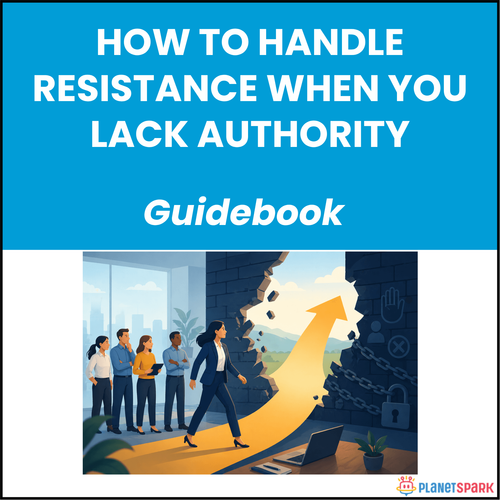

How to Handle Resistance When You Lack Authority: A Strategic Guide to Influencing Without a Title
You’ve experienced it before—having a great idea, but the pushback feels impossible to overcome. You’re not in charge, you don’t have the formal authority, yet the work still needs to move forward. Sound familiar? This is the reality many professionals face today: influencing without a title. Whether you’re in a cross-functional team, a matrixed environment, or leading a project with no direct reports, the ability to handle resistance and move people forward is a crucial skill.
This guide provides you with the tools, strategies, and frameworks to manage resistance effectively—even when you lack formal authority. From preparing before resistance hits to responding in the moment, this playbook will help you navigate resistance and lead with influence, not authority.
Download these resources and apply them alongside your daily work for improved clarity, productivity, and professional growth. You can also book a free trial to gain expert guidance and enhance your communication, problem-solving, and decision-making skills. The materials are designed in a clear, structured format to help professionals learn efficiently and implement insights with confidence.
Who Is This Blog For?
- Project managers and team leads without formal authority
- Consultants and advisors working without executive sponsor power
- Professionals seeking to influence senior stakeholders and peers
- Anyone struggling to overcome resistance in their workplace without the backing of a title
Why This Topic Matters Today?
In today’s flat hierarchies and collaborative work environments, influence has replaced formal authority as the primary means of getting things done. Professionals without a formal title often struggle with how to move ideas forward, secure buy-in, and address resistance effectively. Understanding how to respond to resistance and turn skeptics into allies is a must-have skill for career growth and organizational success.
Core Concept Explained
The central concept of this guide is to understand that **resistance is not personal**. It’s a signal, not a rejection of your idea. Resistance often arises from fears, unmet needs, or priorities of the person resisting, and understanding these underlying factors can make all the difference. The guide walks you through the three phases of handling resistance:
- **Before Resistance Hits**: Laying the groundwork by mapping stakeholders, building relationships, and framing your ideas around shared goals.
- **In the Moment**: Responding to live resistance with a strategy that de-escalates emotional reactions and invites collaboration.
- **After the Conversation**: Building lasting influence through thoughtful follow-up and maintaining relationships.
How This Blog and Guidebook Help You?
This guide gives you a practical framework to diagnose the type of resistance you face and the right strategy for handling it. Whether it's **skepticism**, **territoriality**, **resource constraints**, or **value misalignment**, this guide offers specific tools and responses to address each type effectively. By following the advice in this blog and guidebook, you’ll be able to influence decisions, gain support, and lead initiatives—without needing formal authority.
Step-by-Step Breakdown
1. Before Resistance Hits: Lay the Groundwork
- Map the **stakeholder landscape**: Understand who will be involved in your project, their priorities, and potential concerns.
- **Build relationships**: Start connecting with key stakeholders before you need their support.
- **Pre-sell your ideas**: Have 1:1 conversations with stakeholders to address their concerns early.
2. In the Moment: Responding to Resistance
- **Pause & listen**: Don’t jump to defend your position; allow the other person to fully express their concerns.
- **Acknowledge** their perspective: Validate their concerns without agreeing with them.
- **Diagnose** the real issue: Ask questions to understand the underlying causes of resistance.
- **Reframe & invite**: Connect your idea to their concern and invite them into the solution.
3. After the Conversation: Building Lasting Influence
- **Document and follow up**: Send a brief follow-up message summarizing agreements and next steps.
- **Give credit generously**: Acknowledge others who contributed to the solution.
- **Create regular touchpoints**: Maintain your relationships by scheduling check-ins and sharing relevant updates.
- **Demonstrate progress visibly**: Share the results and impact of your efforts to reinforce your influence.
Common Mistakes to Avoid
- **Doubling down on data**: When resistance is emotional, presenting more data won’t help. Focus on addressing the underlying concern.
- **Going over their head**: Escalating the issue to higher authorities without exhausting direct channels can damage trust.
- **Taking it personally**: Resistance is rarely about you. Reacting emotionally will hinder your ability to influence effectively.
- **Over-explaining**: Lengthy, defensive explanations signal insecurity. Practice brevity and focus on solutions.
- **Giving up too early**: One "no" is rarely final. Persistence and adaptation are key to overcoming resistance.
How Should You Use This Guidebook Effectively?
- **Time Investment**: Invest time in mapping stakeholders and understanding their concerns before you pitch an idea or request.
- **Practical Usage**: Use the **Acknowledge–Align–Advance** framework in your next resistance conversation. Reflect on how it changes the dynamics.
- **Follow-up**: Don’t let the conversation end with a single discussion. Follow up regularly and build long-term relationships.
Key Takeaways
- Resistance is a signal that tells you about other people’s needs, fears, and priorities.
- Handling resistance requires preparation, emotional intelligence, and a strategic approach.
- The **Acknowledge–Align–Advance** framework is a powerful tool for managing resistance in the moment.
- Building relationships before you need something is key to minimizing resistance.
- Persistence, not perfection, is the key to long-term success in overcoming resistance.
Your Next Step: Accelerate Your Career with PlanetSpark
Creating an impact-driven resume is not just about landing your next job—it’s about owning your professional story and presenting it with clarity, confidence, and credibility. When your resume clearly communicates value, results, and impact, opportunities follow naturally.
At PlanetSpark, we are committed to empowering working professionals with practical, outcome-focused resources that drive real career growth. From resume building and workplace communication to leadership presence and professional writing, our programs are designed to help you succeed in today’s fast-evolving job market.
Visit https://www.planetspark.in/resources to explore:
- Career and resume-building guides
- Workplace communication and professional writing resources
- Skill-development tools curated for working professionals
Want a deeper, hands-on experience?
You can also book a free trial session to learn more about PlanetSpark’s Working Professional Courses, designed to accelerate your career through personalised coaching, real-world practice, and expert guidance.
Your career deserves more than generic advice.
It deserves clarity, confidence, and measurable impact.
Personalized Communication Roadmaps
Record a video to get a AI generated personalized communication reports