
Best Process to Maintain System Discipline Without Feeling Burned Out
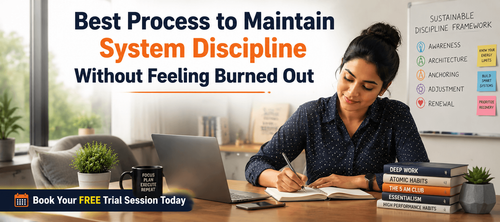

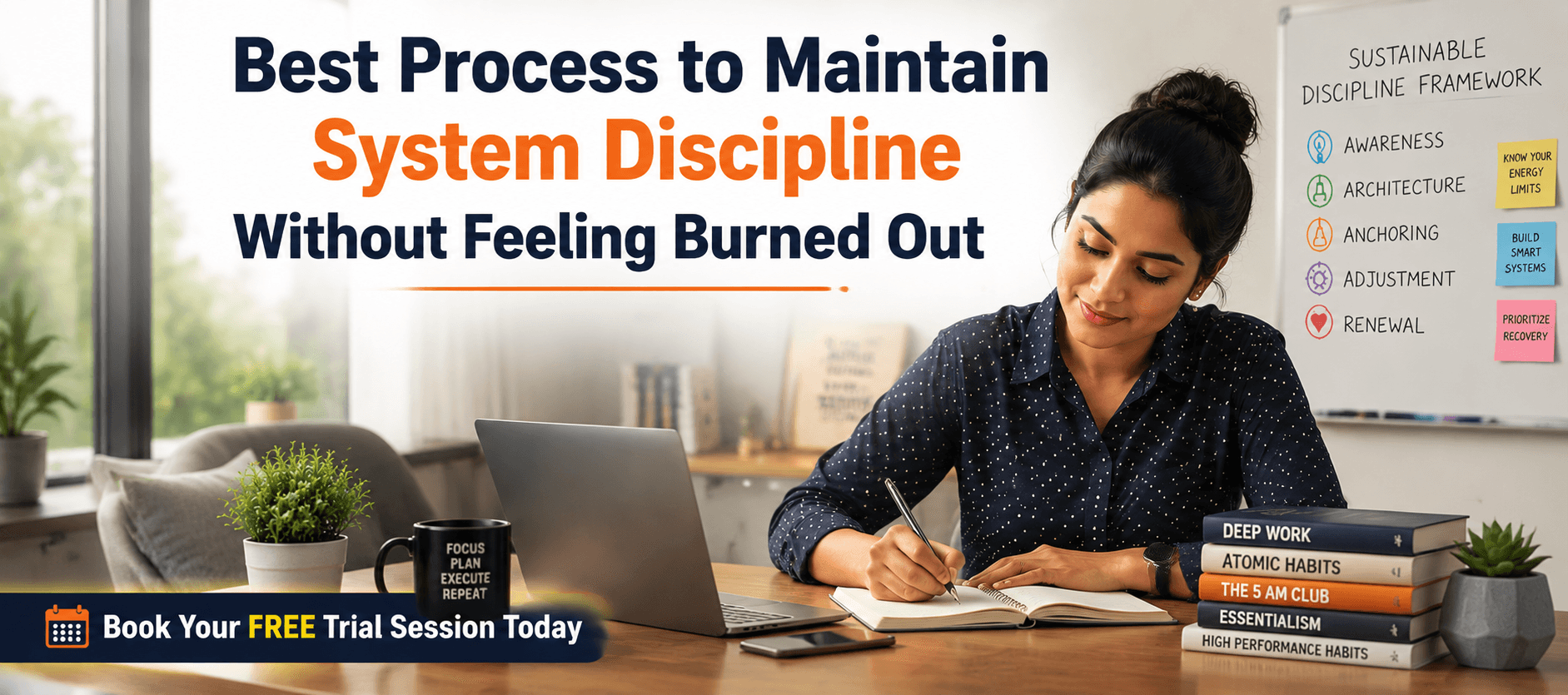
Best Process to Maintain System Discipline Without Burnout: A Practical Guide to Building Sustainable High-Performance Habits
In today's fast-paced work environment, you might find yourself constantly juggling tasks, yet feeling overwhelmed and unproductive. You're working hard, but things still seem to slip through the cracks. Why does this happen? It’s not that you lack discipline; it’s that your system for maintaining discipline isn't designed with your human limits in mind.
You’ve probably tried several productivity hacks, but somewhere between planning and execution, the discipline fades. This guide offers a sustainable approach to maintaining discipline without burning out, focusing on creating a system that works with your energy levels and personal constraints.
Download these resources and apply them alongside your daily work for improved clarity, productivity, and professional growth. You can also book a free trial to gain expert guidance and enhance your communication, problem-solving, and decision-making skills. The materials are designed in a clear, structured format to help professionals learn efficiently and implement insights with confidence.
Who Is This Blog For?
Career switchers, consultants, and managers
Early- to mid-career professionals (0–15 years)
Individuals struggling with burnout or high stress
Professionals looking to build sustainable systems for long-term success
Anyone aiming to enhance productivity without sacrificing wellbeing.
Why This Topic Matters Today?
In a world where hustle culture often gets glorified, burnout is more common than ever. Research shows that professionals who follow structured systems have a higher chance of maintaining long-term productivity. Yet, most systems fail because they are too rigid or unrealistic.
The real problem isn’t the lack of willpower, but a failure to design a system that aligns with your personal energy cycles. This guide addresses this gap by offering a practical framework that helps you manage your work rhythm while prioritizing recovery.
A well-designed system can prevent the cycle of intense hustle followed by burnout, making it easier to stay disciplined and productive over time.
Core Concept or Framework Explained
The foundation of this guide revolves around creating a system that works for you—not just your to-do list. The Sustainable Discipline Framework is built around five phases:
Phase 1: Awareness — Understand your energy levels and limits.
Phase 2: Architecture — Design a system that fits your actual life constraints.
Phase 3: Anchoring — Build daily rituals that hold your system in place.
Phase 4: Adjustment — Conduct weekly reviews to stay on track.
Phase 5: Renewal — Prioritize recovery to avoid burnout.
Each phase is designed to address a key aspect of maintaining discipline without overwhelming your mind and body.
How This Blog and Guidebook Help You?
This guide and blog post help you:
Develop an energy-based system that works with your natural rhythms.
Implement rituals that make discipline automatic.
Identify key adjustments you can make weekly to avoid stress and burnout.
Use the Minimum Viable System (MVS) to simplify and sustain productivity.
By following this guide, you’ll be able to work more efficiently, without feeling drained or anxious about your productivity levels.
Step-by-Step Breakdown:
Step 1: Post-Interview Thank You
After an interview, follow-up emails reaffirm your interest and professionalism. Send the email within 24 hours and reference specific topics discussed during the interview. This helps you stay top-of-mind for hiring managers.
Step 2: Networking Event Follow-up
Post-networking event follow-ups should mention the event and the topics you discussed. Add a personalized detail or compliment, and offer value before making any requests.
Step 3: Cold Outreach to Recruiters
Cold outreach to recruiters should be concise and targeted. Keep your message under 150 words, introduce yourself briefly, and state what you are looking for.
Step 4: Application Status Follow-up
If you haven't heard back from an application, follow up after 7–10 days. Reaffirm your interest and mention any relevant company updates to maintain the relevance of your email.
Step 5: Referral Introduction Response
Respond to referrals within 24 hours with gratitude and clarity about your intentions. Suggest a next step, like scheduling a short call, to keep the momentum going.
Step 6: LinkedIn Connection Request
Personalize your LinkedIn connection request by mentioning shared interests or common connections. Avoid sending generic requests, as they often go unnoticed.
Step 7: Reconnecting with a Former Colleague
Reconnecting with former colleagues can unlock new opportunities. Keep the tone warm and genuine, and suggest a casual catch-up to revive the relationship.
Step 8: Informational Interview Request
Informational interviews are an effective way to expand your network. Ask specific questions and respect the person's time, keeping the conversation insightful and valuable.
Step 9: Proposal or Project Follow-up
For freelancers and consultants, follow-ups after proposals can make the difference between landing a project and missing out. Be confident, flexible, and ask for a clear response.
Step 10: Career Switch Outreach
When entering a new industry, highlight your transferable skills and do thorough research. Position yourself as a learner and be clear about your motivations.
Common Mistakes or Pitfalls to Avoid
Mistake 1: Designing for Your Best Day — Systems that only work when everything is perfect will fail during difficult times. Instead, design systems that can survive even your toughest days.
Mistake 2: Treating All Tasks as Equal — Prioritize your most important tasks and protect them during your peak energy windows.
Mistake 3: No Recovery Scheduled — Without scheduled recovery, burnout is inevitable. Make recovery a priority, not an afterthought.
Mistake 4: The All-or-Nothing Mindset — Missing a day should not lead to abandoning your system. Remember the “never miss twice” rule: one missed day is a blip, not a pattern.
Mistake 5: Confusing Motion with Progress — Stay focused on high-value work that moves you toward your goals.
Mistake 6: System Complexity Creep — Simplify your systems regularly. The more complex your system, the more energy it consumes.
Mistake 7: Skipping the Weekly Review — The weekly review is essential for spotting small frictions before they become big problems.
How Should You Use This Guidebook Effectively?
Step 1: Complete the Energy Audit to understand your peak, maintenance, and recovery windows.
Step 2: Implement your Minimum Viable System (MVS) to simplify your routine.
Step 3: Set up daily and weekly rituals like the Shutdown Ritual and Weekly Review to ensure you stay on track.
Step 4: Regularly evaluate your system to identify friction points and make adjustments.
Time investment:
Energy audits take 5–10 minutes per day for a week.
Weekly reviews should be limited to 20–30 minutes.
Consistency is key. Implement one change at a time, and make follow-ups a regular habit rather than a one-time effort.
Key Takeaways:
Sustainable discipline requires a well-designed system, not endless willpower.
Focus on your peak energy windows and protect them for your highest priorities.
Consistency is more important than perfection — small wins add up over time.
Rituals and routines anchor your system and make discipline easier to maintain.
Regular reviews and adjustments help you stay on track and avoid burnout.
Your Next Step: Accelerate Your Career with PlanetSpark
Creating an impact-driven resume is not just about landing your next job—it’s about owning your professional story and presenting it with clarity, confidence, and credibility. When your resume clearly communicates value, results, and impact, opportunities follow naturally.
At PlanetSpark, we are committed to empowering working professionals with practical, outcome-focused resources that drive real career growth. From resume building and workplace communication to leadership presence and professional writing, our programs are designed to help you succeed in today’s fast-evolving job market.
Visit https://www.planetspark.in/resources
to explore:
Career and resume-building guides
Workplace communication and professional writing resources
Skill-development tools curated for working professionals.
Want a deeper, hands-on experience?
You can also book a free trial session to learn more about PlanetSpark’s Working Professional Courses, designed to accelerate your career through personalised coaching, real-world practice, and expert guidance.
Your career deserves more than generic advice.
It deserves clarity, confidence, and measurable impact.
Start building that advantage today—with PlanetSpark.
Personalized Communication Roadmaps
Record a video to get a AI generated personalized communication reports