
Career Stability Monitoring Systems for Long-Term Professional Growth

The Career Stability Tracking System Every Professional Should Use Before Problems Appear
Most professionals assume their careers are stable until something unexpected happens. A sudden layoff, a missed promotion, declining industry demand, or a shrinking professional network can quickly reveal vulnerabilities that have been developing quietly for months—or even years.
The challenge is not that career instability appears without warning. The challenge is that most people lack a system to detect early signals and take corrective action before problems become serious. As a result, career decisions often become reactive rather than strategic.
In today's rapidly evolving professional landscape, career stability requires more than simply performing well in your current role. It requires continuous monitoring of your skills, relationships, financial preparedness, professional visibility, and market relevance.
This resource provides a structured framework to help professionals assess, track, and strengthen their career stability over time. Rather than relying on assumptions, it offers practical tools, assessment methods, and action plans that help you stay ahead of change and build long-term professional resilience.
Download these resources and apply them alongside your daily work for improved clarity, productivity, and professional growth. You can also book a free trial to gain expert guidance and enhance your communication, problem-solving, and decision-making skills. The materials are designed in a clear, structured format to help professionals learn efficiently and implement insights with confidence.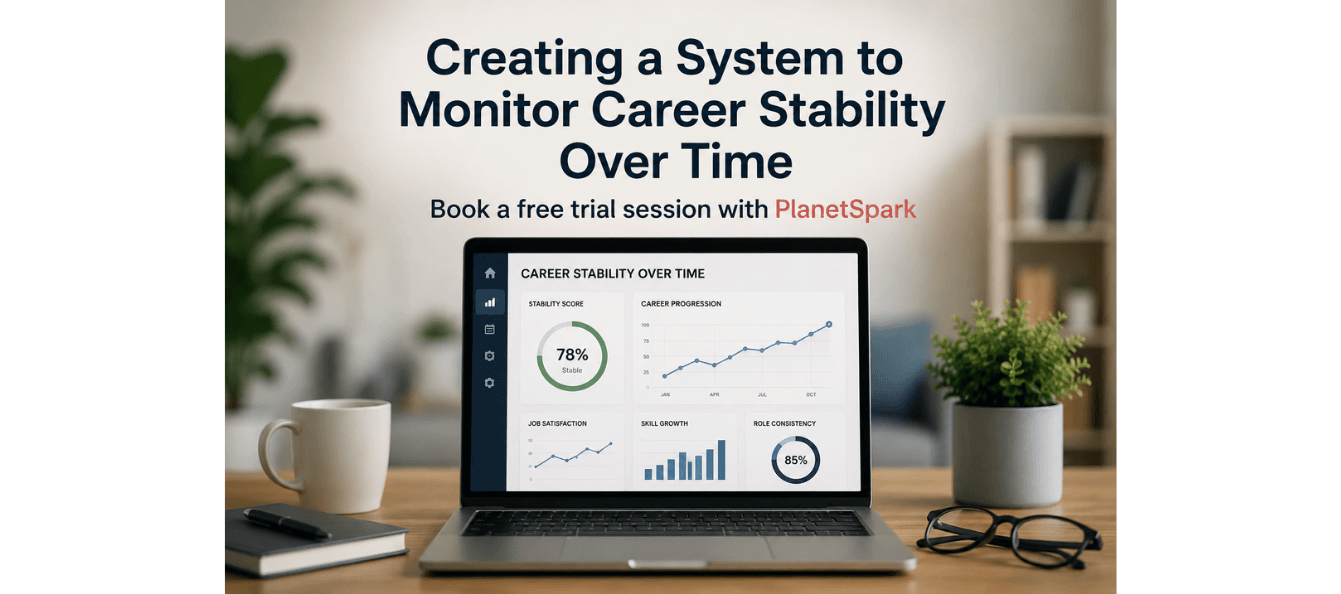
Who Is This Blog For?
- Early-career and mid-career professionals seeking greater career security
- Career switchers preparing for transitions into new industries
- Consultants and freelancers managing uncertain income streams
- Managers and leaders responsible for long-term professional growth
- Professionals concerned about industry disruption and changing skill requirements
- Individuals looking to proactively manage career risks before they become crises
Why Does Career Stability Matter Today?
The modern workplace is changing faster than ever. Technological advancements, economic uncertainty, organisational restructuring, automation, and evolving skill requirements have made career stability increasingly complex.
Many professionals focus exclusively on job performance while overlooking other critical factors that influence career resilience. According to the framework outlined in this resource, career stability depends on multiple interconnected dimensions rather than a single measure of success.
Common career challenges include:
- Limited awareness of professional vulnerabilities
- Reactive decision-making during career disruptions
- Declining relevance in evolving industries
- Weak networking habits
- Inconsistent skill development
- Lack of financial preparedness
- Reduced professional visibility
Without a structured monitoring system, these issues often remain hidden until they begin affecting career opportunities and growth.
The professionals who navigate disruption most effectively are not necessarily the most talented. They are often the ones who have developed systems for tracking, evaluating, and improving their career health over time.
Core Concept or Framework Explained
At the heart of this guide is the Five Pillars of Career Stability Framework.
Rather than viewing career stability as simply maintaining employment, the framework recognises that professional resilience is built across five interconnected areas.
Role Relevance
This pillar evaluates whether your skills, experience, and expertise remain aligned with current market demand.
Questions addressed include:
- Are your skills still valuable in your industry?
- Could you secure a comparable role if needed?
- Are you adapting to emerging trends?
When role relevance declines, career mobility becomes significantly more difficult.
Relationship Capital
Professional relationships often determine access to opportunities.
This pillar measures:
- Strength of your professional network
- Availability of advocates and mentors
- Quality of industry connections
- Access to referrals and recommendations
Strong relationship capital creates opportunities even during uncertain times.
Financial Resilience
Career stability is closely linked to financial preparedness.
This pillar examines:
- Emergency savings
- Income diversification
- Salary benchmarking
- Understanding of benefits and financial protection
Financial resilience reduces pressure during periods of professional transition.
Skill Momentum
Industries evolve continuously. Professionals who stop learning often fall behind.
This pillar focuses on:
- Learning velocity
- Skill acquisition
- Professional development activities
- Adaptability to change
Consistent learning creates long-term competitiveness.
Professional Visibility
Visibility determines whether opportunities can find you.
This pillar includes:
- LinkedIn presence
- Industry participation
- Thought leadership
- Internal reputation
- Professional credibility
Even highly skilled professionals may struggle if nobody knows about their expertise.
How Does This Blog and Guidebook Help You?
This framework transforms career management from a vague concept into a measurable process.
By following the system, professionals can:
- Assess their current level of career stability
- Identify hidden vulnerabilities
- Monitor changes over time
- Detect early warning signs
- Prioritise improvement efforts
- Create focused action plans
- Strengthen long-term career resilience
Most importantly, the framework encourages proactive career management rather than waiting for problems to emerge.
Step-by-Step Breakdown
Step 1: Complete the Baseline Assessment
Every monitoring system begins with a baseline.
The guide introduces a Career Stability Score (CSS) that helps professionals assess their standing across all five pillars.
For each pillar, individuals rate themselves on a scale from 1 to 5.
The combined score provides an overall picture of career health.
Understanding Your CSS
- Score 5–12: High Alert
- Score 13–18: Moderate Risk
- Score 19–25: Strong Position
The purpose is not judgment. The score simply identifies where attention is needed most.
This assessment should be completed honestly and revisited every quarter.
Step 2: Build a Monthly Monitoring Habit
One assessment is valuable. Ongoing monitoring is transformational.
The guide recommends creating a monthly 20-minute career check-in process built around three questions:
What Happened?
This focuses on recent activities and actions.
What Changed?
This captures signals from your environment.
What's Next?
This identifies a priority action for the upcoming month.
Each pillar receives individual review during the monthly check-in process.
The framework emphasises that consistency matters more than perfection. A short monthly review is significantly more effective than occasional intensive evaluations.
Step 3: Watch for Early Warning Signals
A major strength of this system is its focus on identifying signals before they become problems.
Examples of warning signs include:
- Reduced invitations to important projects
- Changing job requirements in your field
- Slower career progression than peers
- Lack of meaningful professional conversations
- Shrinking financial runway
- Reduced industry visibility
- Increased uncertainty about career direction
The guide recommends immediate action whenever multiple warning signals appear simultaneously.
Step 4: Create a Focused 90-Day Action Plan
Monitoring alone does not improve career stability.
Action creates results.
The guide introduces a structured 90-day planning process that transforms observations into measurable progress.
Rather than trying to improve every area simultaneously, professionals focus on one or two pillars each quarter.
Day 1–30: Diagnose and Launch
- Identify the weakest pillar
- Research the specific gap
- Launch one meaningful action
Day 31–60: Build Momentum
- Continue implementation
- Track progress indicators
- Refine the approach based on feedback
Day 61–90: Compound and Close
- Execute final actions
- Measure results
- Reassess scores
- Prepare for the next cycle
This focused approach prevents overwhelm and increases the likelihood of meaningful improvement.
Step 5: Strengthen Individual Pillars
Improving Skill Momentum
The guide recommends:
- Enrolling in targeted learning programmes
- Applying new skills to real projects
- Documenting learning outcomes
- Sharing knowledge publicly
Improving Relationship Capital
Suggested actions include:
- Mapping your professional network
- Reconnecting with dormant contacts
- Attending industry events
- Scheduling informational conversations
Improving Professional Visibility
Recommended activities include:
- Updating LinkedIn profiles
- Publishing industry insights
- Participating in professional discussions
- Contributing to publications and panels
Each pillar benefits from focused actions that compound over time.
Step 6: Conduct an Annual Career Audit
The framework includes a yearly reflection process designed to generate deeper insights.
Key reflection areas include:
Role and Relevance
- How employable are you today?
- What factors help or hinder career mobility?
Network and Relationships
- Who would advocate for you?
- Which relationships deserve greater investment?
Skills and Learning
- What skills separate you from the next level?
- What learning goals remain unfinished?
Financial Preparedness
- How would you handle income disruption?
- What financial improvements are needed?
Visibility and Reputation
- How are you perceived professionally?
- Is that reputation aligned with your goals?
These reflections provide strategic clarity for future career planning.
Step 7: Use Weekly Pulse Checks
The guide also introduces a lightweight weekly review process.
Questions include:
- Did I strengthen any pillar this week?
- Did I notice any warning signals?
- Did I invest in a professional relationship?
- What small action can I take next week?
These brief reflections help maintain awareness between larger reviews.
Step 8: Review Progress Quarterly
At the end of every quarter, professionals complete a formal self-evaluation.
This includes:
- Recalculating the CSS score
- Reviewing completed actions
- Assessing environmental changes
- Identifying successful habits
- Selecting the next focus pillar
The guide notes that even a one-to-two-point improvement in CSS represents meaningful progress.
Common Mistakes or Pitfalls to Avoid
Many professionals undermine their progress through avoidable mistakes.
Doing the Assessment Once
Without recurring reviews, insights quickly lose value.
Better approach:
- Schedule monthly check-ins immediately.
Trying to Improve Everything at Once
Spreading effort across all five pillars often creates weak results.
Better approach:
- Focus deeply on one pillar per quarter.
Scoring Too Generously
Inflated scores create false confidence.
Better approach:
- Evaluate yourself as objectively as possible.
Waiting for a Crisis
Many people only begin career planning when problems emerge.
Better approach:
- Build systems before they become necessary.
Confusing Activity with Progress
Being busy is not the same as improving.
Better approach:
- Ensure every action contributes to measurable pillar improvement.
How Should You Use This Guidebook Effectively?
To maximise value from this framework, follow a structured implementation process.
Suggested Workflow
- Read the entire guide first
- Complete the baseline assessment
- Calculate your Career Stability Score
- Identify your weakest pillar
- Create a focused 90-day action plan
- Schedule monthly check-ins
- Conduct weekly pulse checks
- Complete quarterly self-evaluations
- Repeat the cycle continuously
Time Investment
- Baseline Assessment: 20–30 minutes
- Monthly Check-In: 20 minutes
- Weekly Pulse Check: Under 5 minutes
- Quarterly Review: Approximately 30 minutes
- Annual Career Audit: 45–60 minutes
The system is intentionally designed to be sustainable rather than burdensome.
Key Takeaways
- Career stability is a multi-dimensional concept
- Five pillars determine long-term professional resilience
- Role relevance, relationships, finances, skills, and visibility must be monitored together
- A Career Stability Score provides clarity and focus
- Monthly check-ins create consistent awareness
- Early warning signals help prevent future crises
- Focused 90-day action plans drive meaningful improvement
- Small, consistent actions compound into significant career advantages
- Annual audits and quarterly reviews maintain long-term momentum
- Career stability is best managed proactively, not reactively
Your Next Step: Accelerate Your Career with PlanetSpark
Creating an impact-driven resume is not just about landing your next job—it’s about owning your professional story and presenting it with clarity, confidence, and credibility. When your resume clearly communicates value, results, and impact, opportunities follow naturally.
At PlanetSpark, we are committed to empowering working professionals with practical, outcome-focused resources that drive real career growth. From resume building and workplace communication to leadership presence and professional writing, our programs are designed to help you succeed in today’s fast-evolving job market.
Visit https://www.planetspark.in/resources to explore:
- Career and resume-building guides
- Workplace communication and professional writing resources
- Skill-development tools curated for working professionals
Want a deeper, hands-on experience?
You can also book a free trial session to learn more about PlanetSpark’s Working Professional Courses, designed to accelerate your career through personalised coaching, real-world practice, and expert guidance.
Your career deserves more than generic advice.
It deserves clarity, confidence, and measurable impact.
Start building that advantage today—with PlanetSpark.
Personalized Communication Roadmaps
Record a video to get a AI generated personalized communication reports