
How to Negotiate Salary for Remote Jobs: Complete Guide 2026
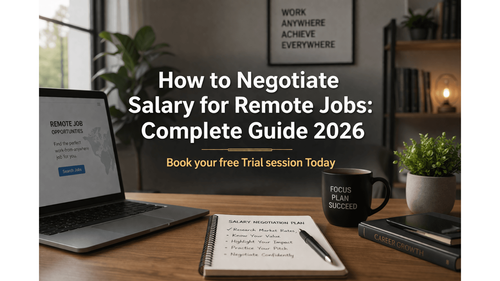

Salary Negotiation for Remote Roles: A Complete Guide to Securing Higher Compensation in a Global Work Environment
You finally receive an offer for a remote role. It looks exciting, the company seems promising, and the flexibility is exactly what you wanted. But then comes the difficult question—should you accept the offer as it is, or negotiate?
Most professionals hesitate here. Not because they lack capability, but because they lack clarity. Remote salary negotiation introduces new variables—location-based pay, global benchmarks, hidden benefits, and compensation structures that go far beyond base salary. Yet, many professionals still approach it like a traditional office-based negotiation.
This is where things go wrong. Without the right preparation, you risk accepting less than what the role is truly worth.
The “Salary Negotiation for Remote Roles” guidebook is designed to solve this exact problem. It equips you with structured frameworks, practical scripts, and real-world insights to help you negotiate confidently and secure a compensation package that reflects your true value.
Book your free trial session today with Planetspark.
Download for more details or PDF file.
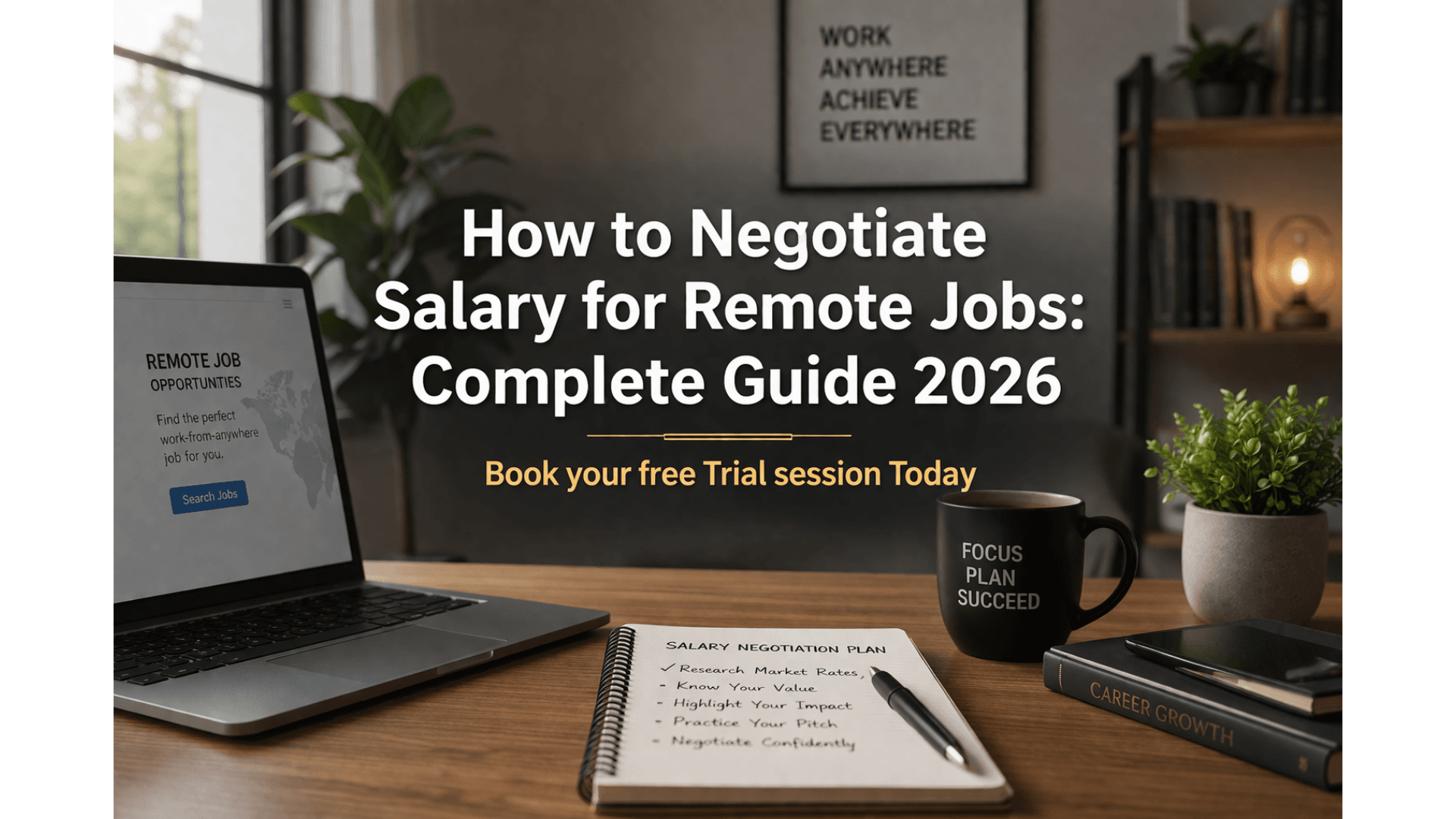
Who Is This Blog For?
- Working professionals with 0–15 years
of experience exploring remote roles
- Job seekers preparing for salary discussions in distributed teams
- Career switchers transitioning into remote work environments
- Consultants and freelancers renegotiating remote contracts
- Mid-career professionals aiming to increase compensation and benefits
- Anyone unsure how remote salary structures actually work
Why This Topic Matters Today?
Remote work has fundamentally changed how compensation is structured. Companies now hire across borders, which means salaries are influenced by global talent pools, cost-of-living adjustments, and company-specific pay philosophies.
This creates both opportunity and risk.
On one hand, professionals can access higher-paying global roles. On the other hand, many unknowingly accept lower compensation due to:
- Lack of research into remote-specific salary benchmarks
- Confusion around location-adjusted pay
- Ignoring non-cash benefits like stipends, equity, and learning budgets
- Entering negotiations without a clear strategy or anchor
The guide highlights a critical truth: remote roles often have more negotiable components than traditional jobs. Professionals who understand this can unlock significant value—sometimes adding thousands to their total compensation.
Core Concept
At the heart of this guidebook is a structured three-phase framework: Before, During, and After the negotiation.
Before the negotiation, the focus is on preparation. This includes researching market rates, understanding the company’s compensation philosophy, and defining three key numbers—your walk-away, target, and stretch.
During the negotiation, the focus shifts to execution. This is where anchoring, communication, and negotiation scripts play a crucial role. The guide emphasises that the first number mentioned in a negotiation significantly influences the outcome.
After the negotiation, the focus is on evaluation. Instead of reacting emotionally, professionals are encouraged to assess the full offer—financial and non-financial—before making a decision.
This structured approach transforms negotiation from a stressful conversation into a strategic process.
How This Blog and Guidebook Help You?
This blog and the underlying guidebook help you move from guesswork to clarity.
You learn how to:
- Define your worth using real market data
- Negotiate beyond just base salary
- Communicate confidently without hesitation or apology
- Handle pushback professionally
- Evaluate offers based on total value, not just numbers
The result is not just better compensation, but stronger confidence in your professional decisions.
Step-by-Step Breakdown
Step 1: Know Your Numbers Before the Conversation
One of the biggest mistakes professionals make is entering negotiations without a clear number. The guide emphasises defining three critical figures:
- Walk-away number: the minimum you are willing to accept
- Target number: a realistic and well-supported expectation
- Stretch number: an ambitious but defensible ask
This clarity ensures you do not default to the employer’s first offer.
Step 2: Research Remote-Specific Market Data
General salary benchmarks are not enough. Remote roles require deeper research.
The guide recommends using platforms like Levels.fyi, Glassdoor, LinkedIn Salary, and Payscale while filtering for remote roles. It also stresses understanding whether a company follows location-neutral or location-adjusted pay.
This insight directly influences your negotiation strategy.
Step 3: Think Beyond Base Salary
Remote roles often include compensation elements that are not immediately visible.
These include:
- Home office stipends
- Internet and utility reimbursements
- Equipment allowances
- Learning and development budgets
- Flexible PTO and async work benefits
- Travel and retreat budgets
Professionals who negotiate only base salary miss out on these high-value components.
Step 4: Anchor the Conversation Strategically
Anchoring is one of the most powerful negotiation techniques. The guide explains that stating your number first can significantly influence the final outcome.
Instead of waiting for the employer’s offer, you present a well-researched range where your target acts as the floor. This positions you strongly from the start.
Step 5: Use Prepared Scripts to Handle Scenarios
Negotiation is not just about numbers—it is about communication.
The guide provides ready-to-use scripts for:
- Opening the negotiation
- Responding to low offers
- Handling “this is our best offer” situations
- Shifting focus to non-cash benefits
- Closing the conversation professionally
Practising these scripts in advance ensures you remain confident and composed during the discussion.
Step 6: Navigate Location-Adjusted Pay
Location-based compensation is one of the most complex aspects of remote work.
The guide encourages professionals to ask key questions:
- How is location adjustment calculated?
- Does it apply to base salary only or the entire package?
- What happens if you relocate?
It also suggests reframing the conversation around the value of your work rather than your geographic location.
Step 7: Evaluate the Full Offer Before Deciding
Receiving an offer is not the end—it is the beginning of evaluation.
The guide introduces a structured approach:
- Calculate total compensation including all benefits
- Score non-financial factors like growth, culture, and leadership
- Apply the walk-away test to assess opportunity cost
- Make a clear and timely decision
This ensures you choose the right opportunity, not just the highest number.
Step 8: Learn Through Real-World Application
The guide includes a real-world case study of a professional who increased their compensation significantly by:
- Researching market data thoroughly
- Anchoring confidently
- Negotiating both salary and benefits
- Avoiding common mistakes like revealing current salary
This example demonstrates how preparation directly translates into better outcomes.
Common Mistakes
The guide highlights several costly mistakes professionals often make:
- Accepting the first offer without negotiation
- Revealing current salary and weakening bargaining power
- Focusing only on base salary instead of total compensation
- Under-researching remote-specific pay structures
- Using apologetic language during negotiation
- Failing to get the final offer in writing
- Assuming remote roles are non-negotiable
Avoiding these mistakes alone can significantly improve your negotiation outcomes.
How Should You Use This Guidebook Effectively?
To get the most value from the guide, follow a structured approach:
Start by reading the entire guide to understand the overall framework.
Set aside 2–3 focused hours to complete the worksheets, especially the compensation research and script-building sections.
Practice your negotiation scripts aloud to build confidence and eliminate hesitation.
Use the guide as a reference during actual negotiations, especially for handling pushback.
After the negotiation, complete the self-evaluation section to reflect and improve for future opportunities.
This is not a one-time resource. It should be revisited whenever you negotiate a new role or compensation change.
Key Takeaways
- Remote salary negotiation requires a different strategy than traditional roles
- Preparation is the single biggest factor influencing your outcome
- Always define your walk-away, target, and stretch numbers
- Focus on total compensation, not just base salary
- Anchor the conversation with a well-researched range
- Use scripts to communicate confidently and handle pushback
- Understand and challenge location-adjusted pay when needed
- Evaluate offers holistically before making a decision
- Avoid common mistakes that weaken your negotiating position
- Treat every negotiation as a learning opportunity
Your Next Step: Accelerate Your Career with PlanetSpark
Creating an impact-driven resume is not just about landing your next job—it’s about owning your professional story and presenting it with clarity, confidence, and credibility. When your resume clearly communicates value, results, and impact, opportunities follow naturally.
At PlanetSpark, we are committed to empowering working professionals with practical, outcome-focused resources that drive real career growth. From resume building and workplace communication to leadership presence and professional writing, our programs are designed to help you succeed in today’s fast-evolving job market.
Visit https://www.planetspark.in/resources to explore:
- Career and resume-building guides
- Workplace communication and professional writing resources
- Skill-development tools curated for working professionals
Want a deeper, hands-on experience?
You can also book a free trial session to learn more about PlanetSpark’s Working Professional Courses, designed to accelerate your career through personalised coaching, real-world practice, and expert guidance.
Your career deserves more than generic advice.
It deserves clarity, confidence, and measurable impact.
Start building that advantage today—with PlanetSpark.
Personalized Communication Roadmaps
Record a video to get a AI generated personalized communication reports