
How to Optimize Your Career Risk Management Strategy for Growth
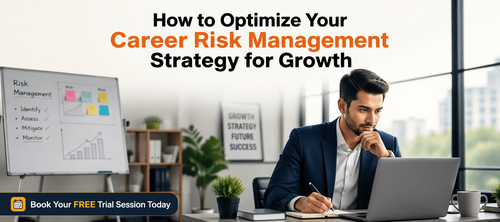

Career Risk Optimisation
In today’s fast-changing professional world, stability is no longer guaranteed. Industries are evolving, skills are becoming outdated faster than ever, and traditional career paths are losing relevance. Many professionals believe that staying in one job for a long time is the safest strategy—but in reality, that mindset can silently increase long-term career risk.
You may be working hard, staying busy, and doing everything expected of you—yet still feel uncertain about your future. Questions like “Am I in the right role?”, “What if my skills become irrelevant?”, or “Should I make a career switch?” are becoming more common.
This is where career risk optimisation becomes essential. Instead of avoiding risk, successful professionals learn how to understand, manage, and strategically take the right risks. The Career Risk Optimisation Guide provides a structured, practical framework to help you assess your current situation, identify hidden risks, and take confident action toward long-term career growth
Download these resources and apply them alongside your daily work for improved clarity, productivity, and professional growth. You can also book a free trial to gain expert guidance and enhance your communication, problem-solving, and decision-making skills. The materials are designed in a clear, structured format to help professionals learn efficiently and implement insights with confidence.
Who Is This Blog For?
- Early and mid-career professionals navigating uncertainty
- Career changers planning a transition
- Consultants and managers seeking strategic growth
- Professionals with 0–15 years of experience
- Anyone feeling stuck, confused, or unsure about their next move
Why This Topic Matters Today?
The modern career landscape is more volatile than ever. According to the guide, factors like automation, hybrid work, and rapid skill obsolescence are reshaping industries at an unprecedented pace
Key challenges professionals face today:
- Skills becoming outdated faster than before
- Increased competition across industries
- Unpredictable layoffs and restructuring
- Limited long-term job security
- Difficulty making confident career decisions
The biggest risk today is not taking risks at all. Staying comfortable without adapting can lead to stagnation, missed opportunities, and reduced earning potential over time.
Core Concept or Framework Explained
Career risk optimisation is the structured approach of identifying, evaluating, and managing risks in your professional journey.
The guide explains five major types of career risks:
- Market Risk: Industry decline or disruption affecting job opportunities
- Skill Obsolescence: Outdated skills reducing your competitiveness
- Reputation Risk: Weak or damaged professional brand
- Opportunity Cost: Missing better opportunities due to inaction
- Concentration Risk: Over-dependence on one skill, job, or network
These risks often overlap, making it important to evaluate them together rather than in isolation. The goal is not to eliminate risk but to manage it intelligently—like diversifying investments in a portfolio.
How This Blog and Guidebook Help You?
This blog simplifies the guide into actionable insights you can apply immediately.
By using this framework, you can:
- Identify hidden risks in your career
- Make smarter, data-driven career decisions
- Build a more resilient and adaptable profile
- Increase your earning potential and opportunities
- Reduce anxiety around uncertainty
Instead of reacting to situations, you learn how to proactively shape your career.
Step-by-Step Breakdown
Understanding Career Risk Clearly
Most professionals only think about job loss when considering risk. However, the guide highlights that risk also includes slow changes like skill irrelevance or missed opportunities
The first step is awareness. Once you understand the types of risks, you can begin managing them effectively.
Conducting a Career Risk Audit
The guide introduces a simple self-assessment tool where you rate yourself across five risk dimensions.
- Score each area from 1 to 5
- Identify your lowest-scoring areas
- Focus on improving those first
This helps you move from vague uncertainty to clear diagnosis.
Mapping Your Career Capital
Your career capital includes:
- Skills
- Relationships
- Reputation
- Knowledge
The key is not just what you have, but how transferable it is. For example, skills tied only to one company are less valuable than those applicable across industries.
Managing Risk with Four Strategies
The guide outlines four powerful strategies:
- Avoid: Stay away from high-risk, low-reward situations
- Mitigate: Reduce risk through upskilling or preparation
- Transfer: Share risk through multiple income sources or collaborations
- Accept and Optimise: Take calculated risks for long-term growth
Successful professionals use all four strategies instead of relying only on safety.
Building Career Resilience
Resilience is built through four pillars:
- Skill diversification
- Strong professional network
- Financial buffer
- Personal brand visibility
These pillars create stability even during uncertainty.
Planning Career Pivots Strategically
Career changes should not be sudden decisions. The guide introduces a 90-day approach:
- Explore: Research and talk to industry professionals
- Build: Develop relevant skills and experience
- Test: Apply and gather real-world feedback
This reduces risk while increasing success probability.
Creating a 12-Month Career Plan
The guide recommends dividing your year into four phases:
- Quarter 1: Diagnose and plan
- Quarter 2: Build skills and network
- Quarter 3: Take action and explore opportunities
- Quarter 4: Review and optimise
This structured approach ensures consistent progress.
Common Mistakes or Pitfalls to Avoid
- Waiting for a crisis before taking action
- Staying in a role out of fear or comfort
- Ignoring personal branding until job search
- Over-specialising without diversification
- Making decisions based on fear instead of strategy
- Not building financial backup
- Confusing busyness with progress
Each of these mistakes can delay growth and increase long-term risk.
How Should You Use This Guidebook Effectively?
To get the best results:
- Start with the career risk audit within 30 minutes
- Complete the career capital inventory within a week
- Set a monthly 60-minute career review session
- Focus on 2–3 priority areas instead of everything at once
- Track progress regularly and adjust strategies
Consistency is more important than perfection.
Key Takeaways
- Career risk is unavoidable, but manageable
- Avoiding risk completely can harm long-term growth
- Diagnosis is the first step to better decisions
- Diversification of skills and network is essential
- Career resilience is built, not inherited
- Strategic action over time creates real results
- Small, consistent steps lead to major career transformation
Your Next Step: Accelerate Your Career with PlanetSpark
Creating an impact-driven resume is not just about landing your next job—it’s about owning your professional story and presenting it with clarity, confidence, and credibility. When your resume clearly communicates value, results, and impact, opportunities follow naturally.
At PlanetSpark, we are committed to empowering working professionals with practical, outcome-focused resources that drive real career growth. From resume building and workplace communication to leadership presence and professional writing, our programs are designed to help you succeed in today’s fast-evolving job market.
Visit https://www.planetspark.in/resources to explore:
- Career and resume-building guides
- Workplace communication and professional writing resources
- Skill-development tools curated for working professionals
Want a deeper, hands-on experience?
You can also book a free trial session to learn more about PlanetSpark’s Working Professional Courses, designed to accelerate your career through personalised coaching, real-world practice, and expert guidance.
Your career deserves more than generic advice.
It deserves clarity, confidence, and measurable impact.
Personalized Communication Roadmaps
Record a video to get a AI generated personalized communication reports