
How to Prepare for Your First HR Interview Confidently
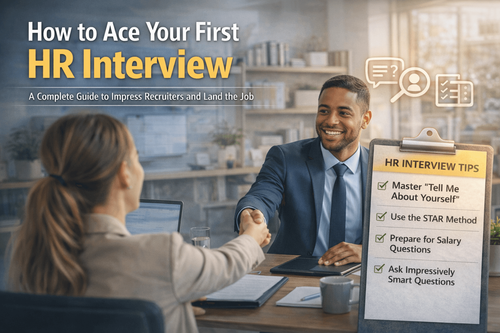

How to Ace Your First HR Interview: A Complete Guide to Impress Recruiters and Land the Job
For many job seekers, the first HR interview feels like a casual conversation before the “real” technical or managerial rounds begin. But this assumption often leads to missed opportunities. In reality, the first HR interview is one of the most critical stages of the hiring process.
Recruiters often decide within the first 10–15 minutes whether a candidate should move forward in the hiring pipeline. They are not just listening to your answers. They are evaluating how clearly you communicate, whether your motivations align with the role, and whether you fit the company culture.
Many talented professionals fail this stage not because they lack skills, but because they struggle to present their story with clarity and confidence. They ramble through introductions, struggle with salary questions, or appear unprepared when asked about the company.
The good news is that the HR interview is highly predictable once you understand what recruiters are actually evaluating. With the right preparation, structure, and communication strategies, you can transform your HR interview into a powerful opportunity to showcase your value.
This guide walks you through the exact frameworks, preparation steps, and interview strategies you need to confidently ace your first HR interview.
Who Is This Blog For?
This blog is designed for professionals who want to confidently navigate HR interviews and improve their chances of landing the job.
- Fresh graduates preparing for their first corporate interviews
- Early-career professionals looking to switch jobs
- Career changers entering a new industry
- Professionals returning to the workforce after a break
- Managers stepping into higher roles
- Anyone who feels nervous or unprepared during HR interview rounds
Why This Topic Matters Today?
The job market has become more competitive than ever. Recruiters receive hundreds of applications for a single role, which means early screening stages like HR interviews carry enormous weight.
The HR interview acts as a gatekeeper stage. Candidates who fail to communicate their value clearly rarely progress to technical or final interview rounds.
Recruiters are evaluating multiple factors simultaneously:
- Cultural alignment with the company
- Communication clarity and confidence
- Motivation for applying to the role
- Potential risks such as job-hopping or unclear career goals
These signals help recruiters determine whether investing further time in the candidate makes sense.
Professionals who understand this evaluation process can shape their answers strategically. Instead of simply answering questions, they build a compelling professional narrative that aligns with what recruiters want to hear.
Core Concept Explained: What HR Interviewers Are Actually Evaluating
Many candidates prepare answers without understanding what recruiters are truly assessing.
According to the HR interview framework outlined in the guidebook, recruiters typically evaluate candidates across four core dimensions.
Fit
Recruiters assess whether your values, working style, and background align with the organization’s culture and the specific role.
Communication
Clear and structured communication signals confidence and professionalism. Rambling or vague answers often raise red flags immediately.
Motivation
Recruiters want to understand why you want the role, why now, and why their company specifically.
Risk Assessment
Interviewers also watch for potential concerns such as unexplained career gaps, unrealistic salary expectations, or unclear career direction.
The strongest candidates address all four dimensions naturally through their answers. Instead of memorizing responses, they communicate a coherent and thoughtful professional story.
How This Blog and Guidebook Help You?
The HR interview preparation framework provides practical strategies that help you prepare systematically rather than randomly.
By following the guidebook approach, you will learn how to:
- Prepare effectively in the days leading up to your interview
- Craft a compelling personal introduction
- Structure answers to behavioral questions
- Navigate salary conversations confidently
- Build rapport with interviewers during the conversation
- Ask thoughtful questions that impress recruiters
- Follow up professionally after the interview
These strategies turn interviews into structured conversations where you confidently present your experience, motivations, and value.
Step-by-Step Breakdown
Prepare Strategically Using the 72-Hour Interview Preparation Plan
Successful interview performance begins long before the interview itself.
The guide recommends a focused preparation approach across the 72 hours before your interview.
72 Hours Before the Interview
Research the company thoroughly. Understand its products, services, recent news, leadership team, and market position.
24 Hours Before the Interview
Prepare your answers to common questions, review your professional pitch, and confirm interview logistics such as time, location, and meeting links.
Day of the Interview
Review key talking points, prepare mentally, and ensure you present yourself professionally.
This preparation structure ensures you walk into the interview with clarity and confidence.
Master the “Tell Me About Yourself” Question
One of the most important questions in an HR interview is the opening question:
“Tell me about yourself.”
Many candidates make the mistake of narrating their entire career chronologically. Instead, the guidebook recommends using a structured three-part narrative.
Past
Summarize your background, education, or professional experience relevant to the role.
Present
Explain your current position and what motivates your job search.
Future
Connect your career goals to the opportunity you are interviewing for.
This structure ensures your introduction is clear, concise, and aligned with the recruiter’s expectations.
Use the STAR Framework for Behavioral Questions
Behavioral questions are extremely common during HR interviews.
These questions often begin with prompts such as:
- “Tell me about a time when…”
- “Give an example of…”
The most effective way to answer these questions is by using the STAR framework.
Situation
Describe the context or challenge.
Task
Explain your responsibility in that situation.
Action
Describe the specific steps you took to solve the problem.
Result
Share the measurable outcome or impact of your actions.
The most important parts of the answer are the Action and Result. These demonstrate your value and achievements.
Prepare for Salary Discussions with Confidence
Salary discussions often make candidates uncomfortable, but preparation makes them manageable.
Before your interview, research salary benchmarks using platforms like:
- LinkedIn Salary
- Glassdoor
- AmbitionBox
Know three numbers before walking into the interview:
- Your minimum acceptable salary
- Your realistic target salary
- Your aspirational salary
When asked about salary expectations, provide a researched range and briefly justify it based on your experience and market data.
Set the Right Tone in the First Five Minutes
First impressions matter enormously in interviews.
The guide highlights four key actions that help create a positive opening impression.
Greet the interviewer by name
Using their name immediately builds rapport and professionalism.
Express genuine enthusiasm
Mention something specific about the company or role that excites you.
Match their communication style
If the interviewer is conversational, respond conversationally. If they are direct, be concise.
Pause before answering
Taking a brief breath before answering signals composure and confidence.
Ask Smart Questions at the End of the Interview
Many candidates miss an opportunity to impress recruiters by asking thoughtful questions.
Instead of saying “No questions,” prepare a few strategic questions such as:
- What does success look like in the first 90 days for this role?
- What are the biggest challenges someone in this role will face?
- What does career progression typically look like here?
- What are the next steps in the hiring process?
Asking insightful questions signals curiosity, preparation, and genuine interest.
Follow the 24-Hour Post-Interview Protocol
The interview process does not end when the conversation finishes.
A structured follow-up strategy can strengthen your candidacy.
Within 1 hour
Send a short personalized thank-you email referencing something specific from the conversation.
Within 24 hours
Reflect on your performance and identify areas for improvement.
Within 48 hours
Connect with the interviewer on LinkedIn with a thoughtful message.
After 1 week
Follow up politely if you have not received an update.
Common Mistakes or Pitfalls to Avoid
Even experienced professionals often make avoidable mistakes in HR interviews.
Rambling introductions
Your introduction should be concise and structured using the Past–Present–Future format.
Using “we” instead of “I”
Interviewers want to understand your individual contribution, not the team’s work.
Lack of company research
Failing to research the company signals a lack of preparation.
Speaking negatively about previous employers
Always keep explanations professional and forward-looking.
Not asking questions
Prepared questions demonstrate engagement and curiosity.
Skipping the thank-you email
A simple follow-up message can leave a lasting impression on recruiters.
How Should You Use This Guidebook Effectively?
To get the most value from this HR interview preparation guide, use it as an active preparation tool rather than a passive read.
Start by preparing your 90-second professional pitch.
Next, create a bank of five STAR stories covering leadership, problem solving, collaboration, pressure situations, and adaptability.
Then research the company and role thoroughly before every interview.
Finally, practice delivering your answers out loud to improve clarity and confidence.
Over time, this preparation process becomes easier and more natural.
Key Takeaways
- The HR interview is a critical screening stage, not a casual conversation
- Recruiters evaluate candidates based on fit, communication, motivation, and risk factors
- A structured Past–Present–Future pitch creates a powerful first impression
- The STAR framework helps you answer behavioral questions effectively
- Preparation in the 72 hours before an interview significantly improves performance
- Salary discussions become easier when you research market benchmarks
- Asking thoughtful questions demonstrates professionalism and curiosity
- Following up after the interview reinforces your interest and professionalism
Your Next Step: Accelerate Your Career with PlanetSpark
Creating an impact-driven resume is not just about landing your next job—it’s about owning your professional story and presenting it with clarity, confidence, and credibility. When your resume clearly communicates value, results, and impact, opportunities follow naturally.
At PlanetSpark, we are committed to empowering working professionals with practical, outcome-focused resources that drive real career growth. From resume building and workplace communication to leadership presence and professional writing, our programs are designed to help you succeed in today’s fast-evolving job market.
Visit https://www.planetspark.in/resources to explore:
- Career and resume-building guides
- Workplace communication and professional writing resources
- Skill-development tools curated for working professionals
Want a deeper, hands-on experience?
You can also book a free trial session to learn more about PlanetSpark’s Working Professional Courses, designed to accelerate your career through personalised coaching, real-world practice, and expert guidance.
Your career deserves more than generic advice.
It deserves clarity, confidence, and measurable impact.
Personalized Communication Roadmaps
Record a video to get a AI generated personalized communication reports