
How to Request Mentorship Professionally: A 2026 Guide
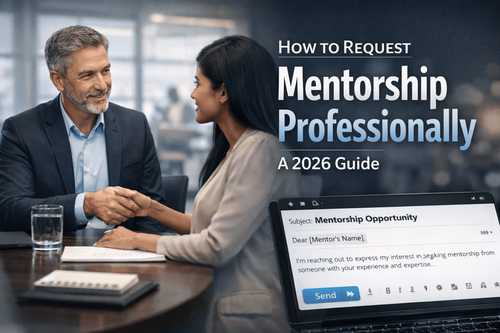

How to Write Mentorship Request Messages That Get Responses (And Build Real Career Relationships)
Introduction
You know mentorship matters. Every successful
professional talks about it.
But here’s the uncomfortable reality—most mentorship requests fail.
They get ignored.
They get polite declines.
Or worse, they turn into one-off conversations that go nowhere.
Not because you lack potential. Not because mentors are unavailable.
But because the message you send doesn’t work.
According to the guidebook, the problem isn’t ambition—it’s language. Most professionals don’t know how to ask in a way that signals clarity, effort, and respect for time.
This blog breaks down a proven system from the “Professional Mentorship Request Scripts” playbook to help you write outreach messages that get responses—and build relationships that actually accelerate your career.
Who Is This Blog For?
- Working professionals with 0–15 years of experience seeking career growth
- Career switchers entering new industries or roles
- Job seekers looking for guidance, referrals, or clarity
- Consultants and specialists building strong professional networks
- Managers seeking strategic perspective from experienced leaders
- Anyone who struggles with writing mentorship messages that feel natural and effective
Why This Topic Matters Today?
Mentorship is no longer optional—it’s a strategic advantage.
In fast-changing industries, learning from someone who has already navigated your path can save months or even years of trial and error.
But here’s the catch: mentors are busy.
They don’t respond to vague, generic, or time-consuming messages.
The guidebook highlights a critical insight—your first message determines whether the relationship even starts.
A poorly written request signals:
- Lack of preparation
- Unclear goals
- High time cost
A well-crafted request signals:
- Professionalism
- Specificity
- Respect for time
And that’s what gets replies.
Core Concept or Framework Explained
At the core of effective mentorship outreach is a structured journey—not a single message.
The guide introduces the 5-Stage Mentorship Outreach Map, which defines how strong mentorship relationships are built over time:
- Identify and Research
- First Contact
- Meeting Request
- First Meeting
- Ongoing Relationship
Each stage has a different objective, tone, and level of specificity.
For example:
- Stage 1 ensures your outreach is relevant and personalised
- Stage 2 ensures your message passes the “worth replying” test
- Stage 3 removes friction and gets the meeting scheduled
- Stage 4 builds credibility through action
- Stage 5 turns interaction into long-term relationship
Most professionals fail at Stage 2 because they skip Stage 1. No research means no relevance. No relevance means no response.
How This Blog and Guidebook Help You?
This blog and guidebook help you:
- Eliminate guesswork in mentorship outreach
- Increase response rates from senior professionals
- Communicate with clarity and confidence
- Build meaningful, long-term mentor relationships
- Avoid common mistakes that lead to ignored messages
Instead of hoping for responses, you operate with a proven system.
Step-by-Step Breakdown
Step 1: Identify and Research the Right Mentor
Before you write anything, invest time in research.
The guidebook recommends 30–60 minutes of focused research before outreach.
Key areas to explore:
- Their career journey and transitions
- Content they’ve shared (posts, articles, talks)
- Problems they’ve solved that you currently face
- Shared connections or common ground
- Their current role and availability
Ask yourself two critical questions:
- Why this person?
- Why now?
If you can’t answer clearly, your message will fail.
Step 2: Craft a Strong First Contact Message
Your first message must do four things quickly:
- Establish context
- Show specificity
- Make a small ask
- Respect their time
Keep it under 150 words.
Avoid generic lines like:
- “I admire your journey”
- “Can I pick your brain?”
Instead:
- Reference something specific they’ve done
- Explain your situation clearly
- Ask one focused question
- Request a short 20-minute conversation
This transforms your message from generic to compelling.
Step 3: Make a Clear Meeting Request
Once they respond, don’t lose momentum.
Most professionals fail here by being vague.
The guidebook emphasises:
- Offer 2–3 specific time slots
- Define what you want to discuss
- Keep the meeting short (15–25 minutes)
- Send a clear agenda
A 24-hour agenda note is a powerful differentiator. It shows preparation and respect—qualities mentors value highly.
Step 4: Deliver and Follow Up After the Meeting
The meeting is not the end—it’s the beginning.
What you do in the next 48 hours determines whether the relationship continues.
Best practices:
- Take notes during the meeting
- Send a thank-you message within 24 hours
- Reference specific insights they shared
- Share actions you will take
Within one week:
- Send a brief update on what you implemented
This signals that you are serious—and worth investing in.
Step 5: Build the Ongoing Relationship
This is where mentorship actually happens.
The guidebook highlights a simple principle: give before you ask.
Ways to maintain the relationship:
- Share relevant articles or insights
- Provide updates on your progress
- Ask one focused question when needed
- Check in every 6–8 weeks
Consistency builds trust. And trust builds mentorship.
Step 6: Use the Personalisation Worksheet
The guide includes a practical worksheet to help you draft messages quickly.
It covers:
- Your context
- Why this mentor
- A specific reference
- Your one focused question
- Time commitment
Completing this reduces hesitation and increases the likelihood of sending the message immediately.
Step 7: Apply the 7 Core Principles
The guidebook distils everything into seven principles:
- Research before outreach
- Start small
- Respect time
- Show initiative
- Give before asking
- Close every loop
- Play the long game
Internalising these makes you effective—even without scripts.
Common Mistakes or Pitfalls to Avoid
- Asking for “mentorship” in the first message
- Writing long, unfocused messages
- Using vague or generic praise
- Not including a clear next step
- Following up too aggressively
- Failing to follow up after meetings
- Only reaching out when you need something
Each of these reduces your chances of building a meaningful relationship.
How Should You Use This Guidebook Effectively?
To maximise results:
- Skim the guide to understand the full structure
- Study the scripts and why they work
- Personalise every message using real context
- Use the worksheet before sending outreach
- Apply one script at a time in real situations
- Track your responses and refine your approach
Time investment:
- 30–45 minutes to understand the framework
- 10 minutes to draft a message
- Immediate execution
The guide is designed for action—not just reading.
Key Takeaways
- Mentorship outreach is a skill, not luck
- Specificity is the key to getting responses
- Always start with a small, focused ask
- Research is non-negotiable
- Follow-up determines relationship quality
- Give value before asking for help
- Consistency builds long-term mentorship
Your Next Step: Accelerate Your Career with PlanetSpark
Creating an impact-driven resume is not just about landing your next job—it’s about owning your professional story and presenting it with clarity, confidence, and credibility. When your resume clearly communicates value, results, and impact, opportunities follow naturally.
At PlanetSpark, we are committed to empowering working professionals with practical, outcome-focused resources that drive real career growth. From resume building and workplace communication to leadership presence and professional writing, our programs are designed to help you succeed in today’s fast-evolving job market.
Visit https://www.planetspark.in/resources to explore:
- Career and resume-building guides
- Workplace communication and professional writing resources
- Skill-development tools curated for working professionals
Want a deeper, hands-on experience?
You can also book a free trial session to learn more about PlanetSpark’s Working Professional Courses, designed to accelerate your career through personalised coaching, real-world practice, and expert guidance.
Your career deserves more than generic advice.
It deserves clarity, confidence, and measurable impact.
Start building that advantage today—with PlanetSpark.
Personalized Communication Roadmaps
Record a video to get a AI generated personalized communication reports