
How to Review Past Decisions to Unlock Career Growth Insights
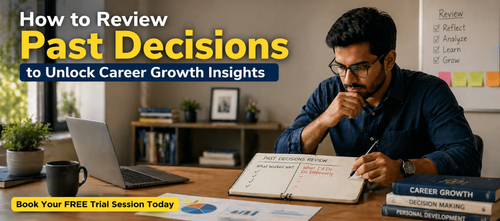

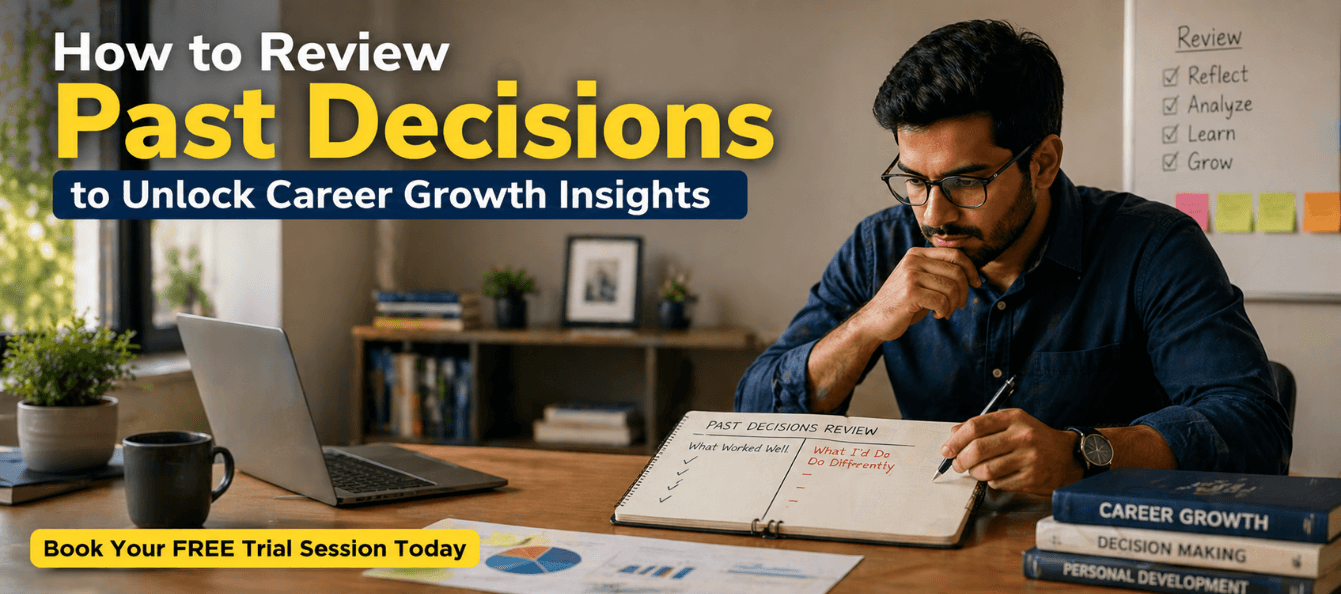
Auditing Your Past Decisions to Improve Judgment and Accelerate Career Growth
You make decisions every day—some small, some career-defining. But how often do you actually go back and analyse those decisions?
For most professionals, the answer is rarely. Once a decision is made, the focus shifts to the next task. There is little time spent understanding whether the decision was sound, what influenced it, and how it could be improved in the future.
This creates a hidden problem. Without reviewing past decisions, you repeat the same mistakes, reinforce weak thinking patterns, and miss opportunities to improve your judgment.
This is exactly where a structured Decision Audit becomes powerful. It helps you systematically review past decisions, identify patterns, and refine your thinking—so every decision you make contributes to long-term growth.
Download these resources and apply them alongside your daily work for improved clarity, productivity, and professional growth. You can also book a free trial to gain expert guidance and enhance your communication, problem-solving, and decision-making skills. The materials are designed in a clear, structured format to help professionals learn efficiently and implement insights with confidence.
Who Is This Blog For?
- Working professionals who want to improve decision-making
- Managers and leaders making high-stakes choices
- Career switchers evaluating past career decisions
- Consultants handling complex problem-solving
- Early to mid-career professionals focused on growth
Why This Topic Matters Today?
In a fast-moving work environment, decision-making quality directly impacts your career trajectory.
However, most professionals:
- Do not systematically review past decisions
- Judge decisions only based on outcomes
- Fail to identify recurring biases or blind spots
- Miss opportunities to improve their thinking process
This leads to inconsistent results and slower growth.
A structured decision audit solves this by:
- Separating decision quality from outcome quality
- Identifying patterns across multiple decisions
- Improving future judgment through reflection
Professionals who regularly audit their decisions build stronger intuition, better frameworks, and higher confidence over time.
Core Concept or Framework Explained
The Decision Audit framework is built around analysing decisions across three key dimensions:
Context
What situation or constraints existed when the decision was made
Process
How the decision was made, including reasoning and evaluation
Outcome
What actually happened and why
This structured approach ensures that you do not rely on hindsight alone but understand the full picture.
The goal is not to judge yourself—but to improve your thinking.
How This Blog and Guidebook Help You?
This blog and the audit guide provide:
- A structured framework to review past decisions
- Tools to identify strengths and weaknesses in your thinking
- Methods to improve future decision-making
- A repeatable system for continuous improvement
The result is better judgment, increased confidence, and stronger career outcomes.
Step-by-Step Breakdown
Step 1: Select Decisions — Which Decisions Should You Review?
Start by choosing a small set of decisions.
Focus on:
- Recent decisions (last 1–3 months)
- Decisions with meaningful impact
- A mix of successful and unsuccessful outcomes
Avoid overloading yourself—3 to 5 decisions per session is enough.
Step 2: Reconstruct Context — What Was Happening at the Time?
To evaluate a decision fairly, you must revisit the original context.
Capture:
- Available information at the time
- Constraints such as deadlines or resources
- Assumptions you made
- External pressures or influences
This prevents hindsight bias and ensures accurate evaluation.
Step 3: Analyse the Process — How Did You Decide?
This step focuses on your thinking process.
Ask:
- What options did I consider?
- What criteria did I use?
- Did I rely on data, intuition, or both?
- Did I seek input from others?
This helps identify strengths and gaps in your approach.
Step 4: Evaluate the Outcome — What Happened?
Now compare expected outcomes with actual results.
Focus on:
- What worked as expected
- What did not go as planned
- Factors within and outside your control
Important: Avoid judging the decision solely based on outcome.
A good decision can lead to a bad outcome due to external factors.
Step 5: Identify Gaps — What Could Be Improved?
This is where real learning happens.
Look for:
- Missing information during decision-making
- Flawed assumptions
- Biases that influenced your thinking
- Areas where you rushed or overcomplicated
This step turns reflection into insight.
Step 6: Extract Lessons — What Will You Do Differently?
Convert insights into actionable lessons.
Examples:
- “I will define decision criteria before evaluating options”
- “I will seek at least one opposing viewpoint”
- “I will delay decisions when information is incomplete”
Clear lessons improve future decisions.
Step 7: Build Decision Rules — How Do You Apply Learning?
Over time, patterns emerge.
Use these patterns to create simple decision rules or mental models.
For example:
- “For high-risk decisions, always run a quick risk analysis”
- “When uncertain, prioritise reversible decisions first”
These rules reduce cognitive load and improve consistency.
Common Mistakes or Pitfalls to Avoid
Many professionals struggle with decision audits due to:
- Only reviewing failures and ignoring successes
- Judging decisions purely based on outcomes
- Skipping context reconstruction
- Failing to document insights
- Not applying lessons to future decisions
A better approach is to:
- Review both good and bad decisions
- Focus on improving the process
- Document insights clearly
- Apply lessons consistently
How Should You Use This Guidebook Effectively?
To get the most value:
- Schedule a monthly decision audit session
- Review 3–5 decisions at a time
- Use a structured template for consistency
- Track patterns over time
Suggested workflow:
- Weekly: Note key decisions briefly
- Monthly: Conduct a detailed audit
- Quarterly: Review patterns and refine decision rules
Consistency ensures long-term improvement.
Key Takeaways
- Reviewing past decisions is essential for improving judgment
- Decision quality should be evaluated separately from outcomes
- Context, process, and outcome form a complete evaluation framework
- Identifying patterns helps build better decision-making habits
- Actionable lessons improve future performance
- Decision rules reduce effort and increase consistency
- Regular audits lead to continuous growth
Your Next Step: Accelerate Your Career with PlanetSpark
Creating an impact-driven resume is not just about landing your next job—it’s about owning your professional story and presenting it with clarity, confidence, and credibility. When your resume clearly communicates value, results, and impact, opportunities follow naturally.
At PlanetSpark, we are committed to empowering working professionals with practical, outcome-focused resources that drive real career growth. From resume building and workplace communication to leadership presence and professional writing, our programs are designed to help you succeed in today’s fast-evolving job market.
Visit https://www.planetspark.in/resources to explore:
- Career and resume-building guides
- Workplace communication and professional writing resources
- Skill-development tools curated for working professionals
Want a deeper, hands-on experience?
You can also book a free trial session to learn more about PlanetSpark’s Working Professional Courses, designed to accelerate your career through personalised coaching, real-world practice, and expert guidance.
Your career deserves more than generic advice.
It deserves clarity, confidence, and measurable impact.
Start building that advantage today—with PlanetSpark.
Personalized Communication Roadmaps
Record a video to get a AI generated personalized communication reports