
How to Structure Resumes for Strategic Operations Roles
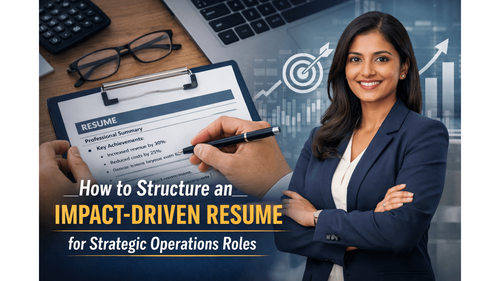

How to Structure an Impact-Driven Resume for Strategic Operations Roles: A Guide to Career Acceleration
In the fast-paced world of strategic operations, standing out in a pile of resumes is a daunting challenge. Recruiters typically spend just 6-8 seconds scanning a resume. In those precious seconds, your resume needs to capture attention—not with a list of responsibilities, but with impactful results. This blog explores how to shift your resume from a list of tasks to a compelling, results-driven narrative that grabs attention, passes ATS filters, and lands you your next strategic operations role. Book your free trial session today with Planetspark. Download for more details or PDF file.
Who Is This Blog For?
This blog and accompanying guidebook are
tailored for:
- Working professionals with 0-15 years of experience aiming to transition into strategic operations roles
- Career changers seeking to position themselves for operations-focused positions
- Mid-career professionals targeting promotions into senior operational leadership roles
- Consultants and managers building credibility in operations functions
- Job seekers facing challenges with low interview callbacks despite significant professional experience.
Why This Topic Matters Today?
In today's competitive job market, strategic operations roles are among the most sought after. From Chief of Staff to Strategy & Operations Managers, companies are looking for professionals who can not only think strategically but also execute efficiently across departments. According to a recent report, 75% of resumes are rejected by ATS systems before they even reach a hiring manager. If your resume merely lists duties without demonstrating measurable impact, it will blend in with the crowd and be overlooked. Quantified achievements on your resume are essential for standing out, especially in high-demand fields like strategic operations.
Core Concept or Framework Explained:
The cornerstone of a high-impact resume is the STAR-Q framework, which shifts focus from what you were responsible for to what you actually achieved. Here's how it works:
- Situation: The context or challenge you were facing
- Task: What you were responsible for
- Action: The steps you took to address the challenge
- Result: The measurable outcome of your actions
- Quantification: The numbers or metrics that back up the results
This framework transforms your resume from a list of tasks to a powerful story that showcases your problem-solving skills and measurable impact.
How This Blog and Guidebook Help You?
The guidebook and this blog will help you:
- Discover hidden achievements in your career that you can quantify
- Identify key metrics, even when they are not immediately obvious
- Write achievement statements that are instantly recognizable to hiring managers
- Structure your resume for maximum impact, ensuring that your most relevant accomplishments are front and center
- Tailor your resume for specific roles, enhancing your chances of getting noticed
By transforming your resume into a strategic tool that demonstrates measurable value, you'll make a compelling case for your ability to succeed in operations leadership roles.
Step-by-Step Breakdown:
Step 1: Audit Your Experience
Begin by conducting a comprehensive audit of your professional experience. Many candidates overlook their most significant achievements because they focus solely on job titles and duties. Start by capturing everything you have accomplished:
- Projects you led or contributed to
- Problems you solved or inefficiencies you improved
- Revenue generated, costs saved, or risks mitigated
- Teams you influenced or managed
- Processes or systems you developed or optimized
Step 2: Identify Your Quantification Metrics
Quantify your achievements wherever possible. Even if you don’t have exact numbers, you can still use estimates or scale references. The guidebook highlights key areas for quantifying your impact, such as:
- Financial impact (e.g., revenue growth, cost savings, ROI)
- Efficiency gains (e.g., time saved, faster delivery)
- Growth metrics (e.g., percentages, conversions, engagement)
- People and scale (e.g., team size, training, retention)
- Quality improvements (e.g., error reduction, compliance)
Step 3: Craft Powerful Achievement Statements
Each bullet point should start with an action verb and include a brief description of what you did, followed by the measurable outcome. Examples include:
- "Spearheaded a project that reduced operational costs by 25% in the first year."
- "Optimized team workflows, increasing output by 40% within six months."
The key is to show the action you took, the scale of your involvement, and the result you achieved.
Step 4: Structure Your Resume Strategically
Your resume should follow a clear and strategic structure:
- Professional Summary: Highlight key achievements upfront
- Core Competencies: Showcase 8-12 key skills relevant to the operations field
- Professional Experience: For each role, include 3-5 achievement-based bullet points
- Education and Certifications: Only list the most relevant degrees and certifications
Step 5: Write a High-Impact Professional Summary
The professional summary should provide a snapshot of your career, highlighting key achievements and your target role. Make sure it reflects your unique skills and the value you can bring to your next employer.
Step 6: Apply the Resume Transformation Checklist
Use the guidebook’s checklist to ensure your resume meets modern standards. This includes formatting tips, keyword alignment, and ensuring that each section of your resume contributes to the overall narrative of your professional value.
Common Mistakes or Pitfalls to Avoid:
Several common mistakes can weaken your resume:
- Using personal pronouns instead of strong, concise statements
- Listing duties rather than achievements
- Failing to include quantified outcomes
- Including irrelevant or outdated skills and hobbies
- Submitting generic resumes without tailoring them for specific roles
Avoiding these mistakes will ensure your resume stands out as a polished, high-impact document.
How Should You Use This Guidebook Effectively?
To use this guidebook effectively, follow these steps:
- Read the guidebook once for context
- Complete the worksheets alongside each section
- Apply the frameworks directly to your resume
- Allocate 2-3 hours for full implementation and a comprehensive review.
Key Takeaways:
- Shift your focus from responsibilities to measurable results
- Quantify your achievements wherever possible
- Use the STAR-Q framework for clarity and structure
- Lead with your strongest accomplishments
- Tailor your resume for every role you apply for
- Be honest, accurate, and focused on impact.
Your Next Step: Accelerate Your Career with PlanetSpark
Creating an impact-driven resume is not just about landing your next job—it’s about owning your professional story and presenting it with clarity, confidence, and credibility. When your resume clearly communicates value, results, and impact, opportunities follow naturally.
At PlanetSpark, we are committed to empowering working professionals with practical, outcome-focused resources that drive real career growth. From resume building and workplace communication to leadership presence and professional writing, our programs are designed to help you succeed in today’s fast-evolving job market.
Visit https://www.planetspark.in/resources to explore:
- Career and resume-building guides
- Workplace communication and professional writing resources
- Skill-development tools curated for working professionals.
Want a deeper, hands-on experience?
You can also book a free trial session to learn more about PlanetSpark’s Working Professional Courses, designed to accelerate your career through personalised coaching, real-world practice, and expert guidance.
Your career deserves more than generic advice.
It deserves clarity, confidence, and measurable impact.
Start building that advantage today—with PlanetSpark.
Personalized Communication Roadmaps
Record a video to get a AI generated personalized communication reports