
How to Structure Your Life with Systems Instead of Relying on Motivation


How to create a Life That Runs Itself: A Systems-Based Approach for Working Professionals
In today’s world, productivity and success don’t come from waiting for the perfect moment. Too often, we find ourselves in cycles of inspiration that fade quickly, leaving us to feel stuck or unproductive. Motivation is a fleeting feeling, and relying on it as the foundation for building a productive professional life can leave you frustrated and overwhelmed.
That’s where systems come in. Systems don’t depend on how you feel. They’re the solid foundation that ensures you continue moving forward—regardless of external circumstances or internal states. This blog will show you how to build your professional life around systems, instead of relying on fleeting motivation.
Download these resources and apply them alongside your daily work for improved clarity, productivity, and professional growth. You can also book a free trial to gain expert guidance and enhance your communication, problem-solving, and decision-making skills. The materials are designed in a clear, structured format to help professionals learn efficiently and implement insights with confidence.
Who Is This Blog For?
Job seekers preparing for interviews and networking opportunities
Career switchers exploring new industries or roles
Working professionals aiming to build stronger connections
Freelancers and consultants managing client communication
Managers and leaders focused on professional relationship-building.
Why This Topic Matters Today?
In today’s fast-paced, competitive job market, relying on motivation is a trap. According to the resource, professionals who take action without waiting for the right internal state are more successful than those who wait for motivation to kick in. Many professionals skip the crucial follow-up or fail to execute their plans simply because they don’t feel ready.
Success depends on consistent execution, not how motivated you are on a given day. Building your career around systems creates a consistent, predictable framework that doesn’t rely on momentary bursts of motivation but instead sets up automatic success.
Core Concept or Framework Explained
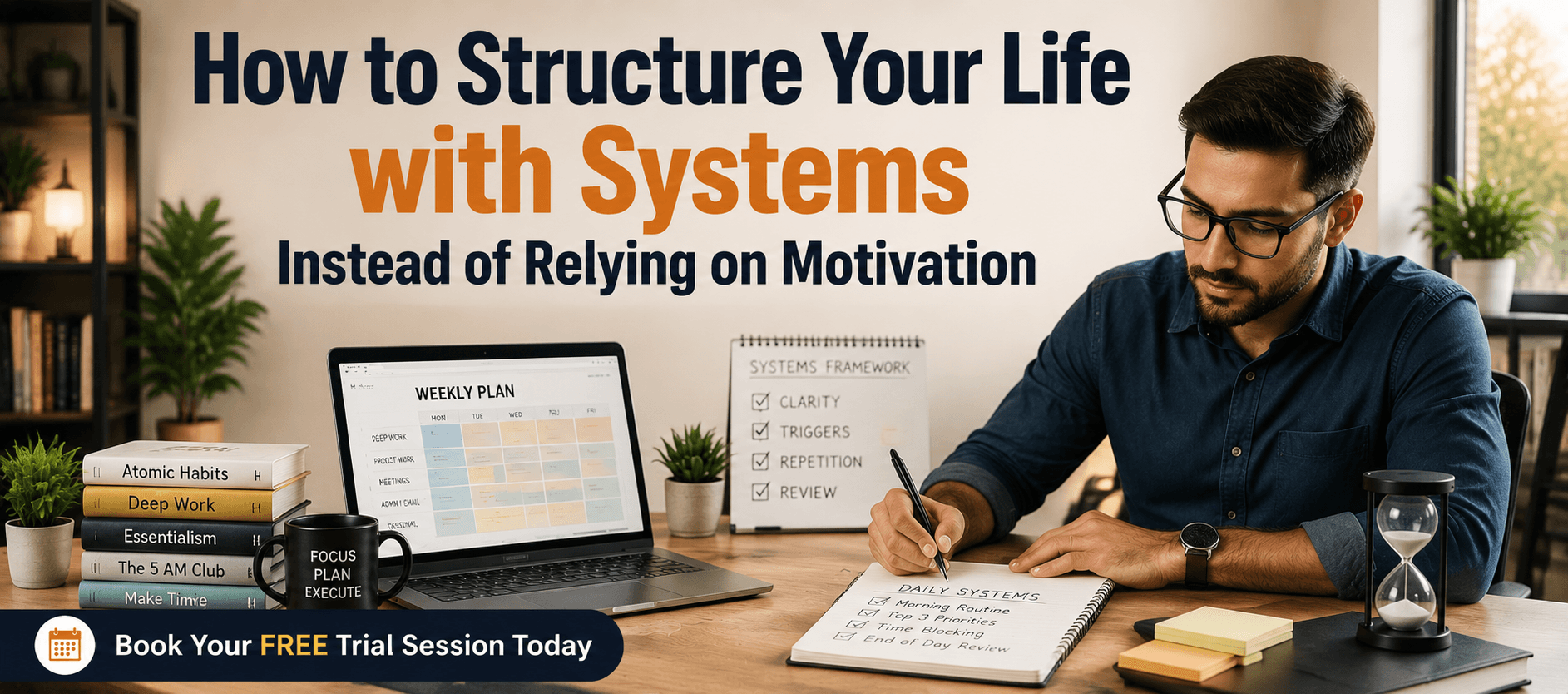
The core framework for system building revolves around four key principles:
Clarity: Define precise, measurable goals. Systems begin with clear definitions, not vague intentions.
Triggers: Use external cues or scheduled times to trigger system activation. Motivation doesn’t trigger a system; your environment does.
Repetition: Consistency is the engine of success. Repeating actions, even when motivation is low, ensures progress.
Review: Systems degrade over time. Regular audits and adjustments are necessary to keep systems working.
This framework ensures that systems don’t fail due to lack of motivation or unexpected disruptions.
How This Blog and Guidebook Help You?
This blog and the accompanying guidebook will help you:
Design systems for energy management, productivity, and career progression
Use practical tools and frameworks to automate your success
Create environments that support your goals and remove distractions
Learn how to maintain your systems over time for sustained growth
The result? Greater control over your career and productivity—regardless of external circumstances.
Step-by-Step Breakdown:
Design Your Non-Negotiable Core
Begin with the most critical systems that must never break. These include:
Energy Management: Ensure adequate sleep, nutrition, and physical movement.
Priority Capture: Use a trusted tool to capture every task and idea.
Daily Start Ritual: Start each day with a structured, repeatable process.
Time Blocking
Define your work week by categorizing tasks:
Deep Work Blocks: Focused, distraction-free time for your highest priority tasks.
Shallow Work Windows: Admin and less focused work.
Buffer Blocks: Time for transitions, thinking, or overflow.
Habit Stacking
Build new habits by attaching them to existing routines. This reduces reliance on willpower:
Morning Start Stack: Begin your workday with a set ritual.
End-of-Day Stack: Review progress, prepare for the next day, and close out your day.
Environment Design
Design your workspace and digital environment to make desired behaviors easy and distractions difficult:
Physical Environment: Keep your workspace clean and task-specific.
Digital Environment: Block distractions and optimize your tools for productivity.
Weekly Review
Set aside 60 minutes every week to assess your systems, adjust them, and plan the next week. This ritual is vital for maintaining momentum and ensuring everything stays on track.
Common Mistakes or Pitfalls to Avoid
Many professionals make avoidable mistakes when building systems. These include:
Building Too Many Systems at Once: Start with one system and stick with it for 30 days before adding more.
Designing for Ideal Conditions: Create systems that work even on your worst days.
Skipping the Weekly Review: Consistently protecting your review time is crucial for long-term success.
Confusing Tools with Systems: Tools are useful, but they’re not systems. Define the process first.
How Should You Use This Guidebook Effectively?
To maximize the value from the guidebook:
Step 1: Read through the entire guide once for the full picture.
Step 2: Start applying the frameworks and systems section by section, using the worksheets and checklists to guide you.
Step 3: Track your progress, adjusting your systems as necessary.
Time commitment:
5–10 minutes per day to apply each system step
Weekly reviews to keep systems on track and continuously improve.
Key Takeaways:
Systems Over Motivation: Don’t wait for the right mood; create structures that work regardless of how you feel.
Clarity, Triggers, Repetition, Review: These four pillars form the foundation of every effective system.
Start with the Non-Negotiable Core: Energy, task capture, and daily rituals are the foundational systems to build first.
Time Block Your Week: Plan your day with intention, giving priority to deep work.
Habit Stack: Attach new habits to existing routines for effortless integration.
Design Your Environment: Make the right behaviors easy and the wrong ones inconvenient.
Weekly Reviews: Protect this crucial system for sustained clarity and focus.
Your Next Step: Accelerate Your Career with PlanetSpark
Creating an impact-driven resume is not just about landing your next job—it’s about owning your professional story and presenting it with clarity, confidence, and credibility. When your resume clearly communicates value, results, and impact, opportunities follow naturally.
At PlanetSpark, we are committed to empowering working professionals with practical, outcome-focused resources that drive real career growth. From resume building and workplace communication to leadership presence and professional writing, our programs are designed to help you succeed in today’s fast-evolving job market.
Visit https://www.planetspark.in/resources
to explore:
Career and resume-building guides
Workplace communication and professional writing resources
Skill-development tools curated for working professionals.
Want a deeper, hands-on experience?
You can also book a free trial session to learn more about PlanetSpark’s Working Professional Courses, designed to accelerate your career through personalised coaching, real-world practice, and expert guidance.
Your career deserves more than generic advice.
It deserves clarity, confidence, and measurable impact.
Start building that advantage today—with PlanetSpark.
Personalized Communication Roadmaps
Record a video to get a AI generated personalized communication reports