
How to Track Decision Accuracy and Improve Judgment Over Time
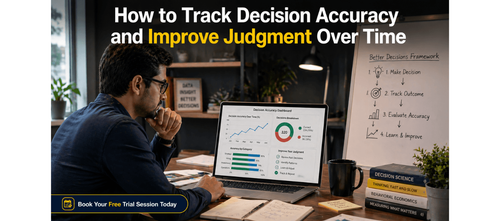

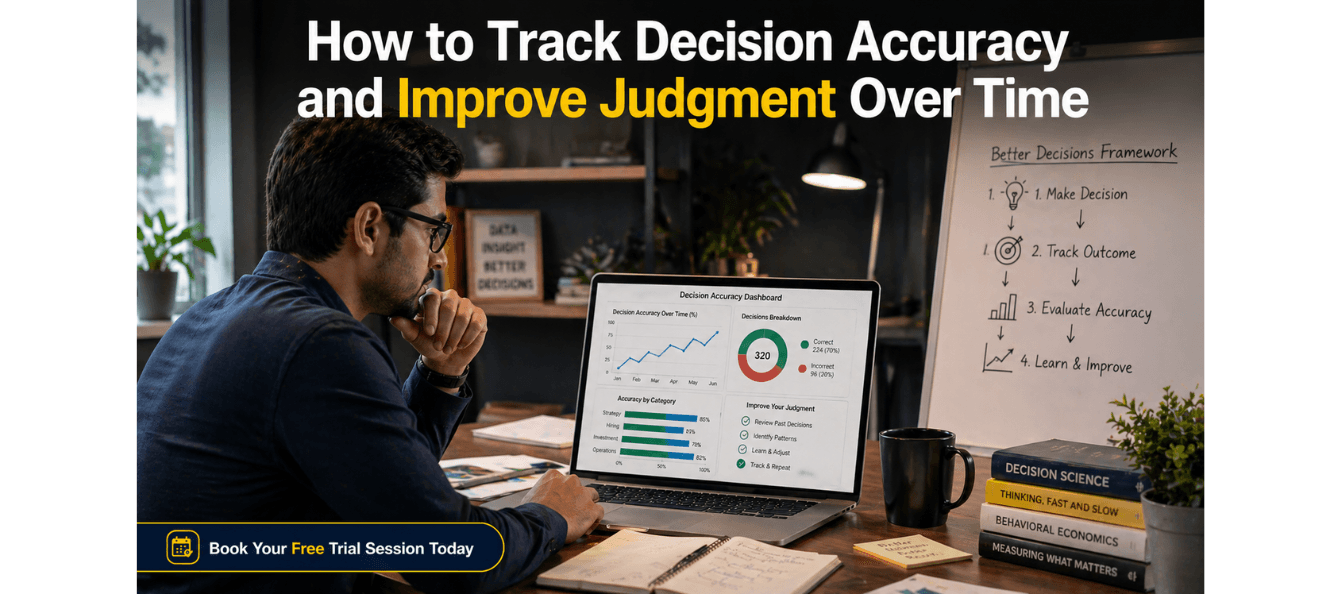
Track and Improve Your Decision-Making: A Guide to Calibrating Confidence and Accuracy
In today’s fast-paced, high-stakes work environments, professionals are expected to make decisions quickly, often under intense pressure. Whether you’re a manager, consultant, or career changer, making sharp, confident decisions is critical. However, as important as it is to trust your judgment, it’s just as crucial to ensure that your confidence aligns with the accuracy of your outcomes.
Most professionals rely heavily on outcome-based metrics to evaluate their decisions, but this approach can be misleading. A well-thought-out decision can fail due to external factors, while a poor decision may succeed through sheer luck. To truly improve your decision-making skills, it’s essential to track not only your outcomes but also how confident you felt when making those decisions—and compare the two.
Download these resources and apply them alongside your daily work for improved clarity, productivity, and professional growth. You can also book a free trial to gain expert guidance and refine your decision-making skills. The materials are designed in a clear, structured format to help professionals learn efficiently and implement insights with confidence.
Who Is This Blog For?
This blog is for professionals who want to improve their decision-making process by understanding the relationship between confidence and accuracy. It’s particularly helpful for:
- Managers looking to make better decisions with improved self-awareness
- Consultants who need to fine-tune their judgment under pressure
- Mid-career professionals who want to track and adjust their decision-making patterns
- Anyone who faces high-pressure decisions and struggles with second-guessing
Why This Topic Matters Today?
In today’s dynamic work environment, decisions are often made in the face of uncertainty, limited information, and high expectations. Unfortunately, many professionals focus only on outcomes when evaluating their decisions. This can lead to biased conclusions, such as assuming that a decision was right just because the outcome was favorable or that a decision was wrong because the outcome wasn’t ideal.
By tracking both confidence and accuracy, you can develop a clearer understanding of your judgment patterns. This insight enables you to adjust your confidence levels, identify areas where you tend to overestimate or doubt your abilities, and ultimately make better decisions with less stress.
Core Concept or Framework Explained
The Confidence-Accuracy Gap is a model designed to help you track your decision-making process over time. The framework works by comparing two key elements:
1. Confidence: This is how certain you felt about your decision at the time it was made. It is rated on a 1-10 scale, where 10 means you were highly confident, and 1 means you were unsure.
2. Accuracy: This refers to how well your decision turned out compared to your intended outcome. This is rated after the outcome becomes clear, typically 2-8 weeks later.
The relationship between these two variables is key. By tracking this gap, you can learn to calibrate your decision-making and adjust your confidence to match reality.
How This Blog and Guidebook Help You?
This guide introduces a practical system for tracking Decision Confidence vs. Outcome Accuracy. The main benefits include:
- Identifying Misalignment: By comparing your confidence with your accuracy, you can spot areas where you tend to be overconfident or underconfident.
- Improving Self-Awareness: The more you track your decision-making, the more you understand your judgment patterns and cognitive biases.
- Building Better Judgment: Regular tracking and reflection lead to improved decision quality, making you a more confident and effective decision-maker.
By following this approach, you will gradually close the gap between how confident you feel about your decisions and how accurate they actually are, leading to more effective and less stressful decision-making.
Step-by-Step Breakdown
Step 1: Log the Decision Before the Outcome Clouds Your Memory
The first and most crucial step is to log your decision as soon as it’s made or within 24 hours. Human memory can be biased by hindsight, so it’s essential to capture your reasoning and confidence level before knowing the outcome. Keep it simple—just a brief record of the decision, your confidence level, and why you rated it the way you did.
Decision Log Template:
- Decision Date: When the decision was made
- Decision Summary: One sentence describing the decision
- Confidence Score (1-10): Rate how confident you were at the time
- Confidence Rationale: Why did you give that score?
- Expected Outcome: What did you expect to happen?
- Review Date: When will you check the actual outcome?
Step 2: Score the Outcome After You Know What Happened
Once the outcome is clear, return to your original log and score the actual result. Rate how closely the outcome matched your expectations and whether it aligned with your original goal.
- Rate the Outcome (1-10): How well did the decision play out compared to what you intended?
- Describe What Actually Happened: What was the actual outcome? Stick to facts.
- Identify the Gap: Compare your confidence score with your outcome score. This gap reveals how well-calibrated your judgment is.
By completing this reflection step, you can separate luck from logic and better understand where your judgment was right and where it went wrong.
Step 3: Analyze Your Patterns to Identify Weaknesses and Strengths
After logging 8-12 decisions (typically 4-6 weeks of consistent tracking), you will start to see patterns in your decision-making. Set aside time to review your entries and ask the following questions:
- In which decision domains (career, finance, team, client) is my confidence most accurate?
- Where am I consistently overconfident or underconfident?
- What type of information, when missing, most frequently correlates with poor outcomes?
This pattern analysis will help you identify where you need to adjust your confidence levels to match reality and improve your decision-making.
Step 4: Adjust Your Default Decision-Making Habits
Once you’ve identified patterns in your decision-making, it’s time to make targeted adjustments. Here’s how you can adjust your decision-making defaults:
- For Overconfidence: Introduce a “devil’s advocate” step before making high-stakes decisions.
- For Underconfidence: Document your reasoning explicitly and create a personal “wins archive” to remind yourself of past successful decisions made under uncertainty.
- For Domain-Specific Issues: Apply your calibration findings specifically to the domains where you struggle the most.
These small, deliberate changes to your decision-making process will compound over time, leading to better judgment and more accurate decisions.
Common Mistakes or Pitfalls to Avoid
- Logging Only Big Decisions: It’s tempting to only log major decisions, but small decisions often reveal more patterns.
- Skipping the Outcome Review: Always score the outcome honestly after the result becomes clear.
- Rating Confidence After Knowing the Outcome: Log your confidence level before you know the result to avoid hindsight bias.
- Confusing Outcome with Decision Quality: A good outcome doesn’t always mean a good decision. Evaluate your reasoning, not just the result.
How Should You Use This Guidebook Effectively?
To make the most of this guide:
- Log Every Decision: Make it a habit to log your decisions immediately after they are made.
- Review Regularly: Set reminders to review your logged decisions and outcomes at the designated review dates.
- Focus on Patterns: Over time, focus on identifying recurring decision-making patterns, rather than evaluating individual entries.
Key Takeaways
- Confidence and accuracy are often misaligned. Tracking both helps you calibrate your decision-making.
- Log your decisions at the time they’re made to avoid hindsight bias and ensure accurate data.
- Use your decision history to identify patterns in your decision-making and adjust your confidence levels.
- Focus on improving your judgment by making small, deliberate adjustments over time.
Your Next Step: Accelerate Your Career with PlanetSpark
Creating an impact-driven resume is not just about landing your next job—it’s about owning your professional story and presenting it with clarity, confidence, and credibility. When your resume clearly communicates value, results, and impact, opportunities follow naturally.
At PlanetSpark, we are committed to empowering working professionals with practical, outcome-focused resources that drive real career growth. From resume building and workplace communication to leadership presence and professional writing, our programs are designed to help you succeed in today’s fast-evolving job market.
Visit https://www.planetspark.in/resources to explore:
- Career and resume-building guides
- Workplace communication and professional writing resources
- Skill-development tools curated for working professionals
Want a deeper, hands-on experience?
You can also book a free trial session to learn more about PlanetSpark’s Working Professional Courses, designed to accelerate your career through personalised coaching, real-world practice, and expert guidance.
Your career deserves more than generic advice.
It deserves clarity, confidence, and measurable impact.
Start building that advantage today—with PlanetSpark.
Personalized Communication Roadmaps
Record a video to get a AI generated personalized communication reports