
How to Use Action Verbs to Boost Your Resume Impact
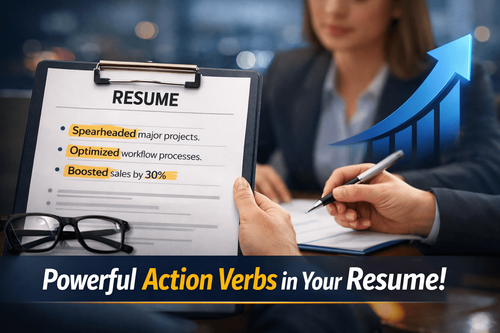

Table of Contents
- Who Is This Blog For?
- Why This Topic Matters Today?
- Core Concept or Framework Explained:
- How This Blog and Guidebook Help You?
- Step-by-Step Breakdown:
- Common Mistakes or Pitfalls to Avoid:
- How Should You Use This Guidebook Effectively?
- Key Takeaways:
- Your Next Step: Accelerate Your Career with PlanetSpark
- Want a deeper, hands-on experience?
How to Use Action Verbs Effectively in Resume Bullet Points: A Guide to Career Acceleration
Recruiters spend an average of just 6–8 seconds scanning a resume, which means you have only a brief moment to make a lasting impression. Your experience and skills matter, but how you present them can make or break your chances. Action verbs are the key to making your achievements stand out. While most resumes are bogged down by passive language, this guide shows how to use powerful action verbs to turn your resume into an impactful, result-driven document that catches a recruiter’s eye.
Who Is This Blog For?
This guide is designed for:
- Working professionals with 0–15 years of experience seeking faster career growth
- Career changers looking to reposition their experience for a new industry or role
- Mid-career professionals aiming for promotions or leadership roles
- Consultants and specialists building a strong personal brand
- Job seekers struggling with low interview callbacks despite strong experience.
Why This Topic Matters Today?
In today’s fast-paced job market, the language on your resume must do more than list responsibilities—it must demonstrate value. Modern recruiters rely heavily on Applicant Tracking Systems (ATS) to filter resumes, and a generic bullet point can easily get lost in the shuffle. The right action verbs not only help your resume pass ATS filters but also signal impact, ownership, and leadership. According to recent statistics, nearly 75% of resumes are rejected by ATS before reaching a human recruiter. This is why knowing how to craft impactful, action-driven bullets is more crucial than ever.
Core Concept or Framework Explained:
The foundation of a powerful resume is understanding the structure of an action-driven bullet point. This structure includes three key elements: the action verb, the task or scope, and the quantified impact. The action verb, as the first word in your bullet, is crucial because it sets the tone for how your achievements will be perceived. By following a methodical approach, you can rewrite each bullet point to focus on your actions and the results they produced.
The STAR-Q framework is the cornerstone of this approach:
- Situation: The context or challenge you faced
- Task: Your responsibility or goal
- Action: The steps you took
- Result: The outcome you achieved
- Quantification: The measurable impact of that outcome
Using strong action verbs such as "Spearheaded," "Optimized," and "Streamlined" gives recruiters the exact proof they need that you’re the right candidate.
How This Blog and Guidebook Help You?
This blog, combined with the accompanying guidebook, will help you:
- Identify hidden achievements in your career
- Select the right action verbs tailored to your industry and role
- Use metrics to substantiate your achievements
- Build a resume that is both ATS-friendly and impactful
- Ensure your resume is strategically structured for maximum impact
By following this guide, you’ll be equipped to demonstrate how you’ve created value in your past roles, leading to stronger job applications and increased interview opportunities.
Step-by-Step Breakdown:
Step 1: Audit Your Experience
Start by reviewing your experience and identifying real achievements rather than just job titles and duties. Capture all relevant activities:
- Projects you led or contributed to
- Problems you solved
- Revenue or cost impact
- Teams you managed or mentored
- Recognition received
Use performance reviews or any feedback you’ve received to uncover achievements you may have overlooked.
Step 2: Identify Your Quantification Metrics
To make your achievements tangible, you need to attach metrics wherever possible:
- Financial Impact: Revenue generated, cost savings, or ROI
- Efficiency Gains: Time saved, process improvements
- Growth Metrics: Conversion rates, engagement, or market share
- People Impact: Team size, employee retention, or training success
Even if exact numbers are unavailable, reasonable estimates or comparisons can still illustrate impact credibly.
Step 3: Craft Powerful Achievement Statements
After identifying your metrics, rewrite your bullets using the formula:
Action Verb + What You Did + Measurable Result
For example, instead of saying, "Managed a team," say, "Led a team of 10, delivering a 15% increase in sales over six months."
Step 4: Structure Your Resume Strategically
An impact-driven resume follows a clear layout:
- Professional Summary with quantified achievements
- Core Competencies aligned with the role
- Professional Experience with 3-5 achievement statements per role
- Education and Certifications
Prioritize achievements by relevance and impact. This ensures your most valuable contributions stand out.
Step 5: Write a High-Impact Professional Summary
Your professional summary should serve as the hook, quickly demonstrating your value. A well-written summary includes:
- Your role and years of experience
- Key achievements with measurable results
- Career direction
Step 6: Apply the Resume Transformation Checklist
Before you send your resume, ensure that it meets modern standards. Check for ATS compatibility, formatting consistency, and clarity.
Common Mistakes or Pitfalls to Avoid:
Here are the most common pitfalls that weaken your resume:
- Using weak verbs: Phrases like "Responsible for" lack ownership. Always opt for strong, specific verbs.
- Listing duties instead of achievements: Focus on results, not just tasks.
- Verb repetition: Avoid using the same verb repeatedly—this makes your resume sound monotonous.
- Lack of quantification: Numbers, percentages, and other metrics make your accomplishments tangible.
How Should You Use This Guidebook Effectively?
To maximize this guidebook’s effectiveness:
- Read through it once for a broad understanding
- Use the worksheets and frameworks to rewrite your resume bullet points
- Set aside a couple of focused hours for implementation
- Keep revisiting the guide for future applications or LinkedIn updates
This structured approach will ensure that your resume accurately reflects your skills and experience.
Key Takeaways:
- Shift your resume focus from responsibilities to measurable results
- Use strong, specific action verbs
- Quantify achievements wherever possible
- Follow the STAR-Q framework for clear, impactful storytelling
- Tailor your resume for every role
- Maintain accuracy and honesty in all claims.
Your Next Step: Accelerate Your Career with PlanetSpark
Creating an impact-driven resume is not just about landing your next job—it’s about owning your professional story and presenting it with clarity, confidence, and credibility. When your resume clearly communicates value, results, and impact, opportunities follow naturally.
At PlanetSpark, we are committed to empowering working professionals with practical, outcome-focused resources that drive real career growth. From resume building and workplace communication to leadership presence and professional writing, our programs are designed to help you succeed in today’s fast-evolving job market.
Visit https://www.planetspark.in/resources to explore:
- Career and resume-building guides
- Workplace communication and professional writing resources
- Skill-development tools curated for working professionals.
Want a deeper, hands-on experience?
You can also book a free trial session to learn more about PlanetSpark’s Working Professional Courses, designed to accelerate your career through personalised coaching, real-world practice, and expert guidance.
Your career deserves more than generic advice.
It deserves clarity, confidence, and measurable impact.
Start building that advantage today—with PlanetSpark.
---
Personalized Communication Roadmaps
Record a video to get a AI generated personalized communication reports