
How to Write Cover Letters That Showcase Problem-Solving Skills
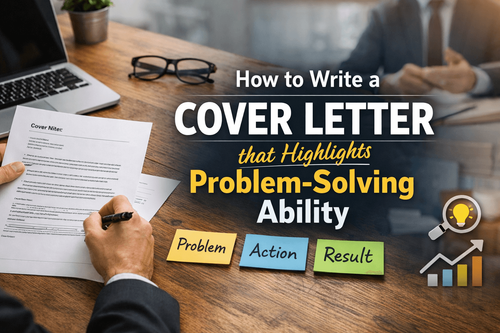

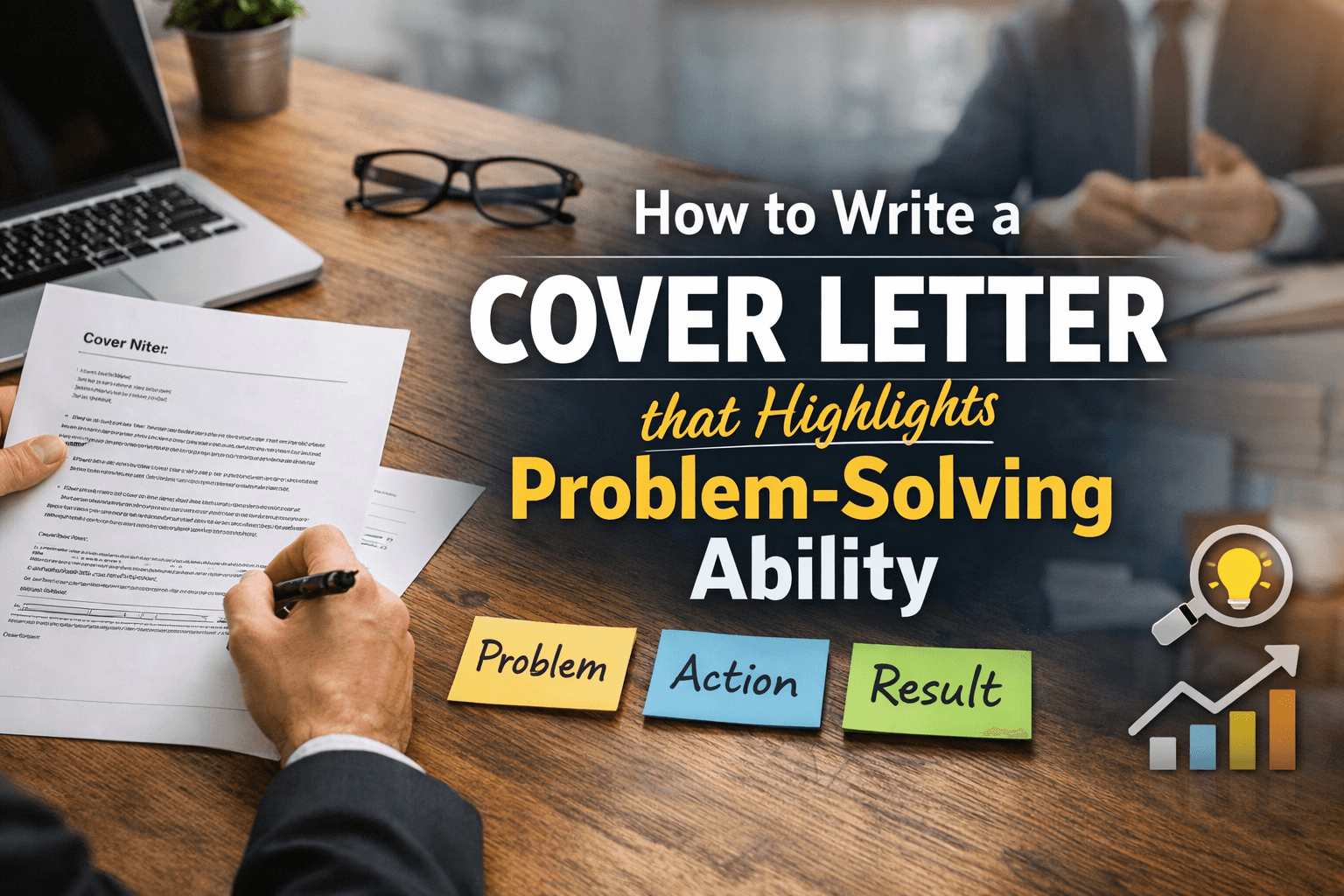
How to Write a Cover Letter that Highlights Problem-Solving Ability and Wins Interviews Faster
Most professionals treat cover letters as a formality. They repeat their resume, describe their enthusiasm for the role, and hope hiring managers read beyond the first paragraph.
Unfortunately, recruiters rarely do.
Hiring managers scan cover letters quickly, often deciding within seconds whether the candidate demonstrates real value. Generic statements about passion, teamwork, or communication rarely leave an impression. What hiring managers actually want is much simpler: proof that you can solve problems that matter to their organisation.
The PlanetSpark guidebook How to Write Cover Letters that Highlight Problem-Solving Ability reframes the entire purpose of a cover letter. Instead of summarising your background, the cover letter becomes a short, strategic narrative showing how you solved a meaningful challenge before — and how that experience applies to the employer’s current needs. :contentReference[oaicite:0]{index=0}
When written this way, a cover letter stops being a polite introduction and becomes something far more powerful: a business case for hiring you.
This blog translates the guidebook’s frameworks, templates, and examples into a practical roadmap that working professionals can apply immediately. Book your free trial session today with Planetspark.
Download for more details or PDF file.
Who Is This Blog For?
This guide and blog are designed
for professionals who want their job applications to demonstrate real professional value rather than generic interest.
- Working professionals with 0–15 years of experience aiming to accelerate career growth
- Career changers who want to reposition their past experience for a new role
- Managers and consultants seeking roles that require strategic thinking
- Job seekers whose cover letters rarely generate interview responses
- Professionals who struggle to communicate their impact clearly in writing.
Why This Topic Matters Today?
Hiring has become faster, more competitive, and increasingly evidence-driven.
Recruiters no longer read every word of every application. Instead, they scan quickly for signals of competence, relevance, and problem-solving ability.
According to the PlanetSpark guidebook, most cover letters fail because they read like resume summaries instead of demonstrating analytical thinking and real problem-solving capability. :contentReference[oaicite:1]{index=1}
Yet problem-solving remains one of the most frequently cited qualities employers look for across industries and job functions.
The opportunity is clear. If your cover letter demonstrates that you can identify challenges, analyse situations, and deliver measurable outcomes, you immediately stand apart from candidates who simply list experience.
An effective cover letter answers a simple but powerful question:
How can this person solve the problem we are currently facing?
When your letter answers that question clearly, you stop sounding like a job applicant and start sounding like a potential solution.
Core Concept or Framework Explained:
The guidebook introduces a powerful shift in thinking: the cover letter should demonstrate problem-solving capability, not simply professional interest.
Instead of focusing on your background, the cover letter focuses on a challenge the employer faces and shows how you previously solved something similar.
The framework used to structure this narrative is the Problem–Action–Result (PAR) method.
Problem
The situation or challenge that existed in your previous role. This section explains the stakes and why the issue mattered.
Action
The specific steps you took to address the problem. The emphasis is on your thinking, decisions, and strategy rather than generic team activity.
Result
The outcome your actions produced. Ideally this includes measurable results such as increased efficiency, reduced costs, faster delivery, or improved outcomes.
This structure transforms vague statements into clear evidence of capability. Instead of saying you are skilled, you demonstrate the results of those skills.
A key principle from the guidebook reinforces this approach: employers are not hiring people. They are hiring solutions to problems.
How This Blog and Guidebook Help You?
Together, the blog and guidebook provide a repeatable system for writing effective cover letters quickly and confidently.
You will learn how to:
- Identify the real challenge behind a job description
- Select relevant experiences that demonstrate your problem-solving ability
- Structure your cover letter using a clear narrative framework
- Write concise, impactful letters within the ideal 250–350 word range
- Customise applications efficiently without rewriting everything from scratch
The result is a cover letter that demonstrates strategic thinking and practical impact within seconds of being read.
Step-by-Step Breakdown:
Step 1: Decode the Job Before You Write
One of the biggest mistakes professionals make is opening a blank document and immediately writing about themselves.
Instead, the guidebook recommends treating the job description as a diagnostic tool.
Every job description contains clues about the organisation’s current challenges. Words like improve, rebuild, scale, drive accountability, or manage ambiguity often signal underlying issues within the organisation.
Your task is to identify the real problem the employer is trying to solve.
For example:
- A company seeking someone to “improve processes” may be struggling with inefficiency
- A team requesting someone to “manage ambiguity” may be dealing with unclear leadership direction
- A role asking for “cross-functional collaboration” may reflect coordination issues between teams
Once you recognise the problem, your cover letter can directly address it.
A helpful exercise from the guidebook is writing a one-sentence problem statement before drafting your letter:
This company needs someone who can solve X because of Y, and I have done exactly that when Z.
If you can complete that sentence clearly, your cover letter becomes dramatically easier to write.
Step 2: Choose the Right Story Using the PAR Framework
After identifying the employer’s problem, the next step is selecting a relevant story from your experience.
The goal is not to present the most impressive achievement from your career. Instead, choose the story that most closely matches the employer’s challenge.
For example:
A mid-level project manager who reduced reporting time by 40 percent may be more relevant to a process improvement role than a senior executive who managed a large department.
Relevance always beats prestige in a cover letter.
Structure the story using the PAR framework:
Problem
Briefly describe the challenge you encountered.
Action
Explain the specific decisions and steps you took to address it.
Result
Show the outcome using numbers or observable improvements.
The key is balance. Be concise about the context and precise about the results.
Step 3: Structure Your Cover Letter Effectively
The guidebook recommends a four-paragraph structure that keeps the letter concise while demonstrating depth.
Paragraph 1: The Hook
Open with a specific observation about the company, role, or industry. This immediately signals that you researched the organisation.
Avoid generic openings like “I am writing to apply for this position.”
Paragraph 2: The Evidence
Present your PAR story. This paragraph demonstrates how you solved a meaningful challenge and delivered results.
Paragraph 3: The Connection
Explain how your previous experience connects directly to the employer’s needs.
This section bridges your past achievements with their current priorities.
Paragraph 4: The Close
End with confidence by expressing interest in discussing how you can contribute to a specific outcome within the organisation.
This structure keeps the letter focused, persuasive, and easy to read.
Step 4: Customise Every Letter Strategically
Many professionals send the same cover letter to multiple roles with minimal changes.
The guidebook emphasises that this approach dramatically reduces effectiveness.
However, customisation does not mean rewriting everything.
Instead, focus on four high-impact sections:
- The opening hook referencing the specific company
- The problem framing reflecting the job description
- The connection paragraph linking your experience to the employer’s needs
- The closing statement mentioning a specific contribution
With a strong template, this process should take approximately 15 minutes per application.
Common Mistakes or Pitfalls to Avoid:
The guidebook identifies several mistakes that consistently weaken cover letters.
- Summarising your resume instead of telling a story
- Using “we” instead of highlighting your own contribution
- Writing vague results without numbers or clear outcomes
- Opening with generic statements that could apply to any company
- Writing to the job title rather than addressing the real problem
Each of these mistakes reduces credibility and makes your application blend into the crowd.
Replacing vague statements with specific examples dramatically improves impact.
How Should You Use This Guidebook Effectively?
The guidebook is designed to be practical rather than theoretical.
The recommended approach is simple and efficient.
- Read the guide once to understand the overall framework
- Use the worksheets to identify employer problems and relevant stories
- Draft your master cover letter template using the PAR structure
- Customise the four key sections for each application
- Review your letter using the self-check rubric before submission
Over time, you can build a personal library of problem-solving stories from your career.
This “story bank” becomes extremely valuable not only for cover letters but also for interviews, presentations, and leadership communication.
Key Takeaways:
- The most effective cover letters demonstrate problem-solving ability
- Start by identifying the employer’s real challenge
- Use the Problem–Action–Result framework to tell one compelling story
- Structure your letter with a four-paragraph format
- Customise key sections to match each employer’s needs
- Quantify results whenever possible
- Build a library of career stories for future applications.
Your Next Step: Accelerate Your Career with PlanetSpark
Creating an impact-driven resume is not just about landing your next job—it’s about owning your professional story and presenting it with clarity, confidence, and credibility. When your resume clearly communicates value, results, and impact, opportunities follow naturally.
At PlanetSpark, we are committed to empowering working professionals with practical, outcome-focused resources that drive real career growth. From resume building and workplace communication to leadership presence and professional writing, our programs are designed to help you succeed in today’s fast-evolving job market.
Visit https://www.planetspark.in/resources to explore:
- Career and resume-building guides
- Workplace communication and professional writing resources
- Skill-development tools curated for working professionals.
Want a deeper, hands-on experience?
You can also book a free trial session to learn more about PlanetSpark’s Working Professional Courses, designed to accelerate your career through personalised coaching, real-world practice, and expert guidance.
Your career deserves more than generic advice.
It deserves clarity, confidence, and measurable impact.
Start building that advantage today—with PlanetSpark.
Personalized Communication Roadmaps
Record a video to get a AI generated personalized communication reports