
How to Write the Perfect Cover Letter Length for Professionals 2026
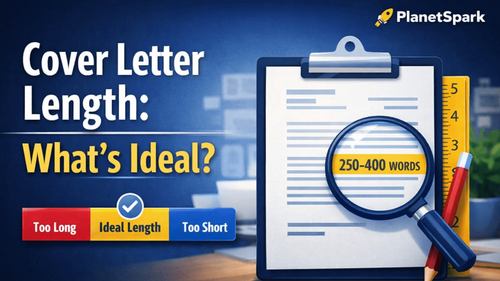

Cover Letter Length: What’s Ideal? A Practical Guide to Getting Your Cover Letter Fully Read
For most professionals, the real challenge in job applications is not a lack of capability. It’s visibility. When recruiters review applications at speed, even strong candidates are filtered out early—often before their experience is properly considered.
One of the fastest ways this happens is through poorly judged cover letter length. A brief letter can feel incomplete or low-effort. An overly detailed one can appear unfocused or demanding of time the recruiter simply doesn’t have. In both cases, the result is the same: your application fails to hold attention long enough to make an impact.
The guidebook Cover Letter Length: What’s Ideal? was created to address this exact issue. Instead of relying on vague advice or outdated conventions, it offers clear, evidence-backed direction on how long a cover letter should be—and how to use that space effectively to communicate value.
Who Is This Blog For?
This blog and the associated guidebook are meant for professionals who want practical clarity rather than generic writing tips. It is especially relevant if you are:
- Applying for roles where applications are screened quickly
- Early in your career and unsure how much detail recruiters expect
- Returning to the job market after a long gap
- Transitioning into a new role or industry
- Operating at a senior or leadership level with higher expectations
- Struggling to shorten or strengthen your cover letter without losing substance
If your goal is to write cover letters that feel focused, professional, and worth reading, this resource is designed to help.
Why This Topic Matters Today?
Recruitment today is shaped by speed. Hiring managers and recruiters rarely read applications line by line during the first round. Instead, they scan for clarity, relevance, and signals of professional judgment.
Length becomes one of the earliest signals. A page that looks dense discourages reading. A letter that feels thin raises questions about effort or fit. Neither gives you the chance to demonstrate your strengths.
The guidebook reflects several realities of modern hiring:
- Initial screening happens under tight time pressure
- Visual presentation influences credibility before content is evaluated
- Concise communication is increasingly linked to seniority and competence
In this context, managing cover letter length is not a formatting preference—it’s a decision that affects how your application is perceived.
Core Concept or Framework Explained
The guidebook centres on a simple but important conclusion: most effective cover letters fall within a specific, proven range.
Based on recruiter feedback and hiring outcomes, it identifies:
- 250 to 400 words as the optimal length for most applications
- Three to four focused paragraphs between introduction and closing
- A single-page format with clear spacing and readable structure
This recommendation is not based on convention alone. Data referenced in the guide shows that cover letters significantly shorter or longer than this range tend to perform worse in terms of engagement and callbacks.
More importantly, the framework shifts focus away from word count alone and towards structure. Each section of the cover letter has a defined function:
- The opening establishes relevance quickly
- The middle paragraphs build credibility through evidence
- The closing reinforces intent and direction
Length, in this model, becomes a tool for clarity rather than a constraint.
How This Blog and Guidebook Help You?
This blog explains the reasoning behind optimal cover letter length, while the guidebook provides the practical tools to apply it consistently.
Together, they help you:
- Make confident decisions about how much to write
- Understand how recruiters interpret length choices
- Edit drafts with purpose instead of frustration
- Align your writing with real-world reading behaviour
- Present yourself as thoughtful, focused, and professional
Rather than treating length as a cosmetic issue, you begin to treat it as part of effective professional communication.
Step-by-Step Breakdown
Clarifying What “Ideal” Looks Like
The guidebook begins by defining a realistic benchmark. For most professionals, a cover letter between 250 and 400 words fits comfortably on one page and can be read in roughly one to one-and-a-half minutes.
This range provides enough room to:
- Explain interest in the role
- Highlight relevant experience
- Show impact through examples
At the same time, it avoids overwhelming the reader.
Managing Your Word Budget
To help writers stay within range, the guide suggests dividing the letter strategically:
- A concise opening of around 50–75 words
- Two or three core paragraphs of 75–100 words each
- A short, forward-moving conclusion of 40–60 words
This approach prevents overlong introductions and ensures your strongest points receive the most attention.
Why This Length Works
The guide explains why this structure consistently performs well:
- It aligns with realistic attention spans during screening
- It allows depth without repetition
- It signals respect for the reader’s time
- It creates a document that looks approachable rather than demanding
The result is a letter that invites reading instead of discouraging it.
Knowing When to Adjust Length
While 250–400 words is the default, the guide also explains when flexibility is appropriate:
- Senior or executive roles may require additional space for leadership context
- Career switchers may need more room to connect transferable skills
- Creative roles may allow slightly longer letters if writing quality adds value
- Employer instructions should always take priority over general guidelines
The emphasis is on intentional adjustment, not personal preference.
Understanding the Risks of Being Too Brief
Letters under 200 words often raise concerns:
- They appear rushed or underdeveloped
- They rely on general claims rather than evidence
- They miss opportunities to differentiate the candidate
Shortness alone does not signal efficiency if substance is missing.
Understanding the Risks of Being Too Long
Letters exceeding 500 words tend to create different problems:
- They suggest weak judgment about professional norms
- They bury strong points under unnecessary detail
- They discourage reading due to visual density
Even strong content can fail if it demands too much effort upfront.
Using the Length Calibration Framework
One of the most practical elements of the guide is its structured editing process:
- Write a full draft without limiting yourself
- Review the word count objectively
- Identify and prioritise your strongest points
- Read the draft aloud to catch unnecessary language
- Refine for clarity, balance, and visual ease
This turns editing into a repeatable system rather than guesswork.
Reducing Length Without Losing Impact
When drafts run long, the guide recommends:
- Removing hedging and filler phrases
- Replacing wordy expressions with direct alternatives
- Cutting repetitive examples
- Eliminating unnecessary background context
- Combining sentences where possible
These changes often improve both tone and readability.
Strengthening Short Drafts Meaningfully
When drafts fall short, the guide suggests adding value rather than padding:
- Reference company-specific details
- Include measurable outcomes
- Explain how skills were applied in practice
- Clarify motivation and role alignment
The goal is depth, not word count.
Learning Through a Real Case Example
A detailed before-and-after example shows how a 625-word letter was refined to 340 words. The improvement came from:
- Removing generic openings
- Introducing concrete metrics
- Eliminating repetition
- Ensuring every sentence served a purpose
The result was a stronger, clearer letter with less content.
Using Checklists to Finalise Your Letter
The guide includes practical checklists to help you review:
- Word count and page fit
- Paragraph focus
- Reading time
- Visual accessibility
- Company-specific relevance
These tools help catch issues before submission.
Common Mistakes or Pitfalls to Avoid
The guide highlights recurring errors that weaken cover letters:
- Rewriting the resume instead of complementing it
- Adding unnecessary career history
- Using multiple examples instead of one strong one
- Describing processes instead of outcomes
- Apologising for gaps instead of leading with strengths
- Using decorative language that adds length without value
Avoiding these mistakes keeps your letter focused and credible.
How Should You Use This Guidebook Effectively?
For best results, treat the guide as an ongoing reference:
- Read it once to understand the principles
- Draft your cover letter freely
- Compare your draft against the benchmarks
- Apply the editing framework step by step
- Use the checklists before each submission
- Revisit the guide when applying across roles or industries
The time investment is small, but the benefits compound with every application.
Key Takeaways
- Most effective cover letters fall between 250 and 400 words
- Length communicates judgment and professionalism
- Structure matters as much as word count
- Very short letters feel incomplete; very long ones feel unfocused
- Context should guide adjustments
- Editing is a strategic skill
- Frameworks and checklists remove uncertainty
Your Next Step: Accelerate Your Career with PlanetSpark
Creating an impact-driven resume is not just about landing your next job—it’s about owning your professional story and presenting it with clarity, confidence, and credibility. When your resume clearly communicates value, results, and impact, opportunities follow naturally.
At PlanetSpark, we are committed to empowering working professionals with practical, outcome-focused resources that drive real career growth. From resume building and workplace communication to leadership presence and professional writing, our programs are designed to help you succeed in today’s fast-evolving job market.
Visit https://www.planetspark.in/resources to explore:
- Career and resume-building guides
- Workplace communication and professional writing resources
- Skill-development tools curated for working professionals
Want a deeper, hands-on experience?
You can also book a free trial session to learn more about PlanetSpark’s Working Professional Courses, designed to accelerate your career through personalised coaching, real-world practice, and expert guidance.
Your career deserves more than generic advice.
It deserves clarity, confidence, and measurable impact.