
How Working Professionals Build Execution Habits That Compound


Building Execution Habits That Compound for Sustainable Success
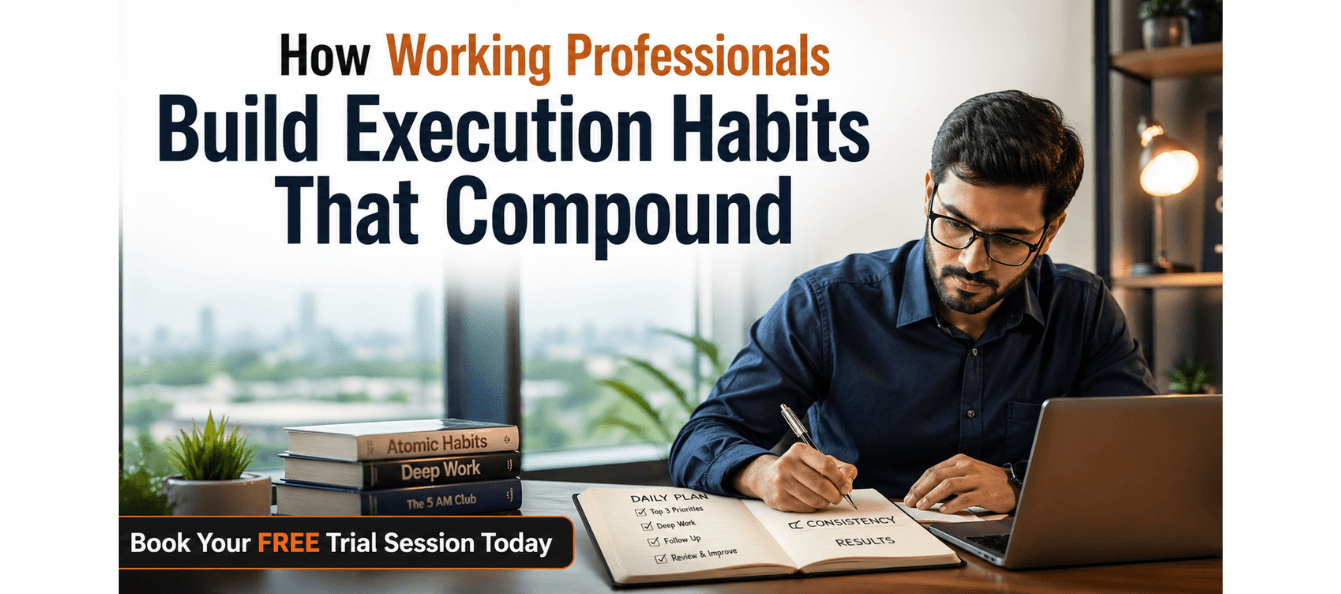
Do you find yourself constantly planning but struggling to execute? Many professionals face the challenge of having good intentions but falling short when it comes to taking consistent, effective action. The gap between knowing what needs to be done and actually doing it is often where careers stall, projects fail, and potential goes unfulfilled. This is where building execution habits that compound over time can make a significant difference. Execution habits are systems that work even when you’re tired, distracted, or overwhelmed. By applying simple but powerful habits consistently, you can turn small actions into significant, sustainable results. This guide will help you create a system of execution habits that compound over time, ensuring that your actions align with your long-term goals.
Download these resources and apply them alongside your daily work for improved clarity, productivity, and professional growth. You can also book a free trial to gain expert guidance and enhance your communication, problem-solving, and decision-making skills. The materials are designed in a clear, structured format to help professionals learn efficiently and implement insights with confidence.
Who Is This Blog For?
- Working professionals who feel stuck between planning and execution
- Career switchers, consultants, and managers looking to build consistent habits
- Individuals seeking to improve their productivity and career progression
- Professionals overwhelmed by too many priorities and lacking a clear execution system
- Anyone looking to turn their actions into measurable, sustainable results
Why This Topic Matters Today?
In today’s fast-paced work environment, professionals are often bombarded with endless tasks and expectations. As a result, they focus more on planning and less on execution. Over time, this lack of follow-through leads to frustration, burnout, and stagnation. Motivation alone is unreliable—while it might push you through an initial burst of productivity, it fades quickly. Execution habits, on the other hand, are built into your routine and require less willpower. They help you stay consistent, even during busy or challenging periods, leading to compounding results over time. Developing these habits is not only essential for career success but also for personal growth.
Core Concept or Framework Explained
The power of execution habits lies in their ability to compound over time. Just like compound interest in finance, small improvements made consistently lead to massive growth. By focusing on daily, incremental actions, professionals can accumulate substantial progress over time, often more than through short bursts of intense effort.
The process of building execution habits can be broken down into five main steps:
1. Clarify Your Execution Anchors: Identify 2-3 specific, time-bound outcomes that matter most in your career. These anchors will serve as the foundation of your habits.
2. Design Habits Around Your Energy: Align your habits with your natural energy rhythms, ensuring that you tackle high-cognitive tasks during your peak energy windows.
3. Use the Minimum Viable Habit (MVH): Start with the smallest version of a habit that still provides value. This makes it easy to stay consistent, even on challenging days.
4. Stack Habits onto Existing Routines: Attach new habits to existing behaviors to reduce friction and ensure you follow through.
5. Build a Friction Audit: Regularly evaluate and reduce any obstacles that prevent you from executing your habits efficiently.
How This Blog and Guidebook Help You?
This blog and guidebook will help you create a sustainable habit system that compounds over time, enabling you to:
- Build consistent execution habits aligned with your career goals
- Increase productivity by focusing on high-impact tasks during your peak energy periods
- Overcome procrastination and reduce decision fatigue with simple, actionable habits
- Recover quickly from lapses and stay on track even when life gets busy
- Create long-term momentum by stacking habits onto existing routines
Step-by-Step Breakdown
Step 1: Clarify Your Execution Anchors
Before building any habit, you must identify your Execution Anchors — the two or three outcomes that genuinely matter to your career or life right now. Without this clarity, you risk building habits around busyness rather than progress. Most professionals have too many priorities, which functionally means they have none.
An Execution Anchor is specific, time-bound, and personally meaningful. It's not "be more productive" — it's "complete my portfolio project by the end of Q3 so I can apply for senior roles." The anchor gives every habit a reason to exist. When motivation dips, the anchor reminds you why the system matters.
Step 2: Design Habits Around Your Energy
Most habit-building advice tells you to "schedule it." But scheduling a habit at the wrong time in your energy cycle is a recipe for failure. High-cognitive tasks attempted during low-energy windows produce poor results and erode your confidence in your own systems. The fix is to map your habits to your natural energy rhythms first, then block your calendar accordingly.
Research consistently shows that most professionals have a peak cognitive window of two to four hours per day — typically in the morning, though this varies. Execution habits that require focus, creativity, or decision-making should be anchored to this window. Administrative habits, reviews, and communication can be batched into lower-energy periods.
Step 3: Use the Minimum Viable Habit (MVH) Framework
A Minimum Viable Habit is the smallest version of a behavior that still counts as doing it. It removes the "all or nothing" trap that kills most habit attempts.
For example, instead of setting a goal to write 2,000 words a day, your MVH could be writing just 200 words. Rather than aiming for a full workout, set a goal of 10 minutes of exercise. Your MVH ensures that you can complete the habit even on your worst days, keeping consistency in place.
Step 4: Stack Habits onto Existing Routines
Habit stacking is one of the most effective techniques for making new behaviors stick. Instead of finding entirely new time slots, attach new habits to existing ones. For example, after your morning coffee, spend 3 minutes reviewing your daily priorities, or after a weekly team meeting, log your progress. Habit stacking reduces friction and makes the new habit easier to follow through with.
Step 5: Build a Friction Audit
A Friction Audit is a structured review of what makes your key habits harder than they need to be. For each execution habit, ask: What slows me down before I start? What makes me skip it? What would make it easier to begin?
Addressing these obstacles can make a huge difference in your ability to follow through. Small changes, such as reducing the steps required to start a task, can significantly improve consistency.
Step 6: Track Progress Without Obsessing Over Perfection
Tracking is the feedback loop that keeps your habit system honest. It helps you see patterns, celebrate small wins, and identify areas for improvement.
The goal of tracking is not perfection but awareness. It makes the invisible visible, helping you stay on track. Use simple tracking methods, such as a paper habit tracker or a spreadsheet. Focus on consistency, not flawless execution.
Key Takeaways
- Execution habits compound over time, creating lasting results.
- Start small with your Minimum Viable Habit to build consistency.
- Align your habits with your natural energy cycles to improve follow-through.
- Stack new habits onto existing routines for easier implementation.
- Regularly audit your habits to reduce friction and improve efficiency.
Your Next Step: Accelerate Your Career with PlanetSpark
Creating an impact-driven resume is not just about landing your next job—it’s about owning your professional story and presenting it with clarity, confidence, and credibility. When your resume clearly communicates value, results, and impact, opportunities follow naturally.
At PlanetSpark, we are committed to empowering working professionals with practical, outcome-focused resources that drive real career growth. From resume building and workplace communication to leadership presence and professional writing, our programs are designed to help you succeed in today’s fast-evolving job market.
Visit https://www.planetspark.in/resources to explore:
- Career and resume-building guides
- Workplace communication and professional writing resources
- Skill-development tools curated for working professionals
Want a deeper, hands-on experience?
You can also book a free trial session to learn more about PlanetSpark’s Working Professional Courses, designed to accelerate your career through personalised coaching, real-world practice, and expert guidance.
Your career deserves more than generic advice.
It deserves clarity, confidence, and measurable impact.
Personalized Communication Roadmaps
Record a video to get a AI generated personalized communication reports