
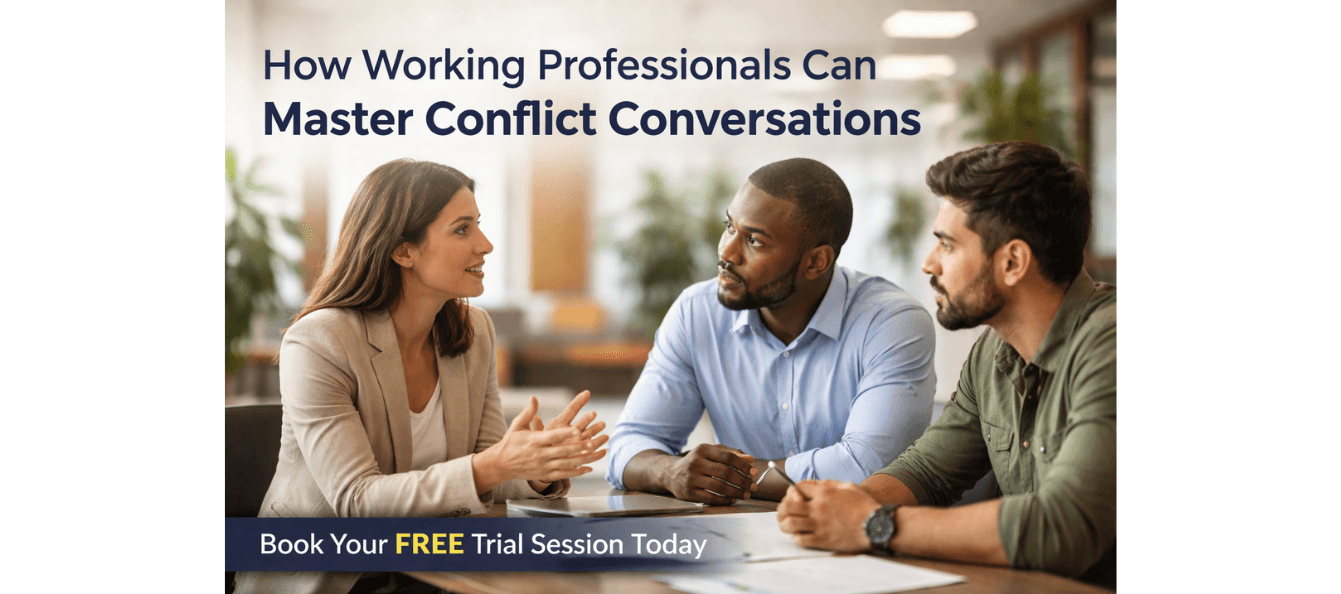
How Working Professionals Can Master Conflict Conversations


Conflict Handling Scripts and Examples: The Complete Guide to Navigating Workplace Conversations with Confidence
In today’s professional environment, your success is not defined only by your technical skills—it is shaped by how you handle difficult conversations. Whether it’s addressing missed deadlines, pushing back on unrealistic expectations, or resolving team misunderstandings, conflict is inevitable.
Yet most professionals are never trained to handle it effectively. Instead, they rely on instinct—reacting emotionally, avoiding conversations, or saying the wrong thing under pressure. The result is strained relationships, unresolved issues, and damage to professional credibility.
What separates high-performing professionals is not the absence of conflict, but their ability to manage it with clarity, structure, and confidence. They know what to say, how to say it, and when to say it—without escalating tension or harming relationships.
This is exactly where structured conflict-handling scripts and frameworks make a difference. Instead of improvising in high-stakes situations, you can rely on proven language, clear frameworks, and practical tools that help you stay composed and outcome-focused.
Download these resources and apply them alongside your daily work for improved clarity, productivity, and professional growth. You can also book a free trial to gain expert guidance and enhance your communication, problem-solving, and decision-making skills. The materials are designed in a clear, structured format to help professionals learn efficiently and implement insights with confidence.
Who Is This Blog For?
- Working professionals dealing with workplace conflicts
- Managers handling team performance and behavioural issues
- Career switchers navigating new environments and expectations
- Consultants and freelancers managing client conversations
- Leaders aiming to strengthen communication and relationship-building
Why This Topic Matters Today?
Workplace dynamics have become increasingly complex. Cross-functional teams, remote collaboration, and fast-paced delivery cycles have amplified the chances of miscommunication and conflict.
The reality is simple: conflict is not optional—it is constant.
However, the difference lies in how it is handled. Professionals who avoid conflict often experience:
- Escalating misunderstandings
- Reduced trust within teams
- Missed opportunities for alignment
- Long-term damage to professional reputation
Research and real-world experience consistently show that unresolved conflict compounds over time. Small issues turn into larger problems, and minor misalignments become systemic breakdowns.
In contrast, professionals who address conflict early and effectively are seen as:
- Strong communicators
- Reliable leaders
- Trusted collaborators
Conflict handling is no longer a soft skill—it is a core career competency.
Core Concept or Framework Explained
At the heart of this guide is the 3-Phase Conflict Navigation Model. This framework simplifies complex conversations into three clear stages, each requiring a different mindset and approach.
Before the Conversation
This phase focuses on preparation. Instead of reacting emotionally, you enter the conversation with clarity and intention.
You define the issue, gather facts, and decide what outcome you want. This ensures you are grounded and purposeful.
During the Conversation
This is where execution matters. Your tone, language, and structure determine whether the conversation escalates or resolves.
Using structured scripts allows you to:
- Stay calm under pressure
- Communicate clearly without blame
- Keep the conversation focused and productive
After the Conversation
Most professionals overlook this phase, but it is critical. This is where alignment is reinforced, outcomes are documented, and relationships are repaired.
Without proper follow-through, even a good conversation can fail.
How This Blog and Guidebook Help You?
This blog and the underlying playbook provide practical, ready-to-use tools that eliminate guesswork in difficult conversations.
You gain:
- Structured scripts for real workplace scenarios
- A clear framework to handle any conflict situation
- Confidence in high-pressure conversations
- Improved clarity in communication and decision-making
The outcome is not just conflict resolution—it is stronger relationships, better collaboration, and enhanced professional credibility.
Step-by-Step Breakdown
Step 1: Prepare Before the Conversation
Preparation is the foundation of effective conflict handling.
Key actions include:
- Identify the core issue in one clear sentence
- Focus on specific behaviours, not personality traits
- Define your desired outcome
- Assess your emotional readiness
- Choose the right time and setting
Asking yourself questions like “What outcome do I want?” and “Am I reacting or responding?” shifts your mindset from reactive to intentional.
Step 2: Open the Conversation Effectively
The opening sets the tone for everything that follows.
Strong openings:
- Avoid blame
- Signal collaboration
- Invite dialogue
For example, framing the issue as a shared problem rather than a personal fault creates a safer space for discussion.
Step 3: Stay on Track During the Conversation
Even well-planned conversations can become difficult.
Use structured responses to manage situations like:
- Defensiveness
- Miscommunication
- Emotional escalation
For instance, acknowledging emotions while redirecting focus helps maintain control without dismissing the other person’s perspective.
Step 4: Use Active Listening as a Strategy
Listening is not passive—it is a powerful tool.
Effective techniques include:
- Reflecting back what you hear
- Validating without agreeing
- Asking clarifying questions
Following the 70/30 rule—listening more than speaking—significantly improves outcomes.
Step 5: Apply Scenario-Based Scripts
Different situations require different approaches.
Examples include:
- Managing client pushback by focusing on priorities
- Pushing back on a manager’s request through transparency
- Addressing credit issues with colleagues using specific examples
- Resolving cross-team conflicts by aligning shared goals
Each script is designed to maintain professionalism while addressing the issue directly.
Step 6: Close the Conversation with Clarity
Ending a conversation without clear agreements leads to recurring issues.
A strong close includes:
- Summarising what was agreed
- Defining next steps
- Setting timelines
- Keeping communication open
Clarity at the end prevents confusion later.
Step 7: Follow Up Professionally
A follow-up message reinforces alignment and accountability.
A structured follow-up should include:
- Summary of agreements
- Defined responsibilities
- Timelines for actions
- Invitation for clarification
Sending this within 24 hours ensures the conversation leads to real outcomes.
Step 8: Learn from Real-World Application
In real scenarios, professionals often make mistakes such as:
- Escalating issues prematurely
- Using passive-aggressive communication
- Addressing conflict publicly instead of privately
Applying the framework transforms these situations into constructive conversations that preserve relationships and deliver results.
Common Mistakes or Pitfalls to Avoid
Many professionals struggle with conflict because of predictable patterns.
Common mistakes include:
- Avoiding conflict and hoping it resolves itself
- Reacting emotionally instead of preparing
- Focusing on personalities rather than behaviours
- Over-explaining or becoming defensive
- Ending conversations without clear agreements
A better approach is to:
- Address issues early
- Stay structured and intentional
- Communicate with clarity and confidence
How Should You Use This Guidebook Effectively?
To maximise the value of this resource, follow a simple process:
- Skim the framework to understand the structure
- Identify the phase relevant to your situation
- Use scripts as preparation tools, not rigid dialogue
- Adapt language to your personal style
- Revisit before high-stakes conversations
Suggested time investment:
- 10–15 minutes of preparation before important conversations
- Ongoing practice to build confidence
Consistency and repetition are key to making these skills natural.
Key Takeaways
- Conflict is inevitable, but mismanagement is avoidable
- Preparation determines the success of difficult conversations
- Structured communication prevents escalation
- Listening is more powerful than speaking in conflict situations
- Clear openings and closings drive better outcomes
- Follow-through ensures lasting resolution
- Addressing conflict early strengthens professional relationships
Your Next Step: Accelerate Your Career with PlanetSpark
Creating an impact-driven resume is not just about landing your next job—it’s about owning your professional story and presenting it with clarity, confidence, and credibility. When your resume clearly communicates value, results, and impact, opportunities follow naturally.
At PlanetSpark, we are committed to empowering working professionals with practical, outcome-focused resources that drive real career growth. From resume building and workplace communication to leadership presence and professional writing, our programs are designed to help you succeed in today’s fast-evolving job market.
Visit https://www.planetspark.in/resources to explore:
- Career and resume-building guides
- Workplace communication and professional writing resources
- Skill-development tools curated for working professionals
Want a deeper, hands-on experience?
You can also book a free trial session to learn more about PlanetSpark’s Working. Professional Courses, designed to accelerate your career through personalised coaching, real-world practice, and expert guidance.
Your career deserves more than generic advice.
It deserves clarity, confidence, and measurable impact.
Start building that advantage today—with PlanetSpark.
Personalized Communication Roadmaps
Record a video to get a AI generated personalized communication reports